Bagmati Province Government Faces Political Uncertainty Amidst Leadership Tussle

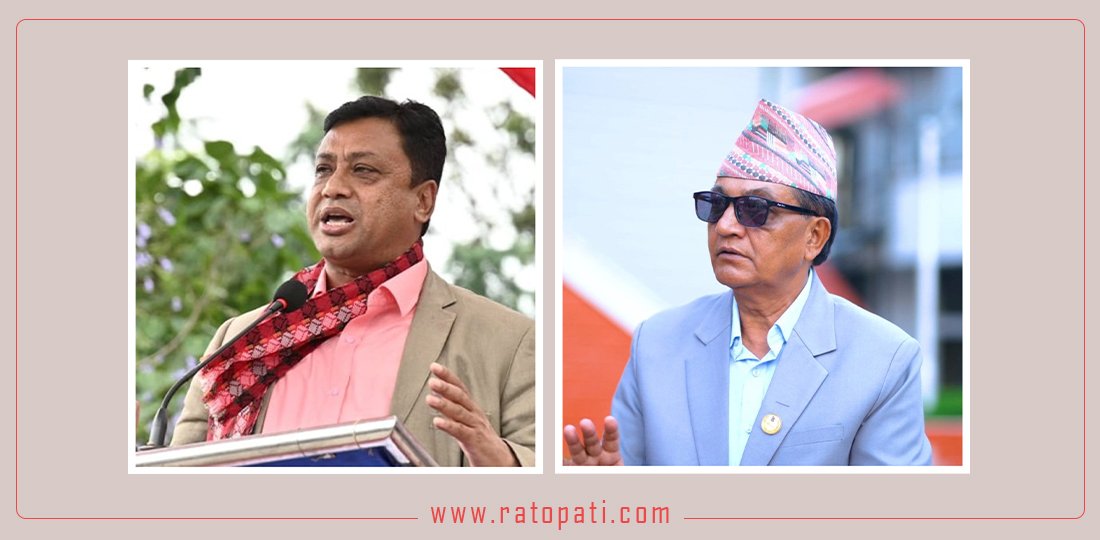
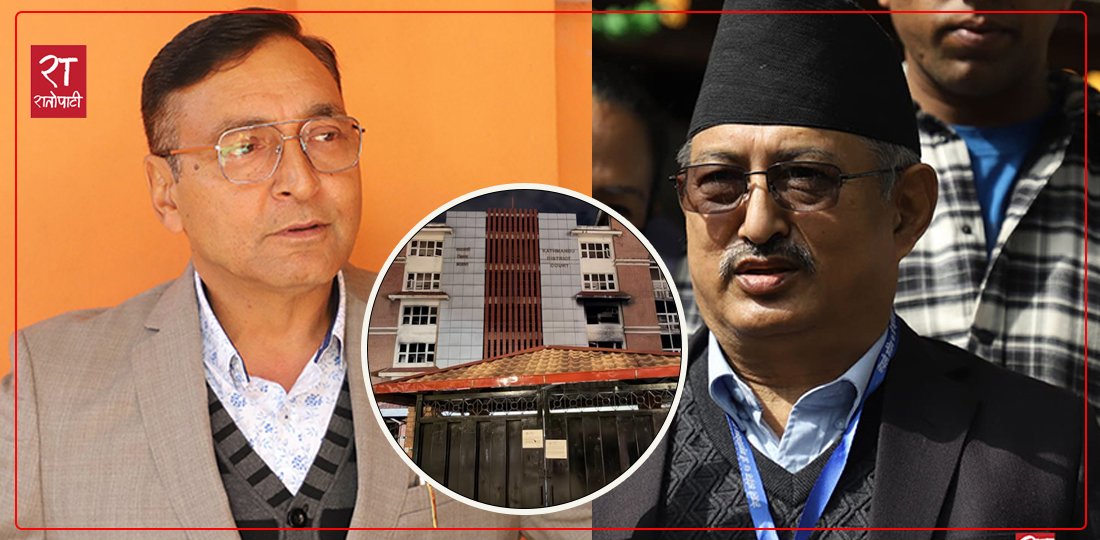
Makwanpur. Discussions about changing the Bagmati Province government are rife at the moment. The ruling coalition parties, Nepali Congress and CPN-UML, are intensely lobbying for government formation in their favor. Specifically, UML is aiming to seize the leadership of the government under any circumstances, while Congress is in favor of continuing the current government. There is a tussle between Congress and UML in Bagmati regarding the leadership of the government. Both parties are currently engaged in discussions in Kathmandu regarding the leadership of the government. No concrete conclusion has been reached regarding the government's leadership so far. UML's Bagmati Province Parliamentary Party leader Jagannath Thapaliya has been in Kathmandu since the budget was passed to lobby for the government's leadership. He is in constant discussion with the party's top leadership. With 25 MPs in the Provincial Assembly, UML is currently part of the Congress-led government with 6 ministers. UML has put forward a strategy to lead the government after the ministries in the provincial government are reduced from the new fiscal year. Congress has stated that no agreement has been made with any party for the rotation of leadership. Congress has been saying that the decision regarding the leadership of the government will be made at the party's top level, while UML insists on moving forward according to the gentleman's agreement of half-half tenure.
UML Using Congress's Lama Group
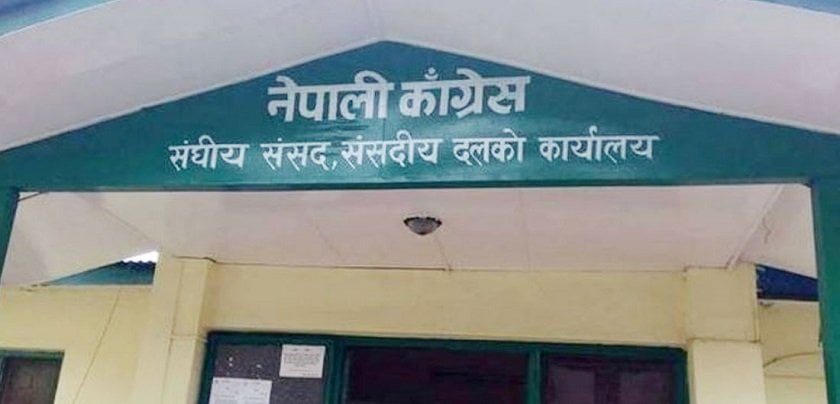
The ruling party Congress is embroiled in internal disputes. While the conflict between the establishment and the dissenting groups within Congress is natural, there is a conflict between individual-centric groups regarding the Bagmati government. With the aim of toppling the government led by Chief Minister Indrabahadur Baniyan, Congress's joint general secretary Bahadur Singh Lama had insisted on discussions regarding the budget. With the objective of taking revenge for being removed from the position of parliamentary party leader and seizing power in the past, Lama, who is also a former chief minister, had cornered the current government by using the budget as a pretext. According to his plan, the atmosphere in the Provincial Assembly also seemed favorable for a few days. The presence of Congress MPs in the budget discussions was continuously decreasing. On Ashar 16, 19 MPs were present, on Ashar 17, 21 MPs, and on Ashar 18, 16 MPs were present. Although there was a preparation to pass the budget on Ashar 19 itself, it was extended due to the low attendance of MPs. After the attendance of MPs decreased, the Lama group put forward the condition of passing the budget only after the Chief Minister's resignation. Realizing that he would face non-cooperation from the party, Chief Minister Baniyan suddenly went to Kathmandu and met with party president Gagan Kumar Thapa and vice-president Bishwaprakash Sharma to inform them about the developments. Accordingly, Vice-President Sharma assigned General Secretary Guru Ghimire to resolve the issue of the Bagmati government. Ghimire came to Hetauda on Ashar 20 and also participated in the parliamentary party meeting. Some MPs from the Lama group were not present in this meeting. That meeting issued a whip to stand in favor of the budget, and the parliament meeting was called for 1 PM, where, fearing action, all MPs from Lama and his group attended and passed the budget. After not getting the results as per his plan, former Chief Minister Lama is in constant communication with UML. He is willing to hand over the leadership of the government to UML if he cannot get it after changing the government, or if he cannot get it himself. Lama group claims to have 19 MPs in its favor within Congress, which has 36 seats.
Dispute Within UML Too
Meanwhile, there is also a high-level dispute within the ruling coalition party UML regarding the parliamentary party leader. Within UML, which is struggling for power, the role of the parliamentary party has been weakening, and the conditions set by the party leader during the budget formulation have further exacerbated this dispute. Some UML MPs have been stating that even if UML gets the leadership of Bagmati in the power-sharing of the provincial government, it is not certain that the current parliamentary party leader Jagannath Thapaliya will get the government leadership. According to them, the party leader has not been playing a leadership role recently, and they accuse him of supporting the government against the sentiments of the MPs in the budget. MPs say that this issue has also been discussed with the top leadership of UML.
CPN's Internal Plan
The Nepali Communist Party (NCP), with 26 seats, claims that it is not currently involved in the power game. However, its internal plan appears to be different. NCP has made a plan to go into the government by partnering with Congress or UML. According to an NCP leader, it is a different matter to support if the ruling coalition partners do not agree, but NCP is actively involved in various discussions for power change. According to him, NCP is ready to participate in the government by reducing the 14 ministries in the province to 7 to 9 ministries according to the detailed work of the ministries. That leader said that NCP has discussed taking a maximum of 4 ministries if the Congress-UML alliance breaks. He also stated that discussions have been held about NCP participating in the government by taking 2 ministries if the alliance does not break. Out of a total of 110 MPs in Bagmati, 106 are currently active. Among them, Congress has 36, UML has 25, NCP has 26, RPP has 12, NMP has 3, and Hamro Nepali Party (Desh Bikash Party) has 2 MPs. If 6 MPs resign, 53 MPs are required to form a government in Bagmati.
Challenge of Minister Management
The management of the Bagmati Province government's cabinet is proving to be extremely difficult. While the decision to reduce the 14 ministries to 8 from July 1 needs to be implemented, it has not yet been decided which of the current 6 ministers will be removed. Currently, there are 6 ministers from UML and 8 from Congress in the provincial government. According to the coalition's power-sharing, the decision to recall or remove ministers should have been made on July 1, but neither party has been able to reach a decision. Chief Minister Indrabahadur Baniyan has already instructed youth and sports minister Urmila Nepal, cooperative and poverty alleviation minister Binu Rayamajhi, and internal affairs and law minister Shivraj Adhikari from Congress to be ready to be recalled. However, UML has not yet decided whom to recall. UML has adopted a strategy to first finalize the issue of government leadership and then move forward with the cabinet reshuffle.
What Will Be the Impact of Karnali and Sudurpashchim?
Just on Wednesday, the Congress-UML power-sharing in Karnali and Sudurpashchim provinces has seen a rift. While 4 ministers from Congress have resigned from the Karnali government, 4 ministers from UML have been dismissed in Sudurpashchim. These two developments show that the Congress-UML partnership can no longer proceed smoothly. It is speculated that the power struggle and deadlock among the parties in Bagmati could also take a similar turn. However, party leaders say that it will not have an impact in Bagmati. According to UML Parliamentary Party leader Thapaliya, the two-party alliance in Bagmati will not break. He said that the decision regarding the government will be made with understanding in a cordial atmosphere within the ruling coalition. He stated that the issues in Karnali and Sudurpashchim were decided according to the geography and circumstances there. He said that although the party's top leadership is aware of the matter, no concrete directive has been given. He believes that the party leadership will leave the matter of the Bagmati government open for a unique decision.
This specific news has been automatically translated by AI. As a result, there may be some inaccuracies or language errors.