Film Development Board Chair Dinesh DC Optimistic About Industry Reform Under PM Balen Shah

_CftNklrTSS.jpg)
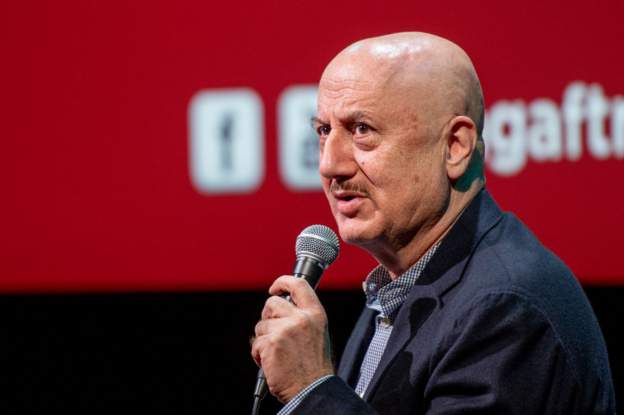
Kathmandu. Dinesh DC is the Chairman of the Film Development Board. A well-established and multifaceted personality in the Nepali media and film industry, he has been active in radio, television, and cinema for nearly three decades.
Active in film direction and acting, DC has successfully implemented policy reforms, strengthened the box office, and expanded the reach of Nepali films in the international market since joining the board.
With Balen Shah, a figure from the arts background, serving as the country's Prime Minister, he is optimistic that the long-standing legal and structural knots faced by the film industry will be untied. Here are the edited excerpts from the conversation with Board Chairman DC.
- How do you feel as an artist now that Balen Shah, a figure from the arts sector, has become the Prime Minister of the country?
I am very happy. For the first time, a person from the arts sector has reached the highest position of the country's Prime Minister. History has been made for the arts sector. More importantly, the current Prime Minister Shah has come to the position with a specific purpose and a resolve to do good work. I believe that under his leadership, with a government holding a nearly two-thirds majority, the country will take a major leap in development and good governance. As an artist, I am happy, and seeing an artist with intellectual depth reach leadership makes me even more optimistic.
- Will the Board's work be easier with an artist as Prime Minister?
It will certainly be easier. For people who only understand politics, the entertainment sector is the last priority. Since the current Prime Minister is a conscious and thoughtful singer himself, he will understand our feelings and needs deeply. We have high hopes for him, and I am confident that he will play the role of a positive 'accelerator' for the development of the film sector.
- Will the long-awaited 'Film Act' finally be completed?
There is no doubt about it. I am fully confident. The bill has already been filed in the House of Representatives. There are some issues that need to be amended, and we are preparing to 'brief' the honorable Minister about them. Some important points we wanted to include in the upper house were missed. Now, as it moves to the lower house, we will request the completion of the act through the bill committee by incorporating suggestions from all stakeholders and new dimensions that have developed recently.
- Which main problems of the film sector do you want to be addressed immediately?
Our problems are clear. First, the Film Act, which incorporates the sentiments of film sector stakeholders, must be passed. Second, it is necessary to provide subsidies and tax/VAT concessions to attract foreign films for shooting in Nepal, which has not happened yet.
Furthermore, we have prepared a proposal for tax exemptions and concessions on construction materials to increase the number of cinema halls across the country. With a strong government and a Prime Minister who understands art, I am confident that these issues will be resolved soon.
- Prime Minister Balen himself is a product of the digital age. What should the government do to further organize the 'digitization' and 'box office' of the film sector?
We have almost completed the technical aspects of the box office. Now, what is needed is transparency and honesty. We have digitized all payment systems. Online ticketing and banking services are connected to a digitally integrated system. There are some other digital aspects related to production for which we are bringing a detailed plan. The main thing is that ending impunity within the system and making it transparent is the need of the hour.
- Will the Dolakha Film City, which is lacking budget, move forward?
When there is someone from the arts sector leading the government, there is naturally more intimacy and activity regarding projects related to the arts. However, in the case of Dolakha Film City, a budget of about 16 billion rupees seems necessary. We have formed a suggestion committee to study whether it is possible to raise such a large investment in the current economic situation of our country and whether it is appropriate to invest that much in that place. Based on the committee's study and conclusion, we will soon reach a concrete decision, after which there will be discussions with the government.
- What kind of policy do you expect to bring foreign investment into Nepali films?
My clear belief is that foreign direct investment should be opened up immediately in the film sector. We will have a special discussion with the Prime Minister on this matter. There is no alternative to making policy doors easier for co-production and investment; necessary initiatives will be taken with the government for this.
- What does the Board expect from the government for the expansion and upgrading of cinema halls outside Kathmandu?
Our plan is to inspire the private sector to open halls in places where there are no cinema halls. We are working on points such as providing tax exemptions for a few years and concessions on the import of necessary materials for upgrading. We have taken initiatives for the approval of these policies from the government. Once these policies are approved, we will move forward in detail.
- What role do you think the government should play in strengthening the presence of Nepali films on international platforms (Cannes, Busan, Oscars)?
It is not that the state does not have a policy on this; it does. We have not used the existing policy correctly. Starting this year, we have begun institutional representation by having our own 'booth' at the Busan and Cannes Film Festivals. We will ensure the international presence of Nepali films by making maximum use of existing resources and policies. I believe we will have full support from the government in this.
- Where are we failing in making Nepal a shooting hub for foreign films?
We are in a hurry to call foreigners without preparation, which is wrong. Every country in the world gives a certain percentage of 'subsidy' or 'tax rebate' when foreign films come to shoot. That facility is not available in Nepal. Unless there is a provision to get tax refunds at the airport after spending millions to shoot a film here, big banners will not be attracted. Therefore, we must first prepare the facilities and laws, and only then invite foreigners. Otherwise, the negative message given internationally by a producer who has suffered once will not let anyone come for the next decade. I think we will have good support from the government in our initiative on this matter.
- Nepali cinema has not yet received the recognition of an industry. What is the legal hurdle?
Before asking for industry recognition, we filmmakers ourselves must be responsible and law-abiding. How many of us have a PAN number? How many of us are in the tax net? First, we must become law-abiding citizens and make our financial transactions transparent. Only when we keep our faces clean and make demands will there be a basis for the government to grant industry recognition. This process has already started. Filmmakers believe that this issue will also be resolved by this government.
- Artists are raising the issue of old-age security; is there a need for initiatives on this?
Artists are also common citizens. Just as a taxi driver or other professionals serve the country for years, artists are doing the same through the screen. It might not be impractical to say that the state should look at artists specially just because we became famous. This is an independent and professional sector. We ourselves must be aware of coming into the tax net and securing our future. The state should appreciate and respect contributions, but things like pensions or allowances are not my priority right now.
This specific news has been automatically translated by AI. As a result, there may be some inaccuracies or language errors.