Nepal's Dried Vegetable Trade: Imports Far Outpace Exports


Kathmandu. While it is well-known that Nepal relies on imports for most daily essentials, the situation for 'Sukuti'—or dried vegetables—is no different. Statistics show that the import of dried vegetables is many times higher than its export.
According to the Department of Customs, in the last eight months, Nepal exported dried vegetables worth Rs 707,000, while imports reached Rs 62.989 million.
By the end of Falgun in the current fiscal year, the largest volume of dried vegetables was exported to the United States, generating only Rs 305,000 in revenue from 517 kg of product.
Similarly, exports to Malaysia amounted to Rs 307,000, and to the United Arab Emirates, Rs 75,000.
During the same period, the department's data indicates that Nepal imported 229,544 kg of dried vegetables worth Rs 62.989 million from India, China, the United States, and other countries.
While 'Sukuti' is often associated with dried meat, the practice of drying fruits and vegetables has been growing. Experts note that this not only adds new flavors from villages to cities but also enhances food security and income potential.
In the trans-Himalayan district of Manang—including Chame, Braga, Nagao, and Pisang—and in Mustang’s Tukche and Chhusang villages, farmers are busy for four months during winter preparing dried products. Local journalist Sushilbabu Thakali notes that the practice of making dried goods for domestic and international tourists has been ongoing for nearly four decades.
According to him, tourists often purchase dried apples as souvenirs, leading to the opening of numerous dried apple sales centers.
Sherap Gurung, a businessman from Chame Rural Municipality-4, states that dried apples are being sold for Rs 1,200 to Rs 1,300 per kg. He mentions that this benefits not only traders but also locals, with workers involved in the drying process earning up to Rs 1,200 in daily wages.
Beyond Manang and Mustang, dried vegetable production is also practiced in Karnali Province districts like Humla, Jumla, Mugu, Kalikot, and Dolpa, as well as in Solukhumbu.
Similarly, in hilly districts such as Gorkha, Lamjung, Kaski, Sindhupalchok, Dolakha, Okhaldhunga, Khotang, Rukum, and Rolpa, vegetables are dried during winter for consumption during shortages, with the surplus sold in markets.
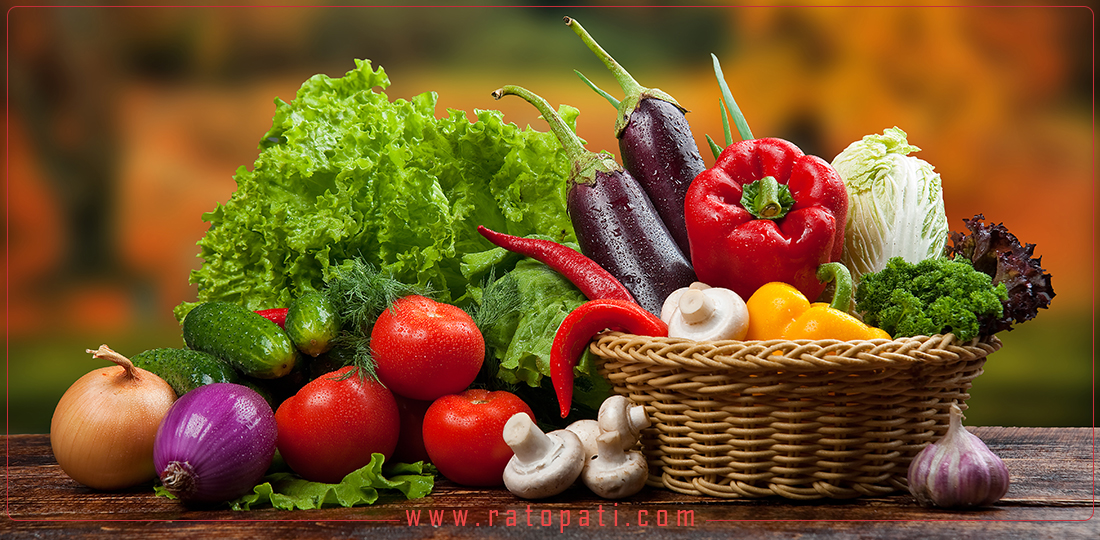
In these regions, vegetables like chayote, radish, cauliflower, broccoli, bitter gourd, sponge gourd, various leafy greens, eggplant, beans, bottle gourd, pumpkin, potato, wax gourd, snake gourd, okra, yam, mushroom, fiddlehead fern, taro, and bell peppers are dried. However, the commercial development of these products remains limited.
Public health expert Dr. Aruna Upreti suggests that while ancestors made dried vegetables to cope with seasonal shortages, it is now time to focus on commercial production. "Since dried vegetables are free from pesticide residues, they are beneficial for health. Therefore, we should move forward with a plan for promotion and export, as there is significant potential for economic gain," she said. "The tradition of drying vegetables has existed for hundreds of years to ensure food availability during winter when fresh produce is scarce in the Himalayan districts and other parts of the country. It must now be promoted."
Dr. Upreti also emphasizes that dried vegetables are nutritionally significant. Experts note that while some vitamins may be lost during the drying process, the removal of pesticide residues and the preservation of other nutrients make them a healthy choice.
This specific news has been automatically translated by AI. As a result, there may be some inaccuracies or language errors.

_jxKX1kXOlf.jpg)

_htFaNqpIDJ.jpg)