
Uncertainty Looms Over Deputy Speaker Election as Parties Stake Claims

Kathmandu. According to the legal provision requiring the election of the Speaker and Deputy Speaker within 15 days of the first meeting of the House of Representatives, Dol Prasad (DP) Aryal was unanimously elected Speaker on Chaitra 22.
However, the process for the Deputy Speaker has not yet begun. The first meeting of the House of Representatives, held on Falgun 21, took place on Chaitra 18. Since the 15-day deadline expires on Baishakh 3, the Deputy Speaker must be selected within this timeframe.
The main opposition party, the Nepali Congress, which did not field a candidate for Speaker to ensure a unanimous election, has signaled its claim for the Deputy Speaker position. However, given the comfortable majority of the Rastriya Swatantra Party (RSP) in the House, it appears unlikely that a Congress candidate will be elected without their support.
The Congress argues that in a parliamentary democracy, it is the responsibility of the ruling party to take the opposition into confidence. They suggest that the RSP should show generosity by offering the Deputy Speaker post to the Congress to keep the parliament functional and move forward through dialogue, consensus, and cooperation.
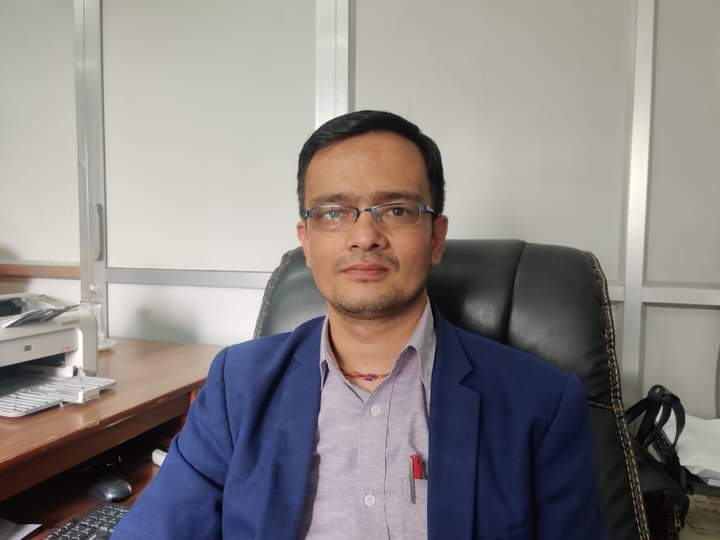
Congress spokesperson Devraj Chalise stated that while their claim to the Deputy Speaker post is natural, no formal dialogue has taken place with the RSP. 'We showed political culture by making the Speaker unanimous despite being the main opposition party,' spokesperson Chalise told Ratopati on Monday. 'In a parliamentary democracy, it is the ruling party's job to take the opposition into confidence. Whether the RSP takes the initiative to keep the House functional and move forward through consensus is up to them. Our claim is natural.'
Spokesperson Chalise argues that just as they demonstrated political culture regarding the Speaker, the RSP should do the same for the Deputy Speaker.
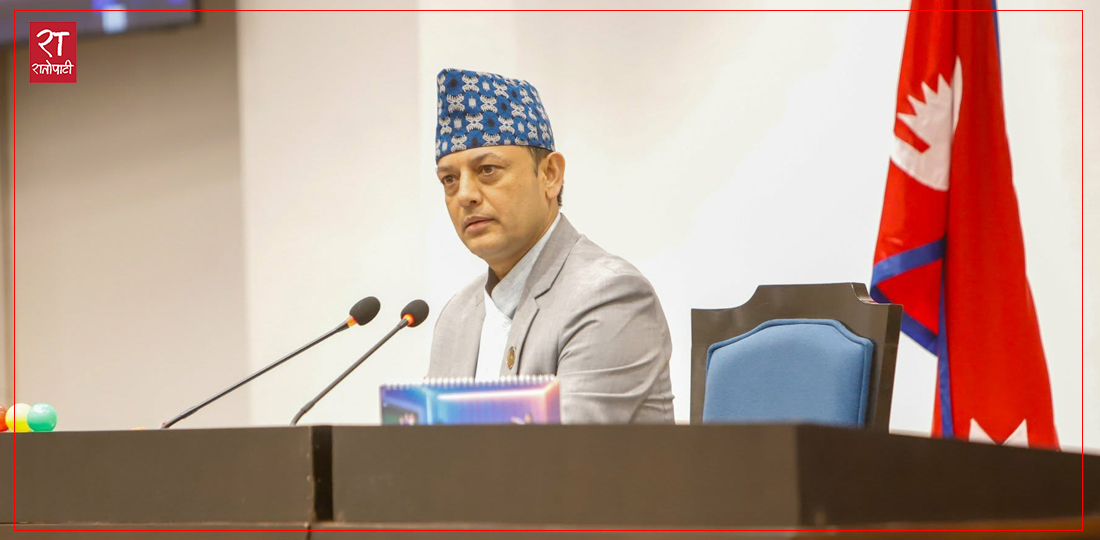
Speaker Aryal mentioned during Monday's House meeting that the parliament needs to draft new laws and amend existing ones in accordance with the Constitution. 'We have yet to draft several laws as per the Constitution. Those laws need to be drafted, and some need to be amended,' Speaker Aryal said. 'For that, consensus and cooperation among political parties in the House are necessary. From the Speaker's chair, I will not discriminate based on party affiliation. I will play an impartial, neutral, and coordinating role.'
To move the House forward as Speaker Aryal envisions, the RSP needs to bring the main opposition and other opposition parties on board. Congress spokesperson Chalise also notes that the kind of culture developed in the House is in the hands of the RSP. 'The House is not just a place to move forward by the strength of a majority alone. If the government moves forward by taking the opposition along in drafting and amending laws, it will be sustainable,' says Chalise. 'However, decisions depend on the numbers. What kind of culture is intended to be developed is a matter for the ruling party.'
The Congress is the largest party in the National Assembly under the Federal Parliament. Laws drafted by the government through the House of Representatives must be passed by the National Assembly. Therefore, Congress leaders argue that if they secure the Deputy Speaker position in the House of Representatives, it would be morally difficult for them to oppose legislation in the National Assembly.
The Congress argues that the position should not be viewed solely from a strategic perspective, such as the Deputy Speaker being a member of the Constitutional Council. Spokesperson Chalise says, 'One should not look at it from the strategic perspective that the Deputy Speaker is a member of the Constitutional Council. Let us not lead the country into constant political conflict.' The Congress argues that as the leading party, the RSP should take the initiative for consensus and cooperation.
What does the RSP say?
The RSP has stated that discussions on which party should be given the Deputy Speaker post have not even begun. General Secretary Bipin Acharya informed that formal party discussions regarding the Deputy Speaker have not started.
'The Speaker has just taken office yesterday and started his work. Discussions regarding the Deputy Speaker have not moved forward yet,' General Secretary Acharya told Ratopati. 'We have given the responsibility of preliminary discussions and deciding how to proceed to the Chairman and other top leaders. They will discuss it gradually. There is still time left.'
He mentioned that the process will begin gradually and that they will naturally discuss the matter with the Congress.
The Constitution stipulates that the Speaker and Deputy Speaker cannot belong to the same party and the same gender; they must be from different parties and genders. Notably, the Labor Culture Party and the Communist Party of Nepal have also formally staked claims for the Deputy Speaker position.
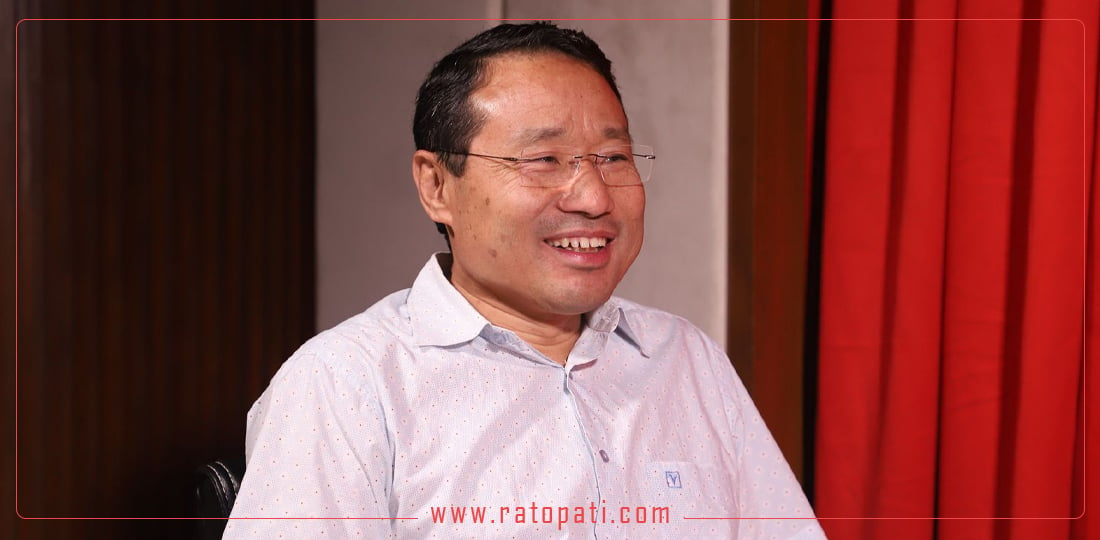

Similarly, it has emerged that there were discussions between RSP Chairman Rabi Lamichhane and Prime Minister Balen Shah regarding the Deputy Speaker. It is reported that although the two leaders discussed whether to give the post to the RPP or the Labor Culture Party, no consensus was reached.

This specific news has been automatically translated by AI. As a result, there may be some inaccuracies or language errors.




_2r7cGHlo8q.jpg)