Nepal Paves Way for Converting Fossil Fuel Vehicles to Electric


Kathmandu. The government has decided to establish a legal framework to convert old fossil fuel-powered vehicles into electric vehicles. This decision, seen as a long-term measure to reduce petroleum consumption, comes amidst rising fuel prices in the international market due to conflicts in West Asia and its subsequent impact on the Nepali market. The move highlights the government's priority in promoting electric vehicles.

With petroleum products accounting for the largest share of Nepal's imports, the country has prioritized the use of electric vehicles (EVs) in recent years to reduce dependency and environmental pollution. Due to relatively lower taxes and incentives for charging stations, Nepal is now among the top countries globally in terms of the share of new vehicle imports being electric.
As the use of EVs grows, electricity consumption for charging has also increased. According to the Nepal Electricity Authority, 60 to 100 megawatts of electricity are currently being consumed for EV charging, a positive development for Nepal's green energy transition.
However, this has not yet freed the economy from the trap of imports. The idea of converting fossil fuel vehicles to EVs has been discussed for some time, and the government's recent decision prioritizes this, likely encouraging the establishment of vehicle conversion companies.
- Converting old vehicles to EVs: What is the cost?
Instead of replacing old fuel-powered vehicles, it is possible to remove their engines and install batteries and motors to make them electric. From a technical perspective, this is fully practical. Under my leadership at Kathmandu University, we have already converted an old vehicle into an EV as a pilot project.
Our study shows that converting a small or light vehicle (car, van, etc.) costs between 600,000 and 800,000 rupees. This cost mainly depends on the capacity of the battery installed. This cost applies to converting a car to provide a range of approximately 100 kilometers.
Similarly, converting large and heavy vehicles (such as buses) running on diesel costs more. Studies show that converting a bus with a battery capacity to travel 100 kilometers costs around 2.5 million rupees. A successful test of this has already been conducted in Nepal.
With the involvement of technicians from Kathmandu University, Sajha Yatayat successfully converted one of its old buses into an electric bus and operated it on the Kathmandu to Budhanilkantha route.
Policy is in place, clear guidelines needed
The Government of Nepal paved the way for a legal framework to convert petrol or diesel vehicles to electric by amending transport management policies about two years ago. However, the process could not move forward due to the lack of necessary clear laws, procedures, or guidelines for implementation.
Even government-owned entities like Sajha Yatayat faced various technical and administrative hurdles while converting vehicles. The lack of clear guidelines has also made commercial companies hesitant to open businesses for converting old vehicles to EVs.
The government's current decision makes it clear that converting old vehicles to electric is a priority. The government must end the situation where businesses face harassment or bureaucratic hurdles in government offices. Doing so will generate great enthusiasm and confidence among investors.
Hydrogen technology essential for heavy vehicles
Although the use of EVs is increasing in Nepal, it is mainly limited to small vehicles for short distances. Looking at Nepal's fuel import data, for every 1 liter of petrol imported, 2 to 3 liters of diesel are imported. This diesel is mainly used in heavy vehicles like long-distance buses, trucks, tippers, and dozers. In terms of environmental pollution and carbon emissions, diesel is many times more harmful than petrol.
Battery Electric Vehicles (BEVs) are not considered effective for long-distance and heavy-load vehicles because they require very large and heavy batteries for long ranges, which increases the vehicle's weight and requires long charging times.
This is where hydrogen technology, which is emerging globally, has come forward as the best option for Nepal.
There are two types of electric vehicles: Battery Electric Vehicles (BEVs) and Fuel Cell Electric Vehicles (FCEVs). The government's decision to transition public transport to 'EVs' is understood to technically open the door for both battery and hydrogen.
Since hydrogen is light, can be refilled quickly, and generates electricity directly to power the motor, it is the only strong alternative to diesel for long-distance heavy vehicles.
- Separate initiative needed for hydrogen vehicles
However, like battery EVs, converting old diesel buses to hydrogen buses is not cost-effective in the current situation. But it could become effective if done on a large scale.
Just as battery-powered vehicles and charging technology were extremely expensive 10 years ago, hydrogen technology is currently in the development stage and is somewhat expensive. Just as the government brought battery EVs to today's accessible state by installing charging stations and providing policy concessions 10 years ago, similar initiatives are needed for hydrogen.
Therefore, instead of retrofitting old vehicles to hydrogen, the country should be able to use its resources by introducing new vehicles as pilot projects.
For example, the government can start by establishing two new hydrogen buses and one refueling station on the Kathmandu-Dhulikhel route. Such pilot testing will increase technical knowledge, develop the skills of mechanics and drivers, and gradually attract transport entrepreneurs.
Recognizing the importance of hydrogen technology, the Government of Nepal has already introduced the 'Hydrogen Policy 2080'. That policy gives hydrogen a major place as an alternative to diesel. Additionally, through the budget for the current fiscal year 2081/82, the government has made a historic provision of 100 percent tax exemption as an incentive for anyone operating commercial projects or programs related to hydrogen.
Therefore, a two-pillar policy is needed to make Nepal's transport sector completely green. With matters already included in policy and budget, the government should now issue clear guidelines and procedures without delay. If this happens, not only will billions of rupees spent on fuel imports be saved within the country, but Nepal will also stand as a model nation with a zero-carbon emission transport system.
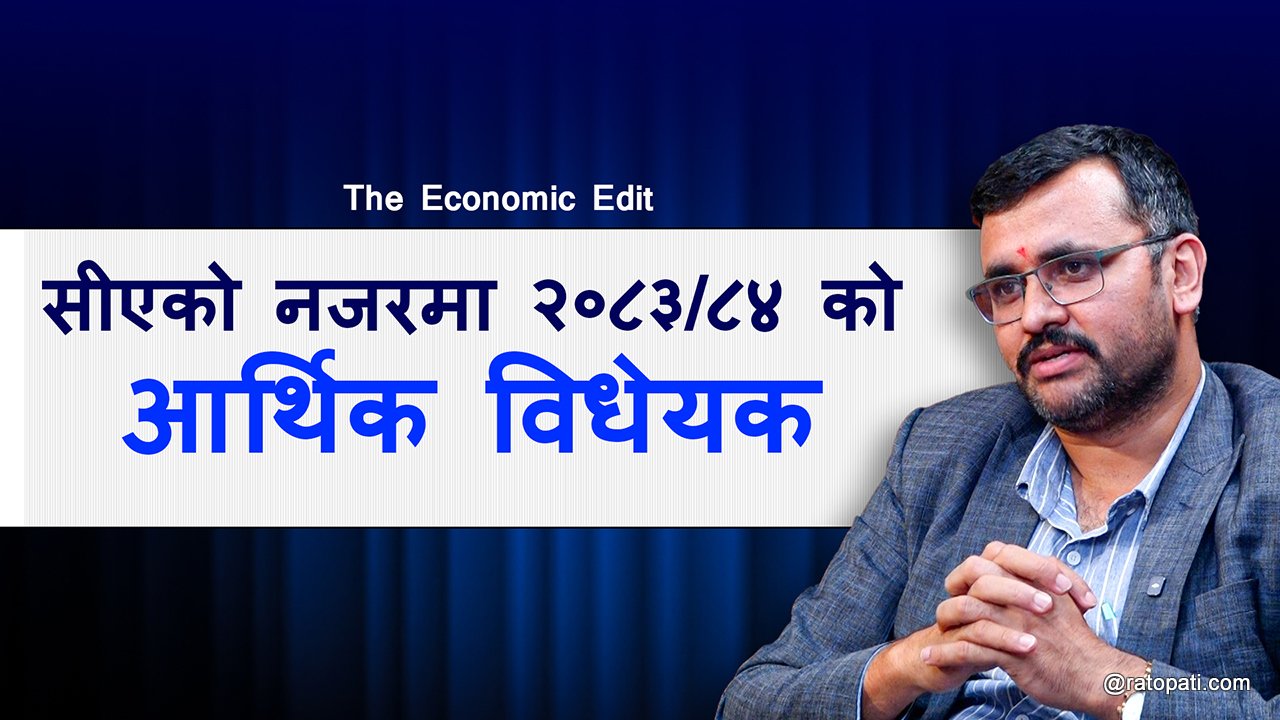
(Based on an interview with Assistant Professor Thapa of Kathmandu University)
This specific news has been automatically translated by AI. As a result, there may be some inaccuracies or language errors.
_jxKX1kXOlf.jpg)

_htFaNqpIDJ.jpg)