Market Correction is Short-Term, Future of Capital Market is Bright: Tulasi Dhakal
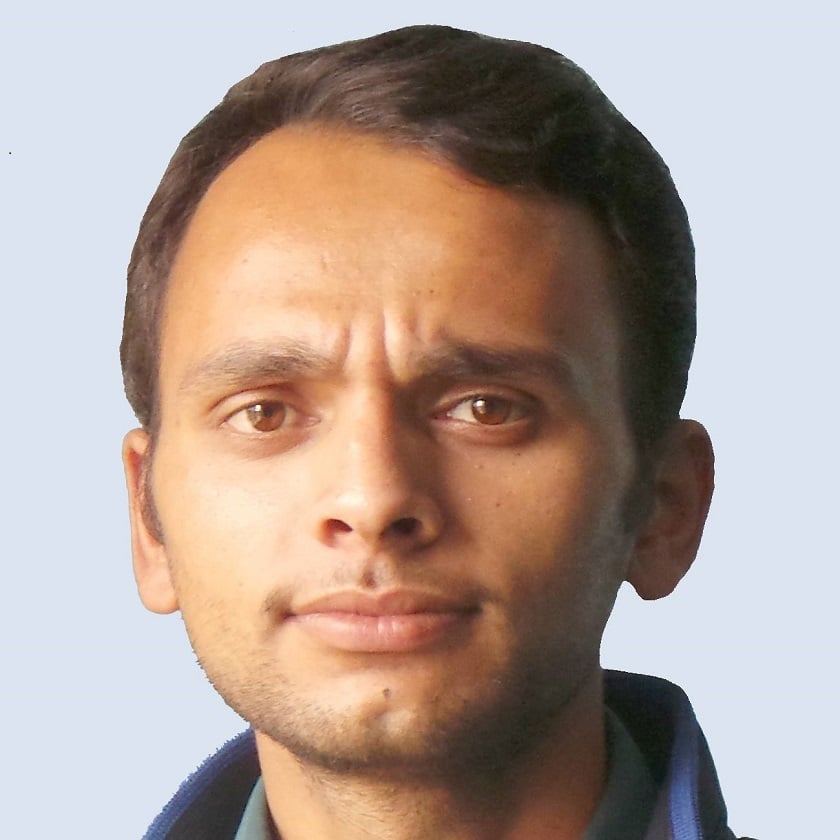

Kathmandu. Recently, Nepal's stock market has seen a sharp decline. Following the formation of the new government, the NEPSE index, which had reached nearly 3,000 points, has fallen by more than 300 points in recent days. Analysts suggest that the government's intensified investigation and actions regarding money laundering have had a psychological impact on the market, causing investor panic.
With the number of Demat account holders now exceeding 7 million, the capital market has become a subject of public interest. In this context, here are the edited excerpts of a conversation with Tulasi Dhakal, President of the Nepal Investors Forum, focusing on contemporary capital market issues, reasons for the market decline, the need for a new stock exchange, expectations from the new Finance Minister, and strategies for investors.
(Details in video)
With the arrival of the new government, the market seems to be in a downtrend. The stock market, which rose while preparing to form, has been falling continuously. How do you view this situation?
One trend in the capital market is that whenever new governments arrive and political changes occur, the capital market has historically set new records. If we analyze our capital market in the current situation, the market was already in a downtrend before the government was formed. Due to the impact of past movements and instability, the market could not progress as it should have. Consequently, investors were terrified and fearful.
As a result, a new interim government was formed and elections were held. Even before the elections, we, the general investors, were not fully confident about whether the elections would take place or not. But the government conducted the elections, and the results brought a clear mandate. The votes received by parties like the Rastriya Swatantra Party and the formation of the new government created enthusiasm among investors and the public.
The capital market seeks a stable government and clear policies. After such a government was formed, the market rose from an index of 2,650 to nearly 3,000. The daily turnover also reached up to 22 billion rupees. However, as the government was being formed and the new Finance Minister was taking charge, issues regarding money laundering emerged. Once money laundering entered a market that had already found its rhythm, it seems investors became fearful or perhaps did not fully understand the issue.
Is money laundering the only reason for the current market decline, or are there other factors?
One main reason for the market decline is profit booking. It is natural for investors to want to secure profits after the market rose from 2,650 to 3,000. Our investors are very smart now. Day-to-day traders are more dominant in the market than long-term investors.
Not all investors have the same nature of investment. Some invest for the long term, while others for the short term. Therefore, profit booking has a big hand in the current decline. Another factor is the actual impact of the money laundering issue. We have not yet been able to fully explain to general investors what money laundering is. With politics stable and plenty of liquidity in the banking system, there cannot be any other reasons for the market decline besides these two.
How do you view the steps the government is taking regarding money laundering, and why are investors afraid of this? How can they be reassured?
First of all, this decision by the government is highly welcome. There is no reason for us to panic, shout, or be terrified about the issue of money laundering. Nepal has already been placed on the international grey list for money laundering. If the government moves forward with the intention of removing the country from the grey list, we should fully welcome it.
But the main thing is that it must be clear what money laundering is, what its effects are, and who the regulatory bodies are. The responsibility to convince investors lies more with the state than with organizations like ours. The state itself should give a clear message to general investors that there is no need to panic. If you look at the capital market, all transactions now enter only through formal channels.
The stock market is completely paperless and works online. We pay for shares through bank checks or online payments, and when we sell, the money comes directly into our bank accounts. Since work is being done through such transparent and formalized channels, money laundering issues do not apply here.
We have already paid taxes in advance to the state on the profits earned from investing in the capital market. There is no other business in Nepal where money is received only after being so transparent and paying taxes. We have either invested our job earnings or taken loans from banks. Therefore, I do not see any place for capital market investors to be afraid or suspicious.
Some businessmen are being arrested on charges of money laundering. How do you view this?
We should support the investigation and legal process conducted by the state. I do not think the state arrests anyone without evidence. It would be hasty to comment too much on matters currently under investigation. We should let the newly formed government work, and as conscious citizens, it is our duty to assist in law enforcement. This matter can be analyzed further once it matures.
The capital market is a business of profit and loss, and it is a game of money. If someone makes a profit, they sell their shares and exit; this is a very natural process. But there should be no discrimination between large and small investors in the market. Whoever invests, everyone has equal rights. For some, one lakh might be a large amount, while for others, even a thousand rupees might be significant.
You say that. But it is heard that due to the government's activities, some large investors are in a mindset to sell shares and exit at any cost. Has panic selling become dominant in the market due to this situation?
The capital market is a business of profit and loss, and it is a game of money. If someone makes a profit, they sell their shares and exit; this is a very natural process. But there should be no discrimination between large and small investors in the market. Whoever invests, everyone has equal rights. For some, one lakh might be a large amount, while for others, even a thousand rupees might be significant. Demand and supply are what make the market fluctuate.
The capital market is now worth 4 to 5 trillion rupees. In such a situation, it is not possible for anyone to say they will manipulate a small company to increase the rate and then exit. As for the price increase of weak companies, its main root lies in the primary issuance.
According to the Securities Board's rules, a minimum of 10 units of shares are distributed in IPOs. When lakhs apply, 10 units are allotted through a lottery. This is how shares come into the market in a scattered manner. When those shares are listed in the secondary market, the buyer wants hundreds of units, but the seller only has 10 units. This leads to excessive demand and very low supply.
_WzcU05mv1P.jpg)
Investors look only at capital gains without looking at the company's condition, profit/loss, or dividend capacity. Where supply is low, investors get a chance to play, and a 100-rupee share reaches 600. To stop this, the Securities Board should change the share allotment policy to increase the supply of shares in the market.
You are the President of the Investors Forum. What initiatives are you taking for market improvement, and what are the immediate tasks the current government should do for the capital market?
The main job of our organization is not to fight with the government but to support and partner with it. We are in constant dialogue about whether the policies brought by the government are capital market-friendly and where they will lead the market's future. We have continuously lobbied from the days of the open cry system to the current online system.
But even now, we do not have technology according to the size of the market. The software brought when the turnover was 2-3 billion is finding it difficult to handle the current volume. Therefore, we are continuously taking initiatives with the government and the Securities Board to make the market technology-friendly and to bring real-sector companies into the market. The government should also take our advice and suggestions positively and move forward with policy reforms.
_EskfVcQ9QJ.jpg)
What is your view on the new stock exchange? Is it still your demand that a new stock exchange is needed?
We were demanding a new stock exchange yesterday, we are today, and we will be tomorrow. Since the current stock exchange cannot provide technology-friendly services, cannot work on time, and cannot include investors from the remote areas of all 77 districts of the country, a new stock exchange is indispensable for us. However, it is our clear belief that before bringing a new stock exchange, the existing NEPSE should be completely restructured.
The suggestion given by the committee led by Rameshwar Khanal regarding the restructuring of NEPSE is excellent, and it must be implemented. Competition will increase when a new stock exchange arrives. In the past, when there was only Nepal Telecom, it was said that Telecom would collapse if Ncell came, but both are doing good business. Similarly, when there were only government banks, the arrival of Nabil Bank brought a revolution in banking services, and competition raised everyone's standards. Therefore, investors will get excellent services and the market's scope will widen when a new stock exchange arrives.
What are your expectations and understanding of the new Finance Minister, Swarnim Wagle?
We wish the new Finance Minister well. His name is enough. He has deep experience working in the country and abroad and understands the global economy. Having worked in the Planning Commission, he is knowledgeable about the dimensions of Nepal's economy.
It is his clear understanding that the overall economy cannot be dynamic without the development of the capital market. Therefore, we have full confidence that he will bring capital market-friendly policies and the market will reach new heights during his tenure. Since the capital market is the mirror of the economy, the Finance Minister's policy will guide the market in the right direction.
With no leadership in the Securities Board for a long time, IPOs and right shares of dozens of companies have been stopped. How do you view this?
We have been continuously pushing the Securities Board on this matter. Many companies have been in the pipeline for a long time for IPOs, right shares, and preference shares. We faced a huge problem when the board did not have a chairman for 11/12 months. Now a new government has been formed, and policy work is underway.
We wish the new Finance Minister well. His name is enough. He has deep experience working in the country and abroad and understands the global economy. Having worked in the Planning Commission, he is knowledgeable about the dimensions of Nepal's economy.
It may have taken some time for the board to understand, but they do not have the luxury of delaying forever. We hope that the stopped issuance processes will move forward soon.
How do you view the stance taken by CDSC regarding the IGN number and the locking period of promoter shares?
We are very clear on the issue of the IGN number. There must be a locking period for the shares of new companies. The provision of three years or six years should be locked for that duration. Since problems were created by shares that were locked in the middle coming into the market, the CDSC's stance that there should be two lockings is correct.
But after the three-year period ends, there should be an arrangement for it to automatically become one and trade easily. This might have caused some difficulty for organizations like IPAN; their investment environment should also be protected, but compliance with rules is mandatory to make the market organized.
There is sufficient liquidity in the market, interest rates are falling, but the capital market has not seen the expected boom. Where will the market go now?
The market will definitely go up. Currently, there is more than 7.8 trillion in deposits in the banking system, and only around 5.8 trillion in loans have been disbursed. More than 1.2 trillion in investable funds are stuck in banks. The fact that demand is not increasing even though interest rates have fallen is a problem of the overall economy.
_u0r9VtMVOK.jpg)
The capital market cannot run alone without the economy being dynamic. Now a new government has been formed. Once the government brings policies to promote agriculture, tourism, hydropower, and industrial sectors, all components of the economy will become active. Then the money in the bank will turn into investment, and the capital market will also set its path. The current situation is only a short-term correction; in the long term, the future of the market is bright.
Finally, what message do you want to give to general investors?
I urge general investors to invest in the capital market only with wisdom. One should not invest based on someone else's influence or rumors. Before buying shares of any company, one should study well what the capital market is, how it works, and what the financial condition of the company is. Plenty of information can be obtained through the Securities Board, NEPSE, CDSC, and various online media.
The stock market is like a vast ocean. Just as one takes safety measures before going swimming, one must acquire knowledge before entering the market. If you invest with understanding, you can pick up diamonds and pearls from here; if you jump in without understanding, there is a risk of getting lost in the ocean. Therefore, I humbly request everyone to invest wisely instead of following rumors.
This specific news has been automatically translated by AI. As a result, there may be some inaccuracies or language errors.