US Attacks Iranian Targets After Strait of Hormuz Incident
New York. The US military has attacked Iranian targets after an attack on a cargo ship in the Strait of Hormuz.
The US took this step immediately after US President Donald Trump accused Iran of a 'foolish violation' of the ceasefire.
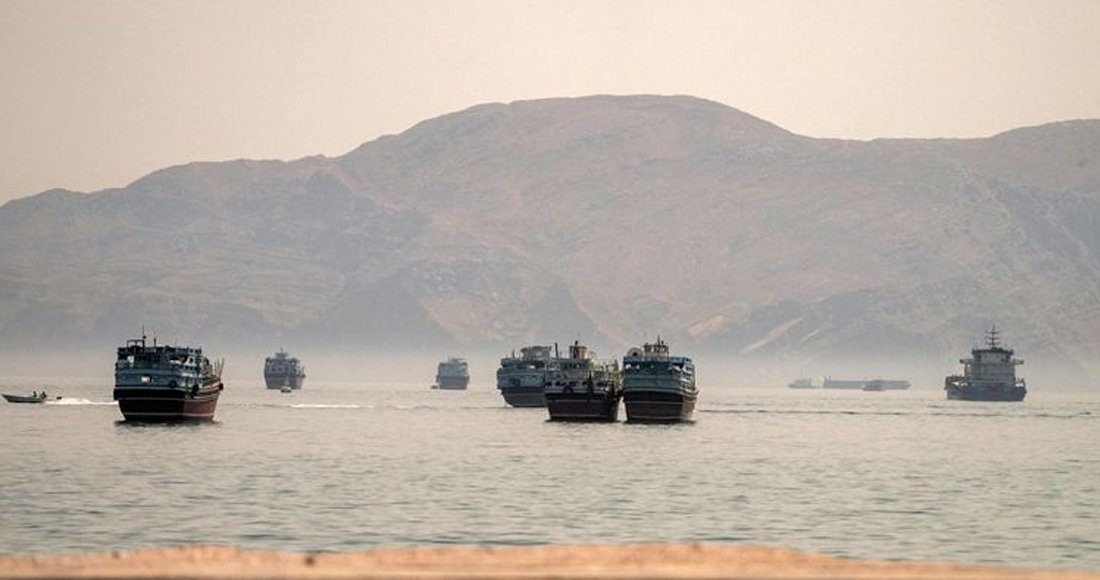
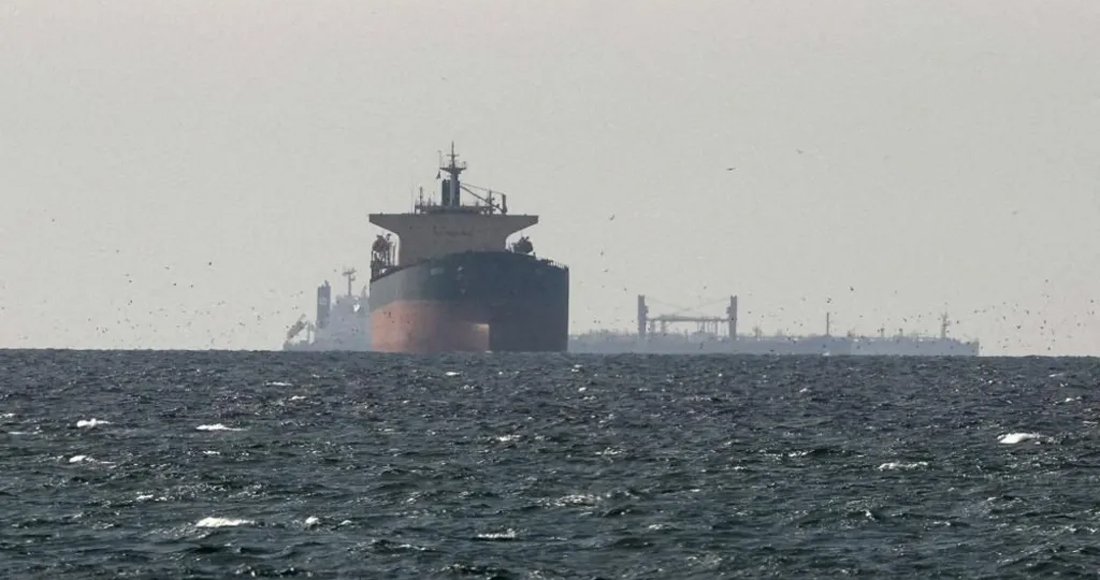
On Thursday, there were no reports of any human casualties when a 'one-way attack drone' hit the ship. However, after this incident, a plan was put in motion to rescue thousands of sailors stranded in the area.
In response, the US Central Command said on Friday that it had attacked Iran's missile and drone storage centers and coastal radar sites. Meanwhile, Iran's Islamic Revolutionary Guard Corps (IRGC) blamed the US and Israel for this.
Shortly before the attack was announced, when asked by a journalist whether Iran would retaliate, Trump said, 'You will see.'
US Central Command (CENTCOM) called this attack a 'strong response' to the drone attack. CENTCOM said in a statement, 'The unjustified attack by the Iranian military on a commercial ship has clearly violated the ceasefire. Furthermore, Iran's dangerous behavior has undermined freedom of navigation at a time when trade is increasing on important international trade routes.'
CENTCOM also stated that the US military will continue to coordinate and assist in providing a safe passage for commercial ships crossing the waterway. However, it is not yet clear whether the US attacks were a one-time action or part of a larger ongoing operation.
The IRGC said in a statement late on Friday, 'The US administration, breaking the treaty, has violated its commitments as always and has carried out airstrikes on Iran's coast under various pretexts, such as a ship using an unauthorized route in the Hormuz waterway. If such an attack is repeated, our response will be much broader than this.'
The IRGC also accused Israel of violating the ceasefire in Lebanon. This incident occurred on Friday, the same day Israel and Lebanon signed a framework agreement for a peace plan in Washington. Despite the existing ceasefire, limited clashes have been ongoing recently between the Israeli army and Iran-backed Hezbollah in southern Lebanon.
In late February, Tehran had closed the waterway after the US and Israel launched attacks against Iran. The closure of this waterway, considered important for oil and gas transportation, caused oil prices to skyrocket globally and also halted the transportation of other essential goods like fertilizers.
A 14-point memorandum of understanding was reached between the US and Iran on June 17 to end hostilities. It also included Iran making 'maximum effort' for the safe passage of commercial ships without any charges for 60 days.
After the US retaliation, Vice President JD Vance posted on social media X, 'If Iran disagrees on how the memorandum is being implemented, they can pick up the phone. But violence will be answered with violence.' Meanwhile, Ebrahim Azizi, head of the Iranian Parliament's National Security Commission, mentioned on social media that the US has 'attacked Iran once again in the middle of talks'.
He further wrote, 'This reckless violation of the ceasefire will, as always, force them to back down and regret it. The game of accusations and counter-accusations will not continue now.'
Speaking to reporters at the White House on Friday afternoon, Trump refused to directly answer questions about how the US would respond to the drone attack or whether he considered the ceasefire still in effect. 'You will find out,' he said, 'I did not like how they attacked yesterday. They should not have done that.'
When asked why he thought Iran conducted such an operation, Trump only said, 'They are a bit different.' In recent days, Trump and other US officials had claimed that talks with Iran were progressing positively and that Iran had abandoned the idea of charging fees to ships crossing the Hormuz waterway.
In a post on Truth Social in late Wednesday, Trump mentioned that Iran had informed the US that 'no toll tax, no insurance fee, and no other type of fee will be charged'. He added, 'If this information is incorrect, the talks will end immediately.' The US has condemned reports that Iran is charging fees to tankers crossing the waterway, and many view any type of fee system as a violation of international maritime law.
On Tuesday, Iranian and Omani officials discussed the future management of navigation in Muscat, the capital of Oman. Omani Foreign Minister Badr Al-Busaidi said that both countries are committed to a 'fee-free safe passage'. However, Iran's chief negotiator Mohammad Bagher Ghalibaf told state-affiliated media, 'Everyone must understand that the administration of the Hormuz waterway will never return to its pre-war state.'
The cargo ship attacked on Thursday was the Singapore-flagged 'Ever Lovely'. According to the UK Maritime Trade Operations (UKMTO), the ship was hit 7.5 nautical miles south-east of the Omani port of Duqm.
Evergreen, the company that owns the ship, stated that the 'Ever Lovely' was following the route recommended by UKMTO when it was attacked. 'All crew members, the ship, and the entire cargo are safe,' the company said. Meanwhile, the UN's International Maritime Organization (IMO) has temporarily suspended its plan to rescue more than 11,000 sailors stranded in the major waterway since the war began.
This specific news has been automatically translated by AI. As a result, there may be some inaccuracies or language errors.
-education-and-sport_c0BHyFjlfq.jpg)


_HuoKF5EAUz.jpg)