Debate Intensifies Over Government Decision to End Health Screening Syndicate for Migrant Workers


Kathmandu. The government has decided to abolish the existing syndicate in health screenings for migrant workers, allowing government hospitals to conduct these examinations as well. This decision has sparked a widespread debate.
While the government's move is expected to reduce the financial burden on workers and improve access to services, industry professionals have labeled it an impractical and shortsighted decision. They argue that the government's move is merely for popularity and that its implementation remains highly challenging.
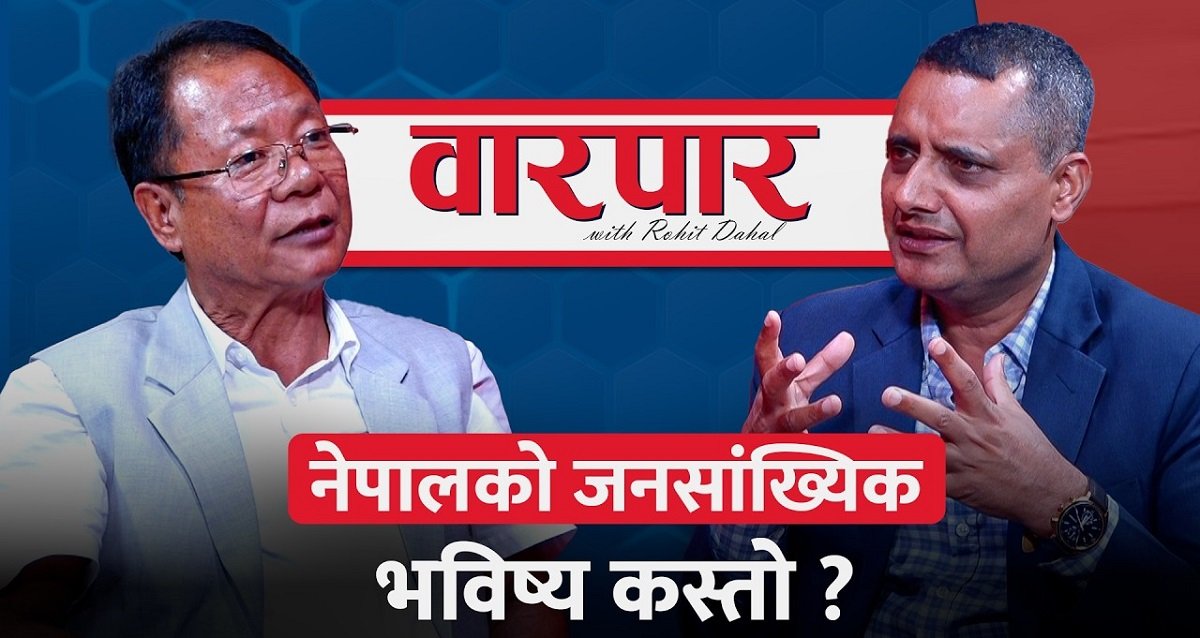
For Ratopati, Anish Mijar spoke with Krishna Prasad Bajgai, General Secretary of the Nepal Medical Entrepreneurs Association, regarding the impact of the Ministry of Labor's decision to end the health screening syndicate on the private sector, existing agreements with destination countries, standards, and stakeholder perspectives.
- The government has decided to end the syndicate in health screenings for migrant workers, allowing both government and private hospitals to conduct them. How do medical entrepreneurs view this?
This government decision appears to have far-reaching impacts. Nepal's foreign employment sector is not related to just one thing. It involves manpower agencies, health screenings, orientation training, skill training, and many other aspects.
With the formation of the new government, Labor Minister Deepak Kumar Sah has made this decision based on popularity without proper study. Past practices and their shortcomings have not been examined. A mentality has developed in the Ministry of Labor that a minister is not successful unless they do something new. That must end.
There are expert committees within the ministry. Decisions should only be made after discussions with stakeholders to reach a conclusion that is long-term and beneficial for the country, the public, and the entrepreneurs. This is how the country moves toward development.
- The government claims there was a health screening syndicate and that it has now been abolished to implement a new system. What is your take on this?
Previously, the Foreign Employment Act 2064, regulations, and procedures already stated that there would be no obstacles for government mechanisms to conduct health screenings for any sector for foreign employment. This was already in place, not just now. The government is spreading confusion by twisting this fact.
- Do destination countries determine the health screening standards for migrant workers, or does our government?
Regarding migrant workers, destination countries have established their own health standards based on their requirements. There is also a scope for health screenings. Some countries keep it open, while others have minimum requirements for health screenings when going abroad for employment.
The government has also established parameters for health screenings based on international guidelines. All of this is coordinated with the respective countries. However, the biggest challenge is maintaining uniformity among the health institutions listed and authorized by the government to conduct screenings for migrant workers in Nepal.
To maintain that uniformity, a committee of 30 doctors, including us and Dr. Dipendra Raman Singh, conducted a study over a year and a half. It is necessary to maintain uniformity as mentioned in that study report.
- Will the government's decision provide convenience to workers or increase their problems? Specifically, how do you view the capacity of government hospitals?
To organize this further, a digital system must be implemented. As soon as that digital platform is used, a biometric system will follow. The biometric system corrects everything.
It should be linked with the government's national identity card, integrated with IRD e-billing systems, and reports should not be generated without being submitted to the government portal. If a standard is set and uniformity is maintained, a unified standard should be created rather than fragmented ones for each country.
First, we must strengthen our internal systems. New technologies have emerged, and there is a need to upgrade accordingly. I believe that if attention is paid to these matters, many current problems will be solved.
- There is a situation where the public has to wait in lines at government hospitals for health screenings. How convenient will it be for migrant workers to get tested there?
The government's decision seems a bit ambitious. Even today, there is no guarantee of receiving timely and easy service in Nepal. The public has not felt that.
People have to wait in lines at government offices from morning until evening. There are situations where one has to wait two to three days just to get a report. Even patients seeking treatment face these complexities.
I hope all this is corrected in two to three years. The government should work systematically. If migrant workers are made to stand in lines at government hospitals where hundreds of people go daily for treatment, their own health risks could increase. They could contract various infections.
They might return as patients after catching diseases from the hospital itself. The disease might not be immediately visible. That could lead to a bigger disaster. The policy the state should have understood is that healthy people should be screened before going abroad. The screening center should be separate, not in the same place.
- Health screenings were being conducted based on fees determined by the government. What does it mean to say this has been abolished immediately?
It has no substantial meaning. The state itself says the health screening fee is too high and workers cannot afford it. But for those going to Korea, Japan, and Israel, the state itself has charged tens of thousands of rupees. It is charging more money for fewer indicators than the medical centers given to the private sector. The government must do its homework properly.
The state itself is an accomplice to the syndicate. That has been happening from the past until now. Money-wise, the medical fee for workers in private health institutions is still 6,500 rupees today. But for those going to Israel or Korea, they have charged up to 10,000 rupees. Where is the government's attention there?
- Policies change every time a new government comes in. How do you take this?
The state should focus on creating an environment for entrepreneurs to do business. It should find ways to end the irregularities within it. It should analyze it at a micro-level. It should evaluate it. It should identify where the problems are.
Policies and rules should be made based on the root causes of those problems. Every time a minister changes, entrepreneurs have to invest, and we have to send money abroad to buy equipment or goods. If money goes abroad to buy things, it puts a financial burden not only on the entrepreneur but also on the state. The government should make business-friendly policies and laws, not for specific individuals. It should be for the benefit of the entire public. Even now, they have decided to give it to government hospitals. What are the implications of giving it to government hospitals? Is it possible? There are 200 institutions in the private sector that have deposited collateral. Each health institution has invested two to three crores as per their requirements. If you look at the workers there, about 2,500 skilled technical personnel are directly employed.
- What is the way to ensure both the welfare of workers and the investment of entrepreneurs?
It is necessary to make policies and laws by keeping all parties involved. Policies and rules should be made by looking at and evaluating everything as recommended by the reports of past studies and research.
The decision to abolish the syndicate for health screenings for foreign employment is welcome, but there are serious questions about its implementation and long-term impact. It is necessary for the government to rise above superficial decisions and formulate a balanced and practical policy that benefits all three parties: the workers, the state, and the entrepreneurs.
This specific news has been automatically translated by AI. As a result, there may be some inaccuracies or language errors.