Monarchist Leader Reflects on Failed Protest, Argues for Continued Relevance of Monarchy Amidst Political Shifts

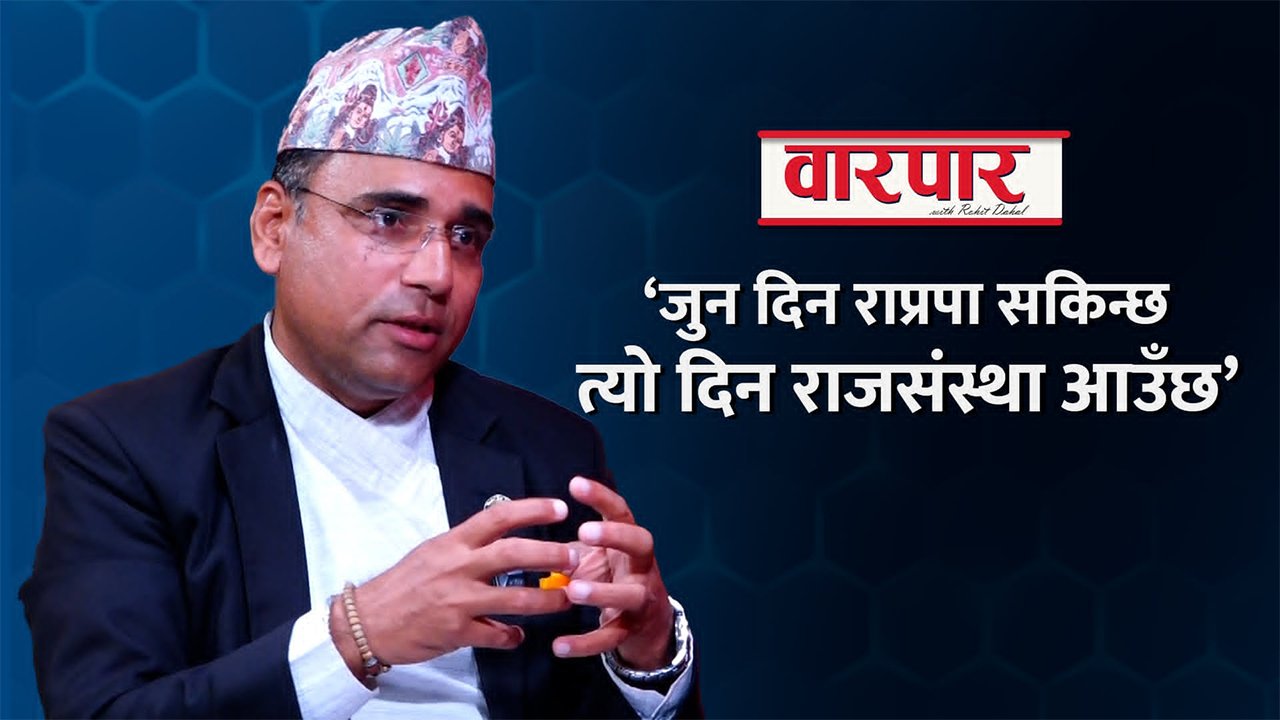
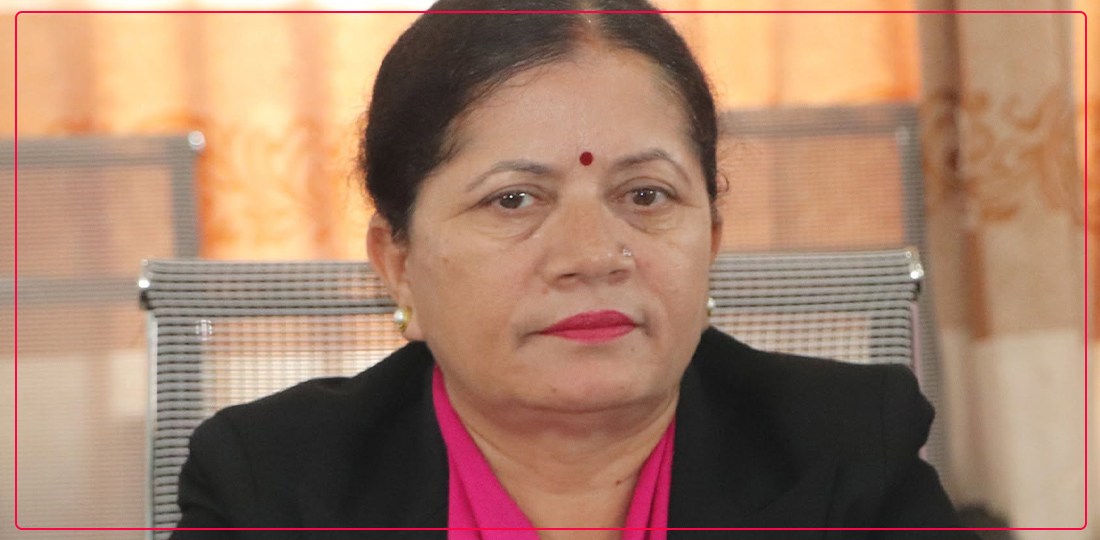
The demonstration organized by monarchists on Chaitra 15 last year, demanding the restoration of the monarchy, ultimately failed after turning violent. However, Bhandari, the President of the World Hindu Federation International and a steering committee member of last year's monarchist movement, asserts that the agenda of a Hindu nation and monarchy must remain as the country's indispensable guardianship. She insists that the monarchy is still needed in some form to provide a way out for the nation. Here is an edited excerpt of an interview Ratopati conducted with Bhandari:
The monarchist demonstration in Tinkune on Chaitra 15 last year became violent, leading to the failure of the movement. How do you remember that Chaitra 15, one year later?
Actually, that movement was planned to be entirely peaceful. But various kinds of infiltrations occurred there. Subsequently, the situation could not proceed as expected, leading to large-scale arrests. Innocent people lost their lives, many were injured, and significant physical damage also occurred during that process.
Looking at the country's situation today, it is saddening to recall that day. It was a campaign to save the nation and uphold nationalism, which did not succeed. It was like trying to plant a good seed and grow a sapling, but the sapling broke before it could sprout. If it had succeeded, it would have united the patriotic forces. But instead of understanding the essence of the movement, the then-government chose the path of repression. The government was scared. Looking at the increasing foreign interference now, I remember that day as a 'black day.' If the events of that day had taken a positive turn, the country would have found the right direction.
You blamed the state for the incident, but don't you think there were some shortcomings on your part as protestors?
Speaking of shortcomings, when you take to the streets, some movement inevitably occurs. But the state must be accountable and responsive to the voice of the streets. The state must listen to the voice of the streets because it is not just the voice of the protestors but the voice of the people. We might have had some shortcomings, but we were not an organized mob directed by anyone, like the major political parties. It was a spontaneous gathering of people showing solidarity for the nation, which could disperse in an instant.
There was a large presence not just of the Rastriya Prajatantra Party but of many other citizens there. Therefore, even if we had some technical flaws, the biggest shortcoming was seen in the state itself. The main flaw was the way the state chose repression instead of listening.
After that movement, many leaders faced charges, and coordinator Navaraj Subedi was placed under house arrest. People say the monarchist movement was crippled beyond recovery after that. Why couldn't you rise again?
I was among those arrested during that movement. What I feel is that there was also some 'competition' among the leadership at that time—a conflict over whether political parties or citizens would claim the credit. On the other hand, the old parties were terrified because they were failing, so they suppressed us selectively. People were sent to arrest me even during a meeting at my office, and I worked to make the program successful by hiding. Various cases were filed to mentally weaken those who spoke of nationalism, monarchy, or religion. Because of this, the issue was sidelined for some time. After that, a 'Gen Z' movement occurred, and the country took another turn. Most importantly, the current geopolitical situation and foreign agendas also played a role, increasing the risk of the country heading towards a confrontation. We must admit that we could not achieve what we intended.
While your movement was subsiding, the 'Gen Z' movement changed the political landscape. How do you evaluate this?
This political change appeared like a 'miracle.' Large structures collapsed at once; our historical heritages were destroyed. But my question is, if the end result was still going to be elections and adhering to this constitution and system, what was the need for such destruction? It will be very difficult for the country to recover from that damage. Children like our sons and daughters were killed; I feel great sorrow for that. There is a big question of whether the current government can address the sentiment that drove them to protest.
Right now, we are all in a preliminary stage, learning the 'A-B-C's.' The new political party faces the challenge of competing with the old ones to move forward. Gaining a majority is one thing, but if they fail to work according to public sentiment in governance and management, the situation will become even more difficult.
There is a two-thirds majority government now; will it address the people's issues?
I don't really want to criticize the government, but looking at the style of the newly formed government over the first couple of days, I must say something. While there are some experienced and learned people in the government, there are also some very inexperienced individuals. How they will proceed on matters of our geopolitical situation, foreign policy, and national sovereignty remains to be seen. Securing a two-thirds majority is good, but it seems they need to learn a lot to mobilize it correctly.
With such a strong government in place, doesn't your agenda for the monarchy become irrelevant now?
The monarchy is the guardianship power of the nation. We are currently feeling the vacuum created by the absence of a guardian. If this two-thirds government also fails tomorrow, who will manage the country? We have seen the state of old parties like the Nepali Congress and UML. The new ones still need to be tested.
Currently, foreign interests and the wave of religious conversion have increased alarmingly in the country. The 'multi-religious' behavior shown by the Prime Minister during the oath-taking ceremony is just a test—will he actually remove secularism? Only if he removes secularism will we believe that they have understood the Eastern philosophy and the essence of the country. Therefore, the agenda of the monarchy is not over; it is the guardianship that will always be necessary. Election mathematics does not decide everything. The proposal for 'national consensus' coming from the King would have served Nepali interests. When there was a King, foreigners could not play games so easily here. Therefore, the two-thirds majority may be momentary, but the relevance of the monarchy is long-term.
What will be your strategy in the coming days for the restoration of the monarchy?
We also need to change our thinking and strategies according to the changed circumstances. The older generation could not achieve anything; now we must move forward by taking the youth generation along. The youth have understood the justification for the monarchy; only the transfer of leadership to the next generation is needed. We must move forward with new coordination, making people understand that bringing back the monarchy is the need of the entire nation, not just one party or organization.
What kind of dialogue or guidance do you have with the former King on this matter?
It goes without saying that there is dialogue. He is extremely concerned about the country. I felt the same during my meeting with him before the election. There is a big difference between a King and political party leaders. A King cannot go around giving arbitrary speeches or statements like party leaders; he has a certain decorum. His statement, 'Let's reach a national consensus,' is a major guideline in itself. He doesn't necessarily need the crown or the scepter; his main concern is that 'the country must survive.' If the country exists, then the King or the subjects will exist.
What was his role in the past movements?
Those programs were organized at the citizen level. He was certainly informed about the activities carried out by the Monarchy Restoration Struggle Committee.
This specific news has been automatically translated by AI. As a result, there may be some inaccuracies or language errors.