Critique Issued on Incomplete 100-Point Agenda of Balen Shah-Led Administration

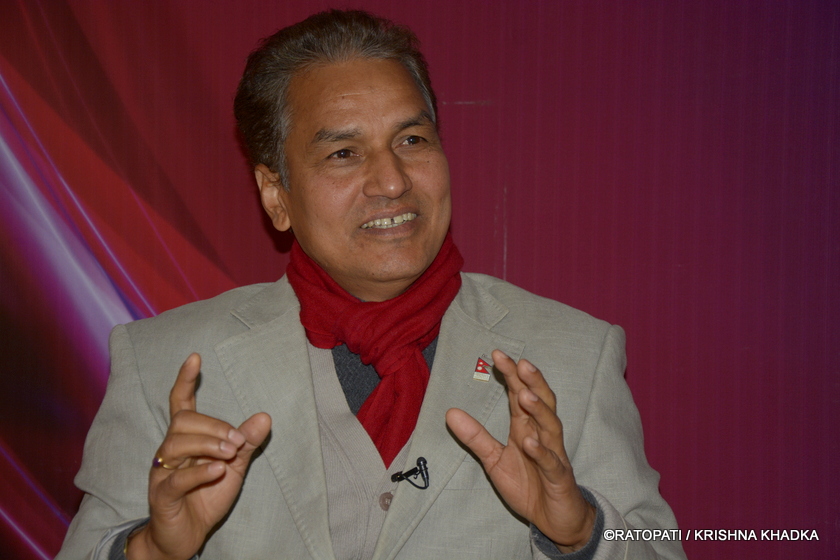
The 100-point agenda of the administration led by Balen Shah seemed somewhat incomplete. When preparing such documents, the use of 'human brain' should be prioritized over AI. It would be beneficial to publicly disclose the advisory team transparently and accountably so that we too can take the liberty of offering suggestions! Nevertheless, I present unsolicited advice –
1. Implementation of Government Austerity Program
To announce and implement a government austerity program from the first meeting of the Council of Ministers.
2. Publication of Reality Paper
To issue a 'Reality Paper' to the public within one month, containing details about the overall economic and good governance situation in Nepal.
3. Prosperous Nepal Construction Work Plan
A work plan for building a Prosperous Nepal, incorporating the commitments made in this commitment letter, will be brought before the public within one month.
4. Completion of Peace Process, Implementation of Agreements with Agitating Parties
- To take ownership of the agreement reached between the government and the agitating Gen-Z side following the Gen-Z movement and implement it with promptness.
- To expedite the completion of the remaining tasks of the peace process by implementing the Comprehensive Peace Accord between the government and CPN (Maoist) and agreements reached with various agitating parties, and by making the work of the Truth and Reconciliation Commission and the Commission of Investigation on Enforced Disappeared Persons more effective.
- To publish the report of the Lal Commission. To review cases filed during various movements in the Terai-Madhes, release those unjustly imprisoned, and promptly implement the agreements made by the government with groups that struggled in the Terai-Madhes and other regions.
- To make necessary arrangements for relief, rehabilitation, and assistance for the families of martyrs and disappeared persons from various movements, conflict victims, and displaced persons, and to arrange appropriate treatment for those injured in various movements who have not received treatment, provide compensation to the disabled, and arrange employment for at least one member of their families.
5. Implementation of Federalism, Strengthening of Federal Democratic Republic
- To implement the jurisdiction and interrelationship of the three tiers of government as per the constitution for the implementation of federalism. To prioritize the enactment of laws related to the concurrent list mentioned in the constitution and other necessary acts to institutionalize the federal democratic republic, and to form an expert working group to amend laws that conflict with provincial jurisdictions.
- To increase the funds transferred from the federal government to provincial and local levels and ensure their equitable distribution, as well as manage necessary resources, means, and manpower.
- To gradually increase the share of national revenue allocated to infrastructure development in provinces and local levels based on the basis of prudent utilization. To provide additional special grants for physical infrastructure development in Madhes Province, Karnali Province, and Sudur Paschim Province, which are comparatively lagging based on various indicators. To operate special income-generating programs for Dalit, backward classes, and poor families in these provinces – ensuring at least one woman employment per family.
- To implement an effective monitoring system in coordination with provincial and local levels to stop irregularities and delays in government project expenditures and public service delivery, reduce unnecessary administrative expenses, and maintain fiscal discipline.
- To operate capacity-building programs in cooperation and collaboration among the three tiers of government regarding the governance of provincial and local municipalities.
- To expedite the process of provincial police adjustment in coordination with the provinces.
6. Making the Supply Chain of Basic Goods Effective
- To control rising inflation, black marketing, adulteration, and artificial shortages, and ensure the easy and affordable supply of essential daily consumer goods and services such as food grains and petroleum products. To prevent shortages of essential items like salt, sugar, rice, medicine, seeds, and fertilizer in remote areas. To announce and gradually implement good governance-related and targeted relief programs that provide immediate relief.
- To integrate organizations such as the Food Corporation, Salt Trading, Agricultural Material Company, and Timber Corporation to effectively supply basic necessities to the general public, establishing them as the "National Supply Corporation."
- To have the Supply Corporation purchase agricultural produce from farmers at a support price set for major agricultural products and manage storage.
- To operate cheap stores in every service center in collaboration with local municipalities by formulating a specific method.
- To create a value chain through cooperatives to ensure agricultural and livestock products reach consumers directly from producers.
- To provide public land on lease for operating cooperative collection centers and wholesale agricultural markets, provide grants for constructing basic infrastructure, and provide subsidies for purchasing vehicles to transport produce from collection centers to agricultural markets. To make necessary fertilizers, seeds, technical services, and financial services available to farmers at wholesale agricultural markets. To establish centers for collecting inedible organic matter and waste in all locations where wholesale agricultural markets are situated and arrange for sending such materials to organic production centers.
- To introduce minimum nutrition programs for pregnant and lactating women and malnourished children in Karnali Province and other areas with low Human Development Index.
7. Effective Public Transportation for Public Convenience
- To effectively improve transportation management in major cities including Kathmandu Valley. To operate safe and comfortable large electric vehicles at the government level within the Ring Road and the area inside it in Kathmandu Valley.
- To ban the import of small public transport vehicles and provide incentives for taking existing vehicles outside the valley.
- To provide incentives for current transport entrepreneurs to jointly invest shares in cooperative societies or companies and operate large electric-equipped public vehicles as specified.
- To completely abolish the private sector syndicate and the practice of collecting route fees by the syndicate.
- To discourage the import and use of motorbikes and address the promotion of electric vehicles through the tax system.
- To arrange for an air ambulance service to provide services during emergencies such as accidents, floods, landslides, and natural disasters in rural areas.
8. Pollution Control, Environmental Protection, Ecological Balance
- To strictly enforce pollution measurement for vehicles. To allow cargo vehicles to enter urban areas only from evening till morning. To mandate that vehicles transporting construction materials cover them completely during transport. To confiscate vehicles modified to cause noise pollution. To limit speed in residential areas and prohibit honking.
- To operate organized waste collection centers in every settlement that generates waste. To manage waste effectively and utilize it in a way that yields economic benefits.
- To relocate kilns, factories, and industries that adversely affect the environment away from densely populated areas.
- Exploitation of natural resources for profit that causes environmental problems will not be allowed. To stop the excavation of the Chure region for exporting stone chips and gravel to prevent the desertification of the Terai-Madhes.
- To provide rescue, relief, and rehabilitation to families affected by floods, landslides, inundation, and other disasters.
9. Financial Resource Management
Internal Resources
- Since a huge amount of resources will be required for physical infrastructure construction, job creation, controlling the foreign trade deficit, and the development and expansion of the social sector to lead the country towards prosperity, an immediate special action plan to increase internal resources will be implemented first.
- To issue project bonds for special types of infrastructure projects.
- To invite Nepali citizens residing at home and abroad to invest in the country's development and construction projects.
- To arrange for payment from the basket based only on actual work progress for capital expenditure projects, initially ensuring only source certainty.
External Resources
- To amend and implement the existing foreign aid policy to increase foreign grants, loans, and direct foreign investment. Foreign loans will primarily be used in the infrastructure sector, and the repayment of foreign loans will be made transparent, informing stakeholders.
- To manage resources with the goal of gradually reducing dependence on foreign loans to zero within 10 years when formulating the annual budget and periodic plans.
- To identify commercially viable projects in various sectors based on the country's needs, prepare a project bank, and invite investment.
- To determine the specific role of Nepali missions abroad in economic diplomacy to expedite bringing in investment by informing potential foreign investors about investment opportunities in Nepal and to attract investment on a non-reciprocal basis in large projects.
- To appeal to development partner institutions and countries to provide large amounts of grants and soft loans to support Nepal's rapid socio-economic development.
- To ensure that foreign aid received is primarily invested in economic and social infrastructure, discourage aid received outside the budget, and ensure that a large portion of the received assistance is spent on targeted work, keeping activities like capacity building, studies, consultations, workshops, and seminars to a minimum.
- To mobilize foreign aid through the budgetary system under the ownership and leadership of the government in areas of national priority, including physical infrastructure construction.
10. Making the Implementation Mechanism for Capital Expenditure Effective
- To make the National Development Problem Resolution Committee meeting effective by convening it regularly to increase capital expenditure, make the implementation of high-priority large projects effective, and coordinate with various agencies and sectors.
- To hold departmental ministers accountable. To change the responsibility of ministers who fail to achieve results. To appoint project chiefs for a specified period and effectively manage the system of rewards and punishments. To ensure that the project chief remains in charge of the physical infrastructure project for its entire duration. To end the practice of changing project chiefs unless it is proven that the work progress is unsatisfactory.
- To arrange for hiring experts and technical staff on contract.
- To invite/call upon experts and experienced individuals residing in Nepal and abroad to participate in nation-building by working in government infrastructure projects for a specified duration.
11. Guarantee of Peace and Security, Good Governance, and Integrity
- To take strict measures to end impunity by controlling crime and anarchy to maintain peace and order in society.
- To take necessary steps to ensure good governance in accordance with the recognition of the rule of law, and to make the public administration, service delivery, security agencies, and all state mechanisms impartial, transparent, publicly accountable, and effective.
- The government will adopt a transparent system based on capacity, qualification, seniority, and performance evaluation for appointments and promotions made by the state. Only experts will be appointed to political positions. Individuals retired from the civil service, army, and police service will not be given political appointments.
- To reform administration to eliminate delays in public service delivery and make it hassle-free, and to make public service delivery effective through e-governance by making it faceless. To arrange for government services to be delivered through a one-stop system.
- To take strict action against corruption and irregular activities. To develop a practice of not protecting such acts from any quarter.
- To make anti-corruption bodies such as the Commission for the Investigation of Abuse of Authority and the National Vigilance Center effective.
- To monitor the financial good governance of local municipalities from the center and provincial levels.
- To arrange for the provision of driving licenses and passports from all provinces.
- To implement the National Identity Card system nationwide with easy distribution.
- To establish integrated service centers at the municipal level as needed based on population and geography.
- To review public holidays. To completely remove public holidays declared during official visits of heads of state and on the death of individuals holding various positions.
12. Promotion of National Interest
- To amend and implement the National Security Policy as necessary to fully guarantee the protection of the country's sovereignty, territorial integrity, and the life and property of the people, and to protect the nation's dignity.
- To resolve outstanding border issues with neighboring countries, including Limpiyadhura, Kalapani, and Lipulekh, through diplomatic means. To increase the number of Border Outposts (BOPs) to secure the border and control smuggling.
- To form a high-level study task force to review treaties and agreements contrary to national interest and to cancel, change, amend, or modify them as necessary.
- To emphasize the professionalism of security agencies and provide necessary resources to boost morale.
- To stop the practice of Nepali citizens being recruited into foreign armies. To diplomatically abrogate previous treaties and agreements allowing Nepali citizens to join foreign armies.
- To manage the movement of citizens of both countries along the Nepal-India border. To secure Nepali territory by paying high-level attention to the mapping or surveying being conducted on the border with India to fully protect Nepal's international border.
- To resolve the problem of annual inundation in Nepali territory caused by roads and dams built by India along the border through diplomatic initiatives.
This specific news has been automatically translated by AI. As a result, there may be some inaccuracies or language errors.
_drOmyPMDMX.jpg)