Nepal's Economy at a Standstill Amid Global Tensions; Expert Outlines Path for New Government

With elections concluded, the nation awaits a new government. As preparations are underway to form a government with a near two-thirds majority, Nepal's economic sector, which was quite optimistic, is now facing further crisis due to long-standing stagnation and recent international developments.
Tensions in West Asia, in particular, are showing multifaceted effects on oil prices and within Nepal.
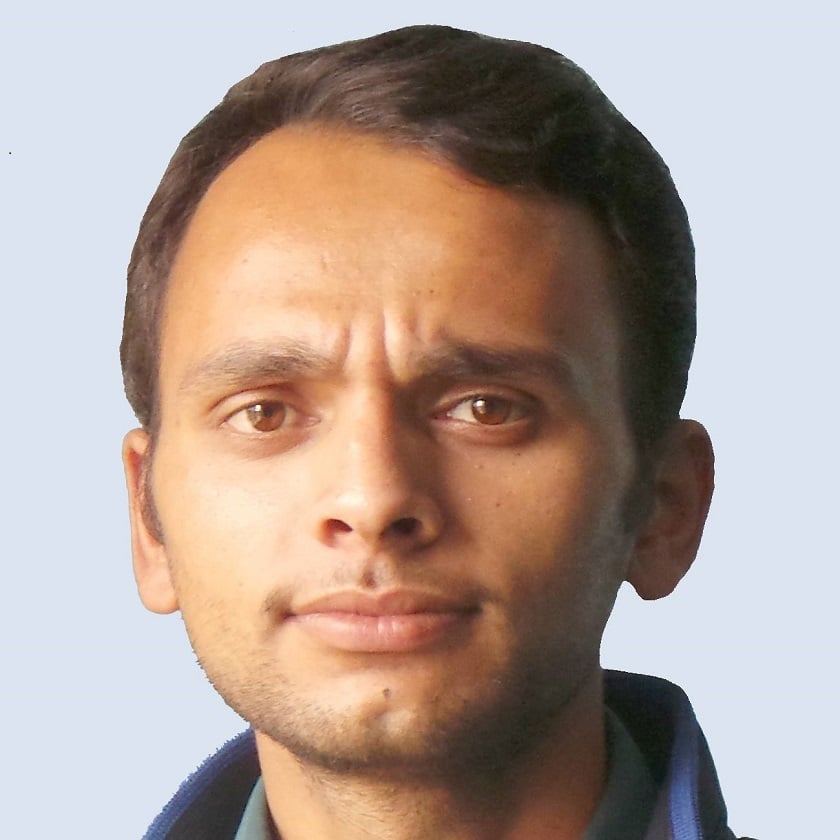
In this situation, we present an edited excerpt of an interview with economist Nar Bahadur Thapa, focusing on the state of the economy and the priorities the incoming government should adopt. (Full interview in video)
- How do you view the overall economic condition of Nepal amidst the past economic slowdown and the current international situation?
If the current state of the Nepali economy were to be described in one word, it is in a state of 'stagnation,' or severe deadlock. This is a situation where the pace of the economy is almost zero, with no signs of movement.
The main question now is how to break this deadlock and make the economy dynamic. The public has given a political party an opportunity to form a powerful government with nearly a two-thirds majority; therefore, the incoming government must work very seriously to break this economic inertia.
We already had the economic problems inherited from the past, and on top of that, two major new international challenges have made our path even more difficult.
The first challenge is the ongoing war in West Asia and its multifaceted impact. The effect of this war appears to be more detrimental to Nepal than the previous Russia-Ukraine war. Many countries around the world have started adopting emergency measures, such as controlling petroleum prices and declaring work holidays, as soon as oil supply issues arise.
For an import-dependent country like Nepal, this has the potential to adversely affect every component of the economy.
The second challenge is Nepal's graduation process from the list of Least Developed Countries, or 'LDC Graduation.' Although it sounds like a matter of pride, its economic cost could be very high. Facilities we currently receive in international trade will be curtailed, posing a risk of further shrinking our export trade.
According to the International Labour Organization, this process is estimated to reduce Nepal's exports by nearly one billion and cause the loss of about 150,000 jobs. The irony is that despite such a serious impact being certain, the government does not seem to have prepared any concrete strategy for compensation or alternatives. The incoming government must immediately address these seemingly small but serious issues. Otherwise, the economy appears set to fall into a deeper crisis.
- Specifically, the conflict in West Asia seems to have affected areas like oil, the dollar, gold, and remittances. What is the reason for this, and how will it affect the common people and the state?
Any upheaval in the international market has a direct and quick impact on a small and import-oriented economy like Nepal's.
Regarding oil, Nepal is 100% dependent on imports for petroleum products. We do not produce a single drop of fuel ourselves. When international oil prices rise, it has a contractionary effect on our economy. Production costs increase, transportation becomes expensive, and this creates inflationary pressure in the overall market.
This makes our products even less competitive, leading to declining exports and widening the import gap. The brunt of this falls most heavily on laborers and low-income Nepalis, as their 'cost of living' is significantly higher compared to the past. Thus, inflation starts a cycle that makes the poor poorer.
Regarding the dollar and exchange rate, the dollar is strengthening globally, and since our currency is pegged to the Indian Rupee (INR), the Nepali Rupee is weakening further. The impact of this is deep and fatal. Firstly, a weaker exchange rate makes imports expensive, which in turn increases inflation. Secondly, the construction sector is severely hit.
Since materials like rebar, cement raw materials, machinery, and fuel used in Nepal's infrastructure development must all be imported and paid for in dollars, construction costs skyrocket. This is the main reason construction entrepreneurs are currently demanding a 'construction holiday,' citing their inability to work.
The third impact is on foreign debt. As soon as the dollar price rises, the burden of foreign debt Nepal has to repay automatically increases in Nepali Rupees. This forces the government to cut the budget allocated for basic public needs like education, health, and drinking water to spend on repaying foreign debt and its interest. This means a reduction in services and facilities available to the general public.
The agricultural sector is not immune to this. The chemical fertilizers we use are entirely imported, and the government provides a large subsidy for them. When the dollar becomes expensive, the procurement cost of fertilizer increases, meaning the government must either increase the subsidy burden or raise fertilizer prices. Furthermore, disruptions in the global supply chain also create problems in receiving timely fertilizer supplies.
Similarly, a crisis may emerge in the remittance sector. Since the main destinations for our workers are caught in the grip of war, there is a risk that the number of Nepalis going there will decrease, and the employment of those already there will become insecure. This could strike a blow to our main source of foreign currency earnings. Viewed this way, the impact on oil, the dollar, and remittances severely affects not only Nepal's external sector but also domestic production and social justice sectors.
- Generally, during times of war or international crisis, gold is considered a safe investment and its price is said to rise. Initially, gold prices rose on the fear of the US-Iran war, but now, despite rising tensions in West Asia, gold prices have paradoxically fallen. What is the reason behind this?
The price of gold is not determined solely by the fear of war; it is also linked to international interest rates and other investment portfolios. Gold itself is not an asset that yields interest; investors only profit if its price increases.
The US central bank, the 'Fed,' had previously signaled it would move towards an interest rate reduction phase. However, due to fears that inflation might rise because of the war and other factors, it kept interest rates on hold or chose not to reduce them.
When investors can secure good interest rates by investing in bank deposits or government bonds, large investors are attracted away from gold towards bank deposits or bonds. Thus, the flow of investment flew from gold to bank deposits, causing a decrease in the demand for gold and a drop in its price.
In addition to this, a market correction in gold prices was also necessary. Sometime ago, the price of gold had risen abnormally, which market forces have now brought into balance.
Another important factor is the influence of large economies like India. The outflow of portfolio investment from India and the situation where its central bank has to spend dollars to manage its foreign exchange reserves have also led to a decrease in gold purchases.
When central banks of major gold-consuming countries like China and India suspend gold purchases, a decline in international gold prices is natural. Thus, interest rate politics, the policies of large banks, and the market's tendency to self-balance led to a fall in gold prices even during wartime.
- Let's talk about Nepal's financial sector now. Currently, there is excessive liquidity in banks, but there is no demand for loans. Despite interest rates falling to historic lows, investment is not happening. On the other hand, inflation is troubling the public. How do you view this situation?
The piling up of money in banks without investment is proof that there is a major deadlock in the economy. We are certainly not a country overflowing with resources, but the current situation is one where money is accumulating due to a lack of work or a lack of confidence. The Nepali economy has been going through this situation for almost two years.
The main reason for this is the lack of investment by both the private sector and the government. The government has failed to meet its capital expenditure targets, and state-owned enterprises are virtually defunct. As long as the government does not spend and bring policy clarity, the private sector will not dare to invest.
Especially, contradictory government policies in the energy sector have discouraged investors. On one hand, there is a target to produce nearly 28,500 megawatts of electricity by 2035, but on the other hand, market assurance for produced electricity is not guaranteed through provisions like 'Take and Pay.'
The halting of PPAs, obstacles in the IPO process, and indecision in energy sector policies have caused private sector investment to drop from 23-24 percent of GDP to the current 15 percent. This represents a frightening decline in capital formation.
To solve this problem, the new powerful government must take immediate bold steps. For this, the 'Second Generation Economic Reforms' must be advanced. If the government accelerates the construction sector, increases capital expenditure, and resolves policy bottlenecks, this accumulated money can be utilized within one or two months, and the economy can become dynamic again. The situation where credit is not flowing despite low interest rates is due to policy ambiguity and investor distrust in the future, which the government must rectify.
- You mentioned that the new government should undertake 'Second Generation Economic Reforms'; what kind of reforms are those?
Second Generation Economic Reforms focus on governance, institutional reform, and effectiveness. It involves improving and making effective the economic activities that were initiated in the first generation of reforms.
This means the government must bring about economic reforms in a new manner. First and foremost, the government's own administration must be streamlined and efficient, with zero tolerance for corruption. Government projects must be accelerated, and state-owned enterprises must be operated with the professionalism of the private sector. The government must reform itself first, and only then will the private sector follow.
Speaking of second-generation reforms, emphasis should be placed on opening up to foreign investment, or FDI, especially in the agriculture and service sectors. Currently, our educated youth are migrating abroad due to a lack of employment; to retain them domestically, the commercial service sector must be invigorated.
We must strive to bring world-renowned large companies like Deloitte, PwC, KPMG, and Ernst & Young into Nepal in sectors like auditing, consulting, legal services, and IT. If these companies come to Nepal, Nepal can secure billions of dollars worth of work for back-office and business process outsourcing for large banks and companies in America and Europe. This will allow youth educated in IT, management, and law to receive international-level employment and salaries while staying in their home country.
Small-scale IT work done at the individual level cannot make a major leap for the national economy; institutional and large-scale investment is necessary for that. Therefore, the government must remove the restrictions in the Foreign Investment and Technology Transfer Act and fully open up the service sector.
Furthermore, major surgery is required in the banking and financial sector as well. The Nepal Rastra Bank Act, currently under consideration in Parliament, must be passed immediately to separate those who run banks from those who conduct business. When the same person is both a banker and a businessman, there is a conflict of interest that puts the entire financial system at risk. This dual character must end.
The Nepal Rastra Bank Act must be reformed to make the central bank more autonomous and effective. Obstacles related to PPA and IPOs seen in the energy sector must be removed immediately. Distortions seen in the securities market must be corrected to make the capital market transparent. If the government courageously implements these reforms, private sector investment will automatically increase, and the current economic sluggishness will end.
- In the past, a two-thirds majority government was formed, but the results were not as expected. How confident are you about the current new political equation and leadership?
As an economist, I am always an optimist. Just because someone made a mistake in the past does not mean the next person will also make the same mistake. We have learned lessons from many past failures; we have endured many hardships and pains. I believe the country will move forward based on this new learning.
The current leadership must understand the aspirations of the people and the needs of the country. History does not always repeat itself; it can be steered in a positive direction. The mandate the people have given to the leadership provides an opportunity to correct past shortcomings and move forward.
The country can never advance by only talking about negative things. We must look at future possibilities. Nepal's economic future is very bright; it just needs a visionary leadership to give it the right direction. The incoming government has no excuse to repeat past mistakes, nor can it risk making them, because the public's patience has run out.
Therefore, I believe the next government will make economic reform its first priority. The media and civil society should not stop showing the government the right path and applying pressure.
Nepal's prosperity is not possible with national capital alone. We need foreign capital, modern technology, and access to international markets. For this, our discourse should focus on how to turn future possibilities into reality, rather than dwelling only on past mistakes. I expect the new government to work in this direction.
This specific news has been automatically translated by AI. As a result, there may be some inaccuracies or language errors.