Trade Union Leader Warns Against Abolishing Sectoral Unions Amid Political Shifts

Kathmandu. Following the recent political changes in Nepal, a debate has begun regarding the future of trade unions operating within government bodies. Notably, the new coalition, including the Rastriya Swatantra Party (RSP), has announced in its manifesto the abolition of partisan trade unions in government agencies.
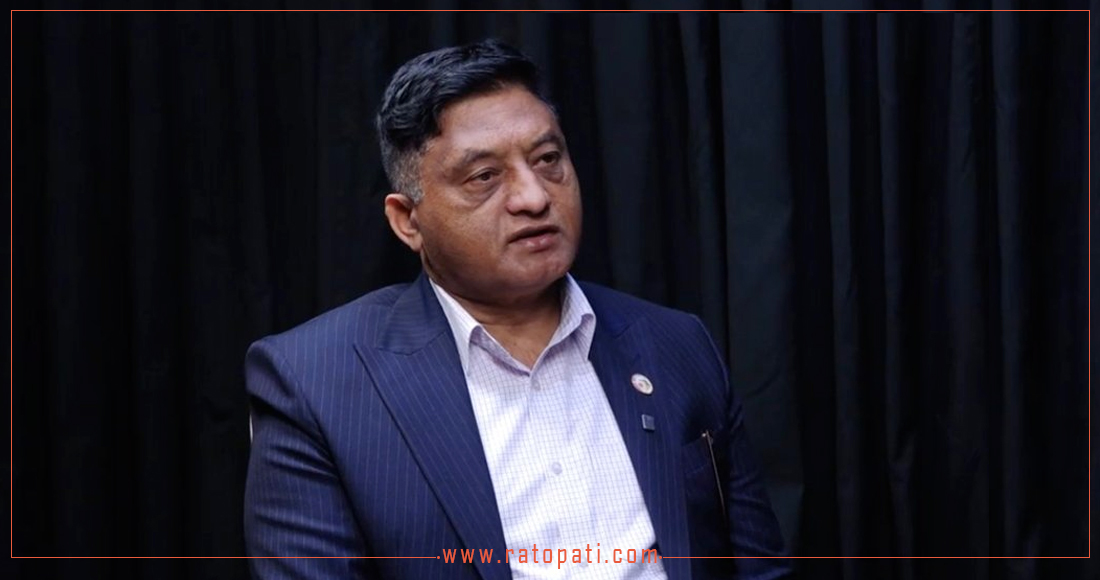
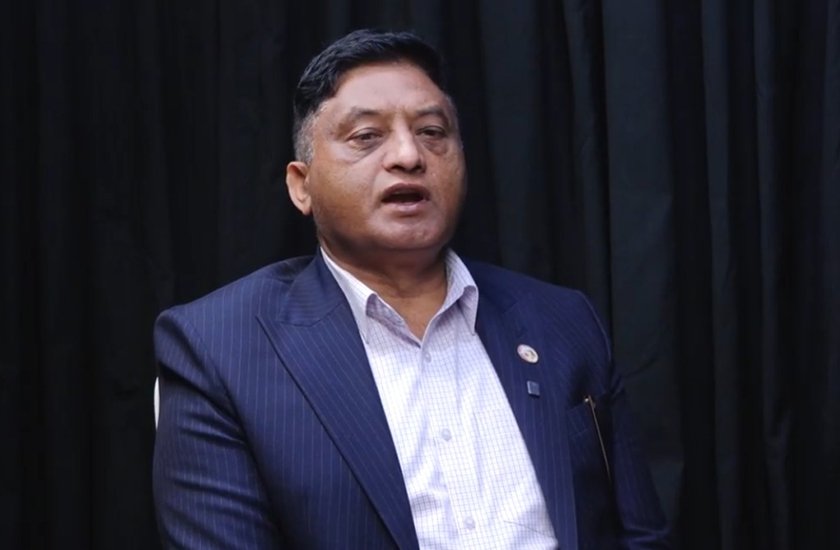
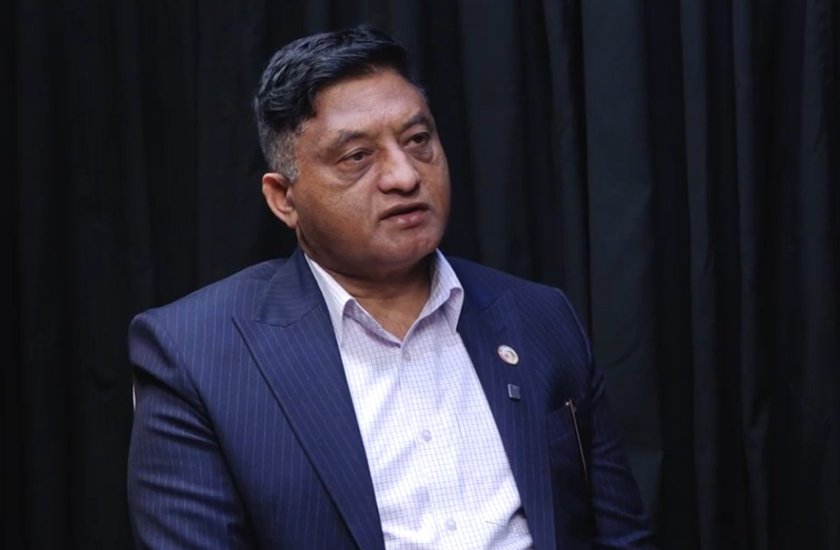
In this context, here is an edited excerpt from an interview with Bholanath Pokharel, Vice President of the Professional Federation Nepal, former chairman of the Civil Servants Organization, and an active participant in international trade union movements, discussing the impact, legal complexities, and the role of trade unions:
The Rastriya Swatantra Party, which mentioned abolishing partisan trade unions in its manifesto, has secured a near two-thirds majority. It is understood that the new government is preparing to implement this immediately. How do you view this as a trade unionist?
The proposal by the new government or the RSP to abolish trade unions, as mentioned in their manifesto, is against the democratic system and the rights of workers. We are currently in a democratic republican system where the right of workers to organize is a fundamental pillar.
Article 34 of the Constitution of Nepal guarantees the right to organize, collective bargaining, and social security for workers as fundamental rights. Fundamental rights cannot be amended or abolished based on a simple administrative decision or whim.
Trade union rights are not limited to Nepali law. ILO Conventions 87 and 98 globally recognize the right to organize and collective bargaining. Furthermore, Convention 151 regulates the labor relations of employees working in public services. Since Nepal is a signatory to these international conventions, it cannot backtrack on them. Therefore, banning trade unions would be an anti-political, anti-good governance, and anti-democratic move.
There is a common complaint that excessive partisanship in government agencies due to trade unions has hindered service delivery. Is this true?
There is a misunderstanding here. Partisanship is not caused by trade unions; rather, it stems from the wrong methods of governance. Organizations active in the civil service are not affiliates of political parties; they are legal entities registered with the Department of Labor. It is natural for employees to have personal political affiliations, but they must remain neutral in their job performance. Administrators should understand politics but should not become pawns of politics.
The root cause of the current partisanship is political interference in transfers and promotions. The system breaks down when ministers or leaders appoint only their 'yes men' for transfers.
We have, conversely, put forward good governance agendas such as service delivery with a smile and service delivery with compensation. The fault lies with those running the system, but the attack is being directed at workers' rights, which is entirely wrong.
There were attempts to ban trade unions in the past as well. What was the experience like then?
If we look at history, we gained the right to organize after the 2046 movement. In 2062 BS, the then King Gyanendra attempted to abolish trade union rights through an ordinance. At that time, we approached the Supreme Court, and the court ordered the preservation of trade union rights. There is also a precedent where the International Labour Organization overturned the Nepali government's ban and spoke in favor of independent union practice.
We fought on the streets for the establishment of democracy and the republic. Trade unions led the efforts to paralyze Singha Durbar and pressure for civil governance. Therefore, these achievements will not be erased just because some new force threatens to abolish them now. Attempting to snatch away rights granted by law and the constitution is a sign of authoritarianism.
How do you refute the accusation that trade unions are responsible for the sluggish service delivery and irregularities in offices like the Land Revenue Office?
The reason for delays and irregularities in the Land Revenue Office or other offices is not the trade union, but rather weak management and a non-transparent transfer system. We have been demanding a predictable cyclical transfer system. If the law clearly stipulated how long an employee stays where and what their performance is, no lobbying would be necessary.
Currently, Secretaries and Joint Secretaries are forced to act like personal assistants to ministers. They cannot work according to the system due to the fear of being sidelined if they do not comply with the minister's wishes. The practice of selectively transferring employees like goats must end. Reform at the higher levels is necessary for good governance. Trade unions work to boost employee morale and ensure their workplace security.
What would be your reaction if the government reduces the number of trade unions or mandates only recognized trade unions?
The provision for recognized trade unions, which come through elections, already exists. Labor law grants the right to register an organization to anyone who secures 25 percent membership. If the government tries to curtail this, it will be against democratic values and pluralism.
Our clear demand is that trade union rights should extend up to the Under Secretary level. Office chiefs are part of the management side, so they should not be in unions, but employees up to the Section Officer level are workers. Banning the organization that raises their voice means subjecting them to injustice.
If things do not go as you say and the government forcibly decides to abolish trade unions, what will you do?
Firstly, even if the government has the capacity to amend the constitution, it cannot make such a decision. This is not just a constitutional matter but also an issue of international commitment. If this is done forcibly, we will seek legal remedies. We will go to the Supreme Court and raise our voices in international forums. As a member state of the ILO, we will fight against government arbitrariness there.
An attack on trade unions will ultimately lead to the failure of the government itself. Therefore, the government's focus should be on providing good governance by boosting employee morale rather than taking away rights. Playing with the rights of workers will not bring pleasant results for democracy.
This specific news has been automatically translated by AI. As a result, there may be some inaccuracies or language errors.