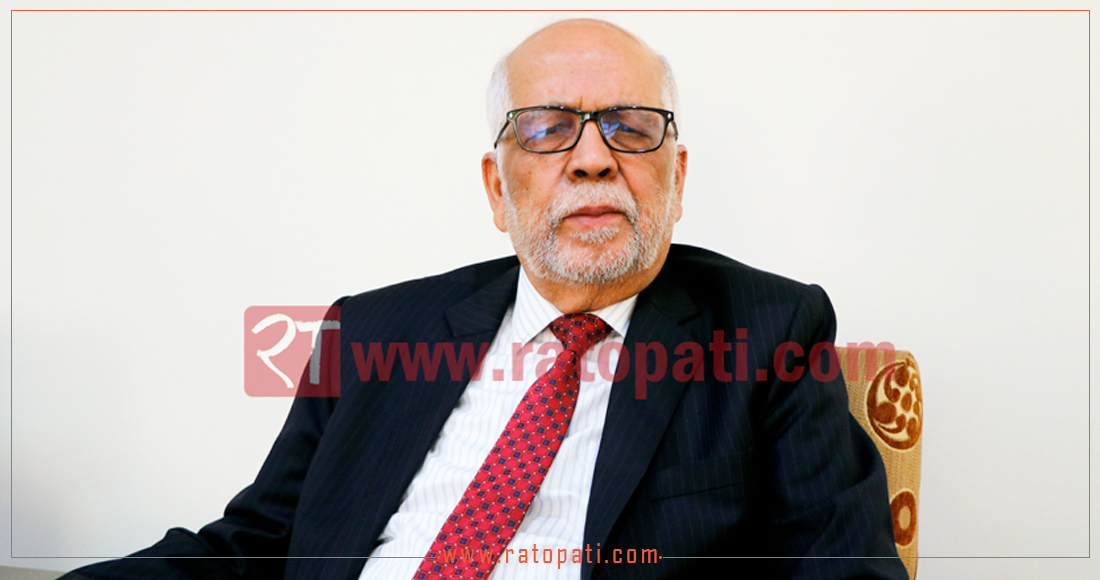
Dr. Prakash Chand, Son of CPN (Maoist) Leader Biplav, Criticizes Political System and 'Beautification' Development Model

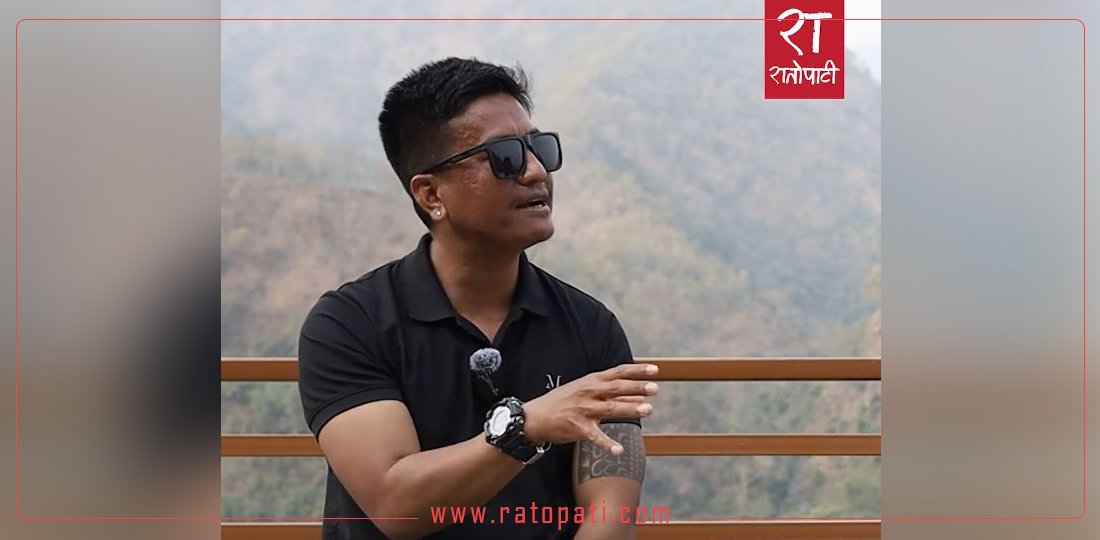
Dr. Prakash Chand is the son of Netra Bikram Chand 'Biplav', the General Secretary of the Communist Party of Nepal (Maoist). However, he aims to establish his identity not just through his father's name, but through his own work and ideological clarity.
By profession, he is a medical doctor and currently operates his own company based on the research and production of Nepali herbs. Speaking with Narendra Raula for Ratopati, Dr. Chand offered sharp commentary on contemporary Nepali politics, the Gen-Z youth rebellion, the alleged development model in Bharatpur, and the working style of current leaders. He claimed that paving roads is not development but merely 'beautification' and a mechanism to enrich contractors.
Here is the edited excerpt of the conversation with Dr. Prakash Chand:
We know you as Dr. Prakash Chand, but the general public recognizes you as 'Biplav's son'. How much struggle has it taken to erase this identity and be known by your own name?
I wouldn't call it a struggle. I have no hesitation in saying I am Biplav's son; I am his son. I also do not hesitate to say I am Dr. Prakash Chand. I studied, and my profession is medicine.
Are you currently practicing your profession (medicine) anywhere?
I have stopped clinical work for now. I have a small research company of my own. I am working particularly on Nepal's herbs, which are currently being exported in truckloads for a pittance. For example, I am studying whether products like soap, face wash, or cleansing products can be made from soapnuts (Ritha) within Nepal to increase their brand value before export. I am mostly busy with that now.
Gen-Z rebellion has occurred, and elections are scheduled for Falgun 21st in Nepal. These elections, which should have been held in '84 BS, have come early. How do you view this?
These elections are the culmination of a massive deception. The historic Gen-Z movement was not held to conduct elections. If you look deeply into why this movement occurred, the main reason was the ostentatious lifestyle of leaders who have repeatedly become Prime Ministers and their families.
The younger generation, struggling day and night in the Gulf, Japan, Korea, or America, sweating blood and toil to repay loans, can barely afford an iPhone. But here, the sons and daughters of leaders with ordinary status wear clothes worth 10-15 lakhs, ride expensive cars, and display a lifestyle beyond the imagination of the common Nepali. The movement arose in protest against that, against that corruption.
So, are you suggesting that the rebellion did not provide a resolution, but rather another rebellion is being conceived on its foundation?
Yes, exactly. That movement arose to take action against corrupt families and to elect a directly executive head, preventing old Prime Ministers from coming to power. But the movement of young, inexperienced youths was hijacked midway. Instead of taking action against corrupt leaders, a scheme was hatched to move the '84 elections to '82 BS. This is the gestation of another frightening rebellion.
Who will be at the forefront of this frightening rebellion you hinted at?
We should be there, and we will be. We were also in the Gen-Z movement yesterday. But the way that movement was sabotaged has created even greater frustration among the youth. The nation will not be transformed until the excesses of corrupt leaders are eliminated. In tomorrow's movement, we conscious youths will be at the forefront.
Are you directly affiliated with any political party today?
No, I am not actively affiliated with any political party right now. I do not believe that Nepal's corruption and irregularities can be resolved through the current system and practices.
If so, what kind of system should exist in this country, and who should run the country?
What the common people on the street are saying should be implemented. If corruption is to be stopped, the Prime Minister should not be chosen by the Parliament; the Prime Minister or the country's executive head should be directly elected by the people through voting. As long as the system where people directly elect the executive head does not arrive, this dirty game of buying and selling MPs, shifting alliances, and collapsing governments will continue.
CPN (Maoist) is participating in the elections this time and has entered the fray with the rose flower as its election symbol. Is Biplav-led party participating in the election merely a strategy, or is it trying to integrate into this system?
It must only be a strategy. Because it has been proven that a solution is not possible through this system. If Biplav is trying to build a narrative that a solution is possible through this system, that could be wrong. If the lives of the people do not change, such a strategy has no meaning.
You live in Chitwan. It is often said that former Mayor Renu Dahal has done a lot of development in Chitwan. In your view, what is the state of development in Chitwan-3?
I do not consider linking Renu Dahal to development as correct. What is the vision of development? That must first be clarified. It is said that 1065 kilometers of roads were paved in Bharatpur. Paving roads might be a small part of development, but it is not complete development.
The biggest proponents of development in Nepal are the contractors. Where do the gravel, sand, and bitumen come from in the name of paving roads? Which crusher industry do they come from, and who has invested in it? If you look at that, it becomes clear. There is a game of crores in commission in building one road. In the name of development there, only contractors and middlemen are being enriched.
True development is opening industries, creating employment, and increasing production. Vegetables are produced excessively in Bharatpur, but where are the cold storage facilities for farmers? What is the condition of egg entrepreneurs? Paving roads and 'beautification' cannot be considered development without addressing these fundamental issues.
Do you have an ideal leader whom you admire in Nepal?
There are no leaders in Nepal right now. All are clowns, tricksters, swindlers, and looters. A leader should be like Prithvi Narayan Shah—someone who can formulate policies today thinking a hundred or a thousand years ahead. Someone who can think about the state even if it means cutting back on their own meal.
While respecting Prithvi Narayan Shah, how do you view the former kings today?
Prithvi Narayan Shah and the current kings should not be put in the same basket. There is a world of difference between Prithvi Narayan Shah's vision and the commercial mindset of the current kings, who open cigarette factories and tea gardens. I see no difference between the current kings and the current leaders.
Finally, in the future, will you remain in the medical profession or enter full-time politics?
The future cannot be predicted right now. No one goes to the streets to protest out of desire. But if this decline in Nepal continues and the new system fails to provide a way out, the day may come when my generation has to leave medicine or their profession and come to the streets to save the country. I hope that situation does not arise.
This specific news has been automatically translated by AI. As a result, there may be some inaccuracies or language errors.