Nepal Road Safety Under Scrutiny Following String of Fatal Bus Accidents Ahead of Elections

The nation is on the verge of general elections, a time when ensuring the safety of passengers traveling home to vote has become a significant challenge.
On Sunday night at 1 AM, a bus belonging to Machhapuchhre Tours and Travels, carrying 34 passengers from Pokhara towards Kathmandu, met with an accident in Benighat Rorang Rural Municipality, Dhading, plunging into the Trishuli River. Nineteen people lost their lives in this tragic incident, which once again raises serious questions about Nepal's road safety and transportation system.
Previously, two other major bus accidents occurred in Ramechhap and Baitadi districts. Thirteen people died in the accident in Badaun, Purchauli-7, Baitadi, on Magh 22, and twelve people died in the accident at Seleghat, Ramechhap, on Magh 29. These three recent accidents have resulted in significant human loss.
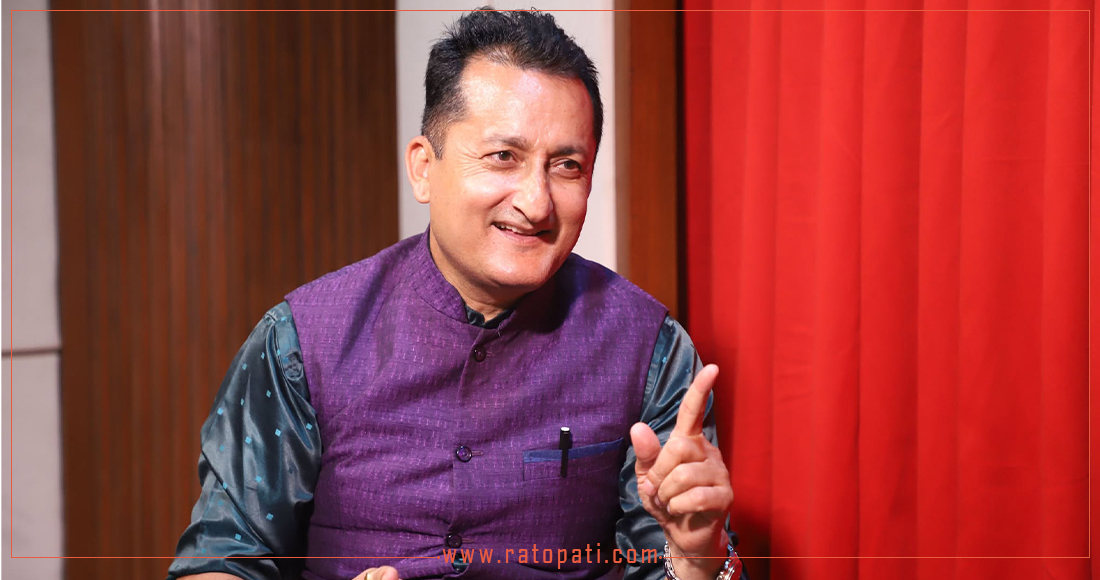
In this context, we present an interview with Saroj Sitaula, Acting Chairman of the Nepal Transport Entrepreneurs' National Federation, regarding the causes of the accidents, the government's role, and the responsibility of the business community:
- Major accidents are occurring right before the elections. What is the main reason for the recent surge in road accidents?
This is an extremely tragic situation. Regarding the Dhading accident, we held discussions today at the Home Ministry on how the accident occurred. Nineteen deaths have already been confirmed. A task force is being formed immediately to investigate the incident. A jumbo team comprising secretaries from the Home and Physical Infrastructure Ministries, IGPs, and Directors General from the Transport and Road Departments held a meeting.
But my question is: Is this task force just for show, or will it be effective? After the Simtal accident yesterday, a task force was formed under the coordination of a Joint Secretary, at the level of the then Home Minister. That task force took a month to submit a 12-point report. This report also included the fact that accidents were caused by natural disasters. But where is the implementation of those 12 suggestions?
This is our irony: when a major incident occurs, the country heats up, and the promptness of all agencies is visible. But once the incident fades, everything gets overlooked, and the reports gather dust in drawers. Generally, there are three main causes of road accidents: human error, the condition of road infrastructure, and mechanical failure of the vehicle. The main problems now are unhealthy competition and the state's weak policies.
_fNfWihnCH5.jpg)
- Road structure is often considered a main cause of accidents. What suggestions do transport entrepreneurs have regarding the quality and safety of Nepal's roads?
Most of Nepal's rural roads have been haphazardly dug by bulldozers without engineering surveys or standards. Such roads lack any safety standards, making them even more perilous during the monsoon season.
Our clear suggestion is that 'safety barriers' must be mandatorily installed along the edges of hilly roads. Because these safety rails are missing, vehicles often fall directly off cliffs. If only barriers were installed, accidents and human casualties could be minimized to a great extent.
Furthermore, instead of traffic lights and informative signboards, commercial advertising hoardings are placed on roads, which distract the driver's attention. Such advertisements should be removed and replaced with road safety messages.
In addition, activities such as placing construction materials on the road, drying hay, encroachment, and morning walks on highways have also increased accidents. Strict action must be taken against those engaging in such activities. The lack of coordination between the federal, provincial, and local governments over road construction and maintenance, due to jurisdictional disputes, has sidelined road safety.
- As transport entrepreneurs, how are you managing regular maintenance and fitness checks of vehicles? Is the current system adequate?
The current fitness testing system is inadequate and unscientific. It is impossible to bring thousands of vehicles from across the country to a single center in Teku for inspection. We have demanded fitness centers in all seven provinces and in every district.
Another serious issue is that due to open borders with neighboring India, counterfeit and substandard spare parts are flooding the market indiscriminately. The state neither checks the quality of spare parts nor classifies or monitors garages. Workshops opened without standards and such substandard materials significantly increase the risk of mechanical failure in vehicles.
_rSMTg1vpPR.jpg)
- What policies are in place for driver capacity and fatigue management? What arrangements exist for rest for long-distance drivers?
We provide awareness training to drivers. But a bitter truth is that all skilled drivers in the country are migrating abroad. We mandate and employ two drivers for long distances. However, there is no refresh center anywhere on the route where a driver can rest for 15 minutes.
It is easy to blame an accident on a driver falling asleep, but shouldn't the state build resting places for them on the route? We have been demanding rest stops every 300 kilometers, but all three tiers of government have ignored this.
Moreover, the fault of transport offices is not small. Electric vehicles (EVs) with an 11-seater capacity, which should only operate up to 250 kilometers, have been granted permits for long routes of 500–600 kilometers. This is a major mistake and a crime by the transport office.
- What improvements do you see as necessary for the rescue and treatment of the injured in case of an accident?
There are major problems with rescue operations when accidents occur in remote areas at night. For this, we have proposed establishing an 'Emergency Rescue Fund.' If just 1 rupee is added to diesel and petrol and kept in this fund, we can save the lives of the injured immediately by dispatching a helicopter in emergencies. Insurance companies should also contribute to this.
- What can be done to make the current system of vehicle accident insurance and compensation more effective?
We have advocated for introducing an 'Unlimited Insurance' policy. Currently, after an accident, there is a tendency to bargain on the road, vandalize vehicles, and demand 20–50 lakhs. If the insurance policy covers all aspects of compensation, the hassle of bargaining on the road is eliminated, and victims receive justice easily.
_kDC6Usq8yC.jpg)
- What lessons have major accidents in places like Baitadi, Ramechhap, and Dhading taught, and how can accidents be minimized in the coming days?
The main lesson is the 'use of technology and strict enforcement of rules.' We must now adopt technology. A system must be implemented to install Vehicle Positioning Systems (VPS) in every vehicle, implement cashless online ticketing, and mandatorily keep passenger details. This will clarify where each vehicle is and who the passengers are. After an accident, there will be no need to search for 'who went missing.'
Passengers must also develop the habit of traveling only after purchasing a mandatory ticket for safety. People should not be boarded haphazardly along the route. The practice of granting long-route permits to small vehicles (microbuses) beyond their capacity must stop. Traffic police checks need to be made stricter to stop overloading.
The government's tendency is to react only after an accident occurs. A national investigation commission is formed if an airplane's tire punctures or hits a bird, but why is the government not serious when so many people die on the roads daily? The reports we submit should not be thrown into the dustbin; they must be implemented. Sufficient budget must be allocated for road safety.
We are always ready to coordinate with the government to minimize accidents. But the main thing is that the suggestions given by us entrepreneurs and experts should not be thrown into the wastebasket. With increased movement of security personnel and voters around the elections, there should be no pressure to force vehicles onto dilapidated rural roads beyond capacity. If all agencies fulfill their responsibilities honestly, road accidents can certainly be minimized.
This specific news has been automatically translated by AI. As a result, there may be some inaccuracies or language errors.