Freed Haliya Communities in Kanchanpur Demand Written Pledges from Candidates Ahead of Elections

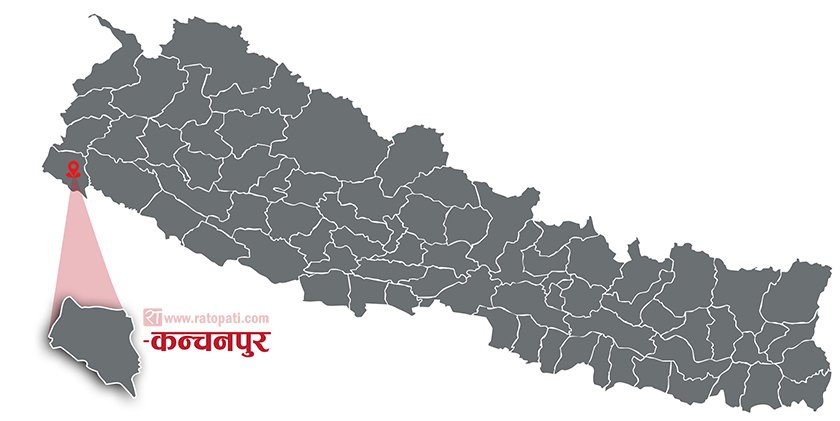
Kanchanpur. As the date for the upcoming House of Representatives election draws near, the political activities of parties and candidates have intensified in the freed Haliya settlements of Kanchanpur. However, this time, the freed Haliyas are not willing to settle for mere verbal assurances.
A new debate has emerged in the election atmosphere after the National Freed Haliya Society Federation Nepal publicly released a nine-point commitment letter targeting candidates in Kanchanpur and demanded a written pledge accompanied by a signature.
Although it is nearly 18 years since the then government declared Haliya emancipation on Bhadra 14, 2065 BS, many families in Kanchanpur have yet to fully realize their rehabilitation. Amidst this pain and anger, the community has put forward the policy of 'Commitment Before Vote' this time.
As the election fervor increases, the Haliya families show more suspicion than enthusiasm when they see candidates entering the villages. Mohan Damai from Baishakha camp stated that although he has voted in many past elections, there has been no change in his standard of living.
He says, "We have voted in many elections; candidates come and say they will ensure rehabilitation, provide employment, and quality education for the children, but those things remained mere election slogans. After winning, no one returns."
The housing problem is even more severe. Srijana Oad from Krishnapur Municipality-2 shared the pain of still having to live in a hut due to the lack of safe housing. "They say they will build concrete houses after winning the election; they are trying to entangle us with the same old talk now. It's hard to trust anyone. All candidates say they will change the situation, but this time we will vote thoughtfully," she said.
Geographical remoteness and the lack of basic infrastructure also plague this community. Kaluram Bhul from Bhimdatta Municipality-9, Brahmadev, complained that the road access to the settlement is not easy. Due to the lack of work in the village, he is forced to go to the border Indian market of Tanakpur for his daily livelihood. He says, "It would be great if employment opportunities were created in the village, but no one is ready for that. Everyone makes commitments during the election, but no one returns to the settlement after the election is over; no one looks at our suffering."
According to CB Luhar, Chairman of the Freed Haliya Society Kanchanpur, although some progress was made initially, the rehabilitation process remains incomplete and inadequate. He observes that even though the constitution guarantees rights to equality and justice, the access of freed Haliyas to education, health, and employment remains low in practice.
According to government statistics and the Federation's records, a large number of Haliya families in Kanchanpur are still deprived of government packages. In Kanchanpur, 168 individuals in category 'A' are still awaiting funds for land purchase and house construction. 723 individuals in category 'B' have not yet received the second installment for house construction. Out of the registered freed Haliyas, the number is 2,516, of whom 1,991 have received identity cards. 1,830 families have been rehabilitated, while 161 individuals are yet to be rehabilitated.
In Sudurpaschim and Karnali provinces, 3,407 freed Haliya families are still awaiting rehabilitation. Out of the initially collected details of 19,059 households, only 13,546 families have received the rehabilitation package so far, out of the 16,953 families re-verified by the government. Another 1,104 families are deprived of receiving the final installment amount.
The main reason cited for the delay in rehabilitation is the lack of coordination among the three tiers of government. Chairman Luhar says, "Some work was moving forward through the Rehabilitation Problem Resolution Committee earlier, but recently, with the implementation of federalism and the transfer of responsibilities to local levels, the rehabilitation work has not gained momentum. The federal government gave the authority but did not provide the budget or a clear action plan."
He states that candidates are being asked for commitments regarding the rehabilitation of freed Haliya families along with budget allocation, and ensuring their access to education and employment. The problem has become more serious as the Ministry of Land Management, Agriculture, and Cooperatives has not allocated sufficient budget for freed Haliyas in recent years. Rights activists complain that because the allocated budget is not being implemented effectively, freed Haliyas are being rendered landless and marginalized in their own land.
The nine-point commitment letter put forward by the National Freed Haliya Society Federation Nepal to the candidates includes important demands such as safe housing, title deeds for arable land, scholarships up to higher education, and concessional loans without collateral.
"It is a serious question for the state and political parties that even a decade after the promulgation of the constitution, the complete realization of the end of the Haliya practice, which existed in the form of slavery, has not occurred," said Ishwar Sunar, the Federation's Chairman.
Freed Haliyas have made their issues the main election agenda this time. The freed Haliyas have also warned that if candidates do not provide written commitments, the community will adopt a collective 'No Vote' or an alternative strategy.
The electoral outcome and the inclusive success of democracy will depend on how political parties and candidates in Kanchanpur respond to this 'Commitment Campaign' of the freed Haliyas in the upcoming House of Representatives election and how honestly they demonstrate implementation.
This specific news has been automatically translated by AI. As a result, there may be some inaccuracies or language errors.



_s4UAz3GPxQ.jpg)