Legal Expert Dr. Gandhi Pandit Discusses Election Prospects, Political Turmoil, and Legal Nuances in Exclusive Interview


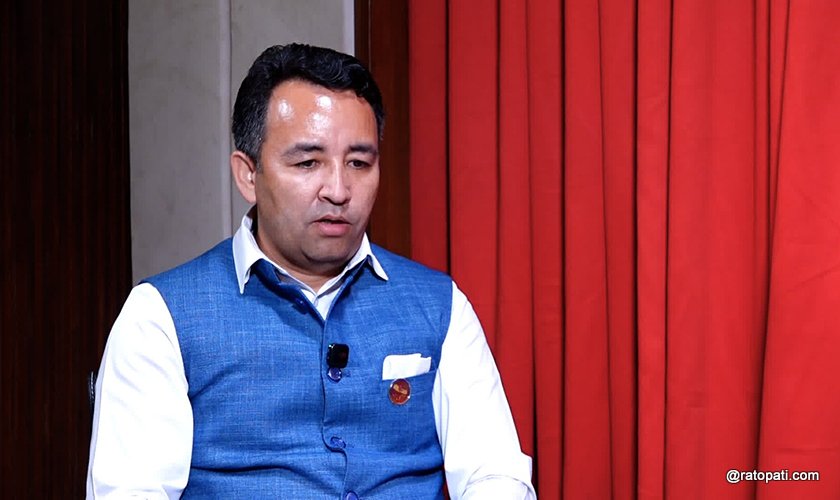
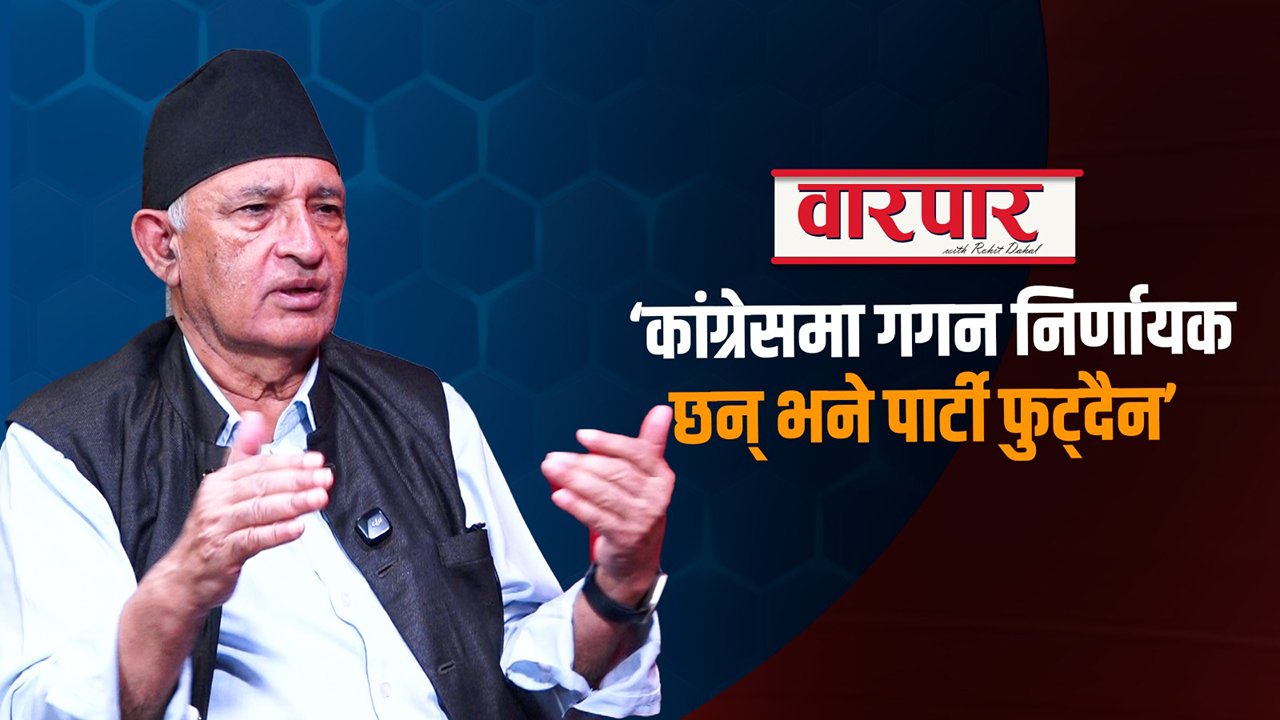
Kathmandu. Senior Advocate and Law Professor Prof. Dr. Gandhi Pandit possesses the ability to provide realistic analysis of national and international developments. Pandit, who has never held a politically appointed position and states he has no desire for one in the future, can express his views confidently.
Ratopati had an extensive conversation with Dr. Pandit regarding the possibilities of parliament reinstatement, ongoing Supreme Court cases concerning internal conflicts within the Nepali Congress, the decision by the Attorney General's office to withdraw cases against Rastriya Swatantra Party Chairman Rabi Lamichhane related to cooperative fraud and money laundering, and whether Madhav Nepal and Rabi Lamichhane can take the oath of office if they win the election, among other topics. Dr. Pandit holds a Master's degree in Commercial Law from Columbia University, New York, a Master's in International Law from Delhi University, and a Ph.D. in Commercial and Banking Law from Tribhuvan University.
Presented here is the edited excerpt of the interview with Dr. Pandit (details in the video):
_R7VPJLnQw1.jpg)
- The country is currently immersed in election fervor. How do you personally view the elections?
Elections must happen, and the country is already in an election mood. Elections are not just about candidates participating, winning, and ruling in power. Elections should strengthen the republic according to the people's desires and aspirations, delivering economic transformation, peace, security, and good governance. The people must be happy and prosperous. Elections are the means to move the country forward by removing past irregularities. Although I am not affiliated with any party, I believe the nation must progress; therefore, I am enthusiastic about the elections.
- Do you have hope that the country will develop after these elections?
This has two aspects. This election must be viewed differently compared to the past. In the past, a coalition government was formed, and the government elected for four years brought instability. The objective of the current election is transformation. We must move forward with a different approach than yesterday's system, with new generations and new thinking.
_zMyLohpEQB.jpg)
Secondly, the root cause of the corruption and irregularities seen in the past is the mixed system of proportional and direct representation in the constitution. This creates a situation where no party can secure a clear majority. Therefore, in this election, voters must give a clear majority to a good party or candidate, even through cross-voting, so that constitutional amendments can be made later to establish political stability.
- In the past, no one secured a majority; will any party get a majority after the next election?
If voters cast their ballots according to the old patterns, no one might secure a majority again. If no one gets a majority, the change and aspirations sought by the younger generation cannot be fulfilled. Therefore, voters must rise above party whips and vote in a way that can provide a way out for the country. The current necessity is a two-thirds majority to amend the constitution. Voters must decide in a way that brings that majority.
- Does your expectation imply that either the Rastriya Swatantra Party (RSP) or the Nepali Congress should emerge?
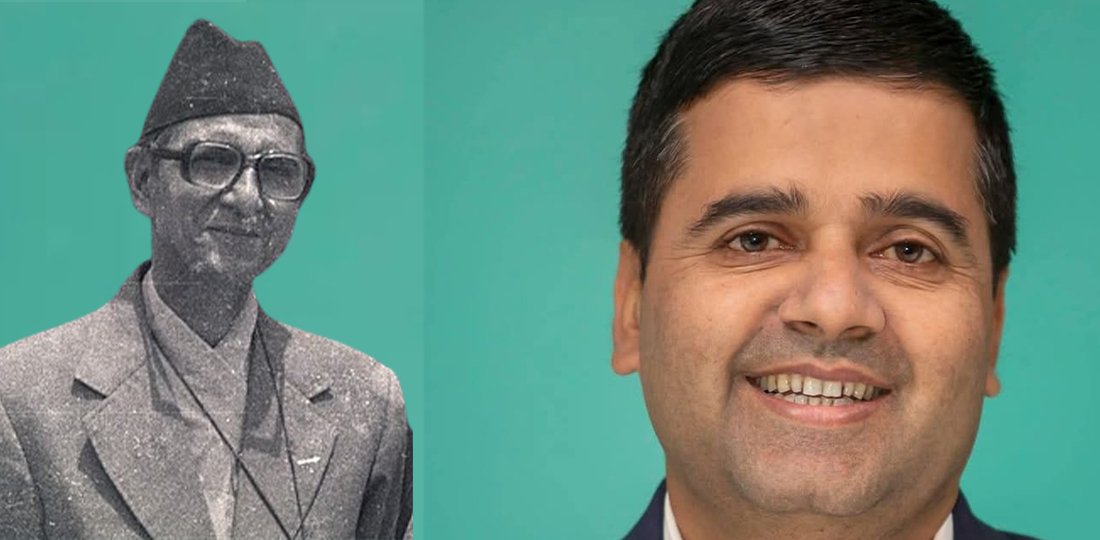
Yes, the main competition should be between these forces. The transformation agenda raised by Gagan Thapa and Bishwa Prakash Sharma within the Congress is also a center of hope. On the other hand, RSP is a new force. UML is also an old party, but under KP Oli's leadership, there seems to be some reservation about giving space to the new generation. Therefore, voters should give a majority to these two forces or whichever one carries the agenda of transformation. My point is that we should not create a 'hung parliament' by giving small votes to five or seven parties.
_m8q4uaKmJl.jpg)
- There is talk that even if Rabi Lamichhane and Madhav Nepal are elected, they might not be allowed to take the oath in parliament. What is the legal provision regarding this?
In this context, when Devraj Ghimire was the Speaker, there was talk of suspending Rabi Lamichhane due to his involvement in cooperative fraud and money laundering cases. However, according to the Anti-Money Laundering Act and the Prevention of Corruption Act, a person holding a public office is automatically suspended if a case is filed against them. But there is a debate on whether a Member of Parliament (MP) is considered a public office or an office of profit.
In my opinion, an MP's position is a political position, not an office of profit. There are past examples where Prime Ministers or Ministers contested elections without resigning from their posts. Therefore, an MP cannot be considered an office of profit.
Furthermore, merely being charged with a criminal case does not mean one is proven guilty. They cannot be labeled a criminal until the final verdict. According to the universally accepted principle of law, an accused and a criminal are different things. Therefore, after being elected, they should be allowed to take the oath and perform their duties as MPs. However, a moral question might arise.
- We criticize KP Oli or Sher Bahadur Deuba as much as we want, but the Attorney General's office is preparing to withdraw Rabi Lamichhane's cases related to cooperative fraud and money laundering. What is the difference between Oli, Deuba, and Rabi in this context?
I will not speak for or against Rabi Ji; I will speak about the law. In my view, the money laundering case filed against Rabi Ji is somewhat excessive. Cooperative fraud is one issue, but for money laundering, the source itself must be illegal. For example, assets earned from drug trafficking, arms dealing, or human trafficking. My argument is that taking a loan from a cooperative and not repaying it cannot be directly termed money laundering.
_I3F79pR7IS.jpg)
The government has the legal authority to withdraw cases. The Attorney General can decide not to prosecute. However, that decision must be based on facts and evidence, not on political prejudice or transaction. If the evidence is insufficient, the case can be withdrawn.
- What is your opinion on Balen Shah?
Balen Ji has taken a great risk and shown great courage. The work he has done in Kathmandu after winning the mayoral election independently has increased public trust in him. His declaration, 'I am a candidate for Prime Minister,' is a bold decision. It has also created pressure on the old parties. Whether he wins or loses is one aspect, but he has created a wave among the younger generation. His candidacy challenges the old leaders, which is good for democracy.
- Finally, what challenges do you see for Gagan Ji in becoming Prime Minister?
Gagan Ji has good personal capability and eloquence. The main challenge for him is the factionalism and the old guard within his own party, the Nepali Congress. Sher Bahadur Deuba Ji is the party president, and his hold is strong. Gagan Ji must be able to win the leadership of the parliamentary party. For that, more MPs supporting him must be elected in the upcoming elections. If he can manage the internal party equation and the public gives a majority to the Congress, his chances of becoming Prime Minister are strong.
Video/Photo: Krishna Khadka
This specific news has been automatically translated by AI. As a result, there may be some inaccuracies or language errors.