Grief Lingers for Family of Protester Killed in Anti-Corruption Demonstration Amidst Election Buzz


Siraha. Three-year-old Divyanshi asked again, 'Mummy, where is Papa?' Amirika Chaudhary tries to speak, but her throat tightens, words fail to emerge. Her daughter is in her lap, tears welling in her eyes, and on the bright screen of her mobile phone is a smiling picture of Bijay Chaudhary.
Outside, the loud noise of election rallies and microphone announcements echoes across the country; slogans are being chanted at every intersection. But inside this small house in Lahan-15, the clamor does not break the silence; instead, it makes it more piercing. It is as if the outside celebration is mocking the emptiness here.
As the House of Representatives election scheduled for the upcoming Falgun 21 approaches, the villages are bustling. Gatherings are held in every locality, and candidates' commitments are heard in every home. But for Amirika, these scenes are not a celebration, but rather a painful repetition. Seeing the crowds and hearing the slogans takes her mind back to that day when the vermilion in her hair parting and her daughter's future were permanently blurred.
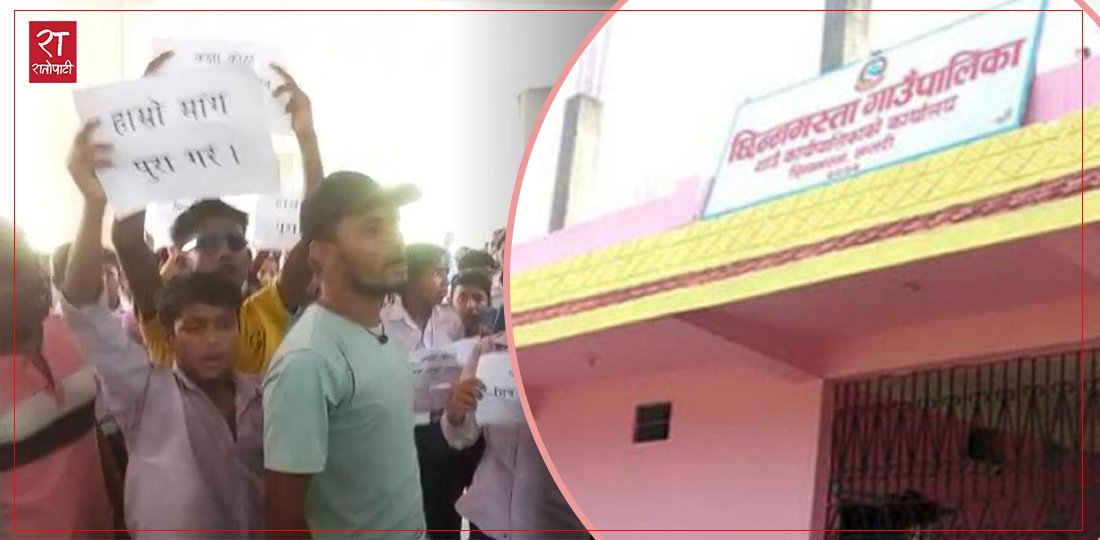
Twenty-seven-year-old Bijay Chaudhary of Lahan-15, Simaltol, was participating in the 'Genji' movement in New Baneshwor, Kathmandu, on Bhadra 23. Bijay, who took to the streets demanding good governance and an end to corruption, was shot in the chest by police. The police fired a shot on the very first day of the protest, hitting Bijay in the chest. His friends immediately rushed him to Civil Hospital, but by then, he had already passed away.
The youngest son of the house, on whose shoulders the parents' medication and his daughter's future rested, was gone forever. Bijay had been working in 'house wiring' in Kathmandu for five years. His earnings supported the household: medicine for his parents, household expenses, and his daughter's future. Bijay, who had a calm nature, never quarreled with anyone. He used to counsel everyone in the village. However, he would not remain silent against injustice and oppression. That rebellious spirit led him to the street protest.
As soon as the news of Bijay's death reached them, his elder brother Ajay Chaudhary returned from foreign employment. But the family could not see their son alive. Bijay's body was brought to Lahan by an army helicopter only nine days after the incident. This family has yet to forget the pain of receiving the body of the main breadwinner.
Bijay's mother, Jaleshwari Devi, now sits lost in thought. She tries to console herself by looking at her son's photo on the mobile phone. She sits lost, holding her young granddaughter in her lap. Sometimes, that same granddaughter distracts her—the last token left behind by martyr Bijay.
When her daughter Divyanshi calls out for her father, Amirika Chaudhary's heart aches intensely. She has no words to explain to the innocent child. Still, she tells her, "Papa has gone to Kathmandu, he will be back soon." But that false assurance only weighs heavier on her heart.
Divyanshi, who used to cling to her father more than her mother, now searches for him in every crowd, in every sound. The loud slogans of the election rallies and the scenes of the crowds refresh the old pain for Bijay's mother as well. "If my son were alive, he too would have been involved in the election like others," says Bijay's mother, Jaleshwari Devi, "Seeing them reminds me of my son; it becomes difficult to manage."
Amirika Chaudhary has been feeling restless since the election campaign began. While politics unfolds outside, she is struggling internally to manage her life. She says, "May the demands for which he became a martyr be fulfilled. May the person who killed my husband be legally prosecuted. May the Nepali people not suffer again. May there be no more protests. May no one have to become a martyr."
The municipality has given her a contract job at the ward office. That provides some relief, but that relief cannot fill the void left by Bijay. While political campaigning goes on outside, this martyr's family is grappling with its own sorrow.
This specific news has been automatically translated by AI. As a result, there may be some inaccuracies or language errors.


_cvUCBlwFTZ.jpg)