Nepal's Finance Ministry Discloses Mid-Year Performance, Highlighting Budget Spending and Revenue Collection Gaps


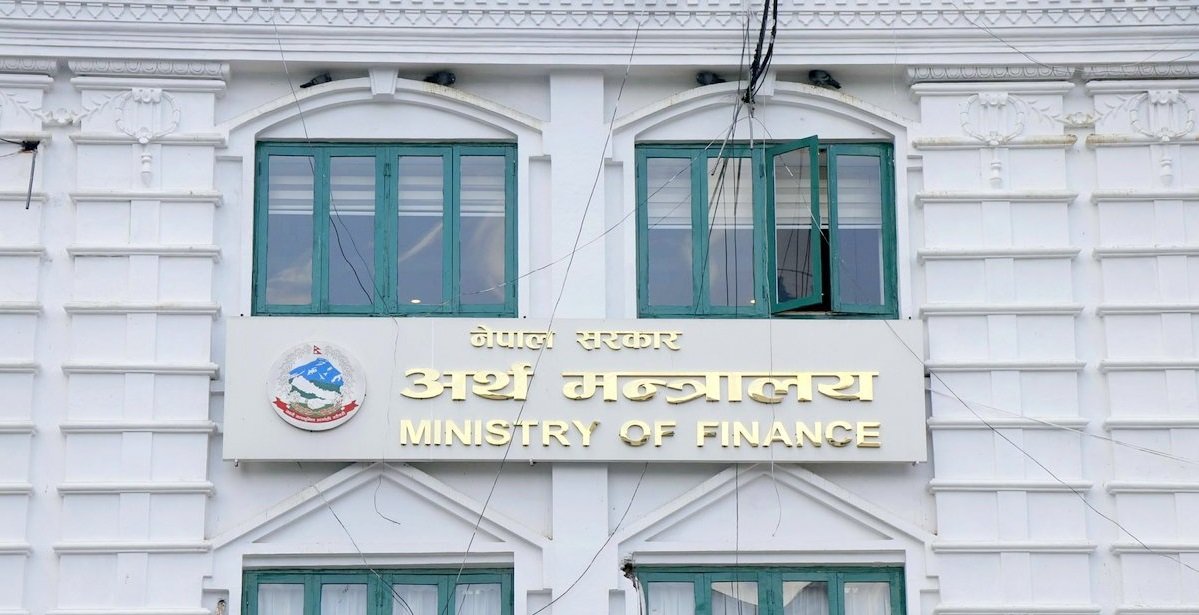
Kathmandu. The Ministry of Finance has made public the work performance and achievements made during the second trimester of the current fiscal year 2080/81.
The Ministry released a detailed progress report concerning budget implementation, revenue management, legal reforms, fiscal federalism, financial sector reforms, planning-monitoring, and administrative management, stating that efforts were focused on treasury management, election expenditures, strengthening revenue administration, and promoting good governance.
According to the Ministry, 46.06 percent of the annual budget target was spent by the end of Poush. This represents an increase of 10.75 percent compared to the same period last fiscal year.
Out of the budget allocated at Rs 19 kharba 64 arba 11 crore for the current fiscal year, Rs nine kharba four arba 64 crore 43 lakh was spent by the end of Poush. Of the Rs 11 kharba 80 arba 98 crore allocated for recurrent expenditure, 40.82 percent, or Rs four kharba 82 arba 10 crore 80 lakh, was spent, while of the Rs four kharba seven arba 88 crore 80 lakh allocated for capital expenditure, 11.66 percent, or Rs 47 arba 54 crore 40 lakh, was spent.
Compared to the last fiscal year, total recurrent expenditure increased by 3.35 percent during this period, while capital expenditure decreased by 4.86 percent. Furthermore, expenditure on financial management increased by 53.29 percent, according to the Ministry's report.
The details indicate significant pressure not only on capital expenditure but also on revenue collection. The government has set a target to collect a total revenue of Rs 14 kharba 40 arba for the current fiscal year, and while the target for revenue collection by the end of Poush was Rs seven kharba 11 arba 20 crore 79 lakh, only revenue amounting to Rs five kharba 81 arba 40 crore 72 lakh was collected during this period. This is Rs one kharba 29 arba 80 crore less than the target.
Moreover, the Ministry of Finance appears weak in settling outstanding audit objections (beruju). The progress report mentions that out of a total outstanding audit objection of Rs one kharba 25 arba, only Rs eight arba was settled during this period, leaving Rs one kharba 17 arba outstanding, marking a progress of 6.4 percent.
The Ministry appears to have prioritized resource allocation and disbursement focused on managing the House of Representatives and National Assembly elections. For the House of Representatives election scheduled for Falgun 21, resource agreements totaling Rs six arba 73 crore 66 lakh 90 thousand were provided to the Election Commission—Rs four arba 96 crore 66 lakh on Kartik 18 and an additional Rs one arba 77 crore 90 thousand on Mangsir 20.
Similarly, resource agreements worth Rs two crore 80 lakh were provided to the National Investigation Department and Rs four crore 42 lakh 50 thousand to the Nepal Army for the purchase of security equipment. Resource agreements amounting to Rs ten arba 39 crore 34 lakh 80 thousand were provided to the Ministry of Home Affairs and its subordinate bodies for the House of Representatives election, and a resource agreement of Rs one arba 94 crore 68 lakh 55 thousand for recurrent expenditure for the election was provided to the Nepal Army.
Furthermore, a resource agreement of Rs four crore 31 lakh 79 thousand was provided to the Election Commission for the National Assembly member election, and this amount has already been disbursed. The Ministry stated that a total of Rs six arba 31 crore was disbursed to the Election Commission for the House of Representatives election by the end of Poush.
In revenue management, it was announced that the online valuation system has been introduced to ensure full compliance with the 'Gate Valuation' system in all customs offices. During this period, the ambiguity regarding tax deduction on capital gains of the Dolma Impact Fund was addressed by resolving disputes related to the Nepal-Mauritius Double Taxation Avoidance Agreement.
Likewise, it was reported that the Nepal-Mauritius Double Taxation Avoidance Agreement has been terminated, and diplomatic channels were used to inform about agreements concluded before the implementation of the Income Tax Act, 2058.
The draft of the Customs Regulation, 2082, has been sent to the Ministry of Law for implementation as the Customs Act, 2082, is being brought into force. The Customs Management Seminar was concluded, and multilateral coordination for controlling revenue leakage was achieved through monthly meetings of the High-Level Central Revenue Leakage Control Committee.
The Ministry stated that a grievance management system for service delivery was developed, and grievances received through channels like Hello Sarkar were continuously addressed. Consent was also provided to various agencies for revising non-tax revenue rates. The practice of affixing postal stamps instead of revenue stamps on public service delivery documents has been abolished. The report also noted a decision during this period to grant capital gains tax exemption for the free transfer of land registered in the name of an individual at the Ram Kumar Sharada Uma Prasad Murarka Hospital in Siraha.
In terms of law and judgment implementation, the Alternative Development Finance Mobilization Act, 2081, has been registered in the Federal Parliament. Amendments to the Payment and Settlement Act, Customs Regulation, Financial Procedures and Fiscal Responsibility Regulation, criteria for resource agreement for multi-year projects, and the Anti-Money Laundering Regulation have been approved and published in the Nepal Gazette.
Additionally, written responses were prepared and defenses mounted for 58 writ petitions where the Ministry was the respondent. Notices regarding income tax exemption for companies under the MCC Compact, various revenue exemptions, determination of cash transaction limits, and restrictions on foreign currency export-import were published through the Nepal Gazette, and correspondence was sent to relevant bodies for the implementation of 26 court orders and judgments.
Towards strengthening fiscal federalism, correspondence was sent to all levels of government for the implementation of the Third National Public Financial Management Reform Strategy. Decisions made by the Council of Ministers regarding cutting unproductive expenditures, frugality, and reprioritization of projects were sent for implementation down to the local level, and 23 decisions from the Intergovernmental Fiscal Council meeting were sent for implementation.
Furthermore, the Ministry of Finance directed local levels not to collect transportation tax contrary to the constitution over the last six months and discussed proposals related to revising the royalty sharing of natural resources. The Public Financial Management Reform Directive was amended, and the Steering Committee meeting was held.
The Financial Sector Development Strategy 2082/83–2086/87 has been approved by the Council of Ministers. The report mentions the implementation of decisions such as a ban on cash transactions exceeding five lakh rupees, revision of the limit for Indian currency circulation, formation of the NEPSE restructuring committee, implementation of the capital market reform report, and disbursement of Rs nine arba 80 crore for interest subsidies on concessional loans.
Moreover, the Ministry stated that 91 grievances received through Bigul and Hello Sarkar were settled, the monthly progress of the annual policy and program implementation was updated in the system, 323 positions were cut through the organization and management survey resulting in a liability saving of Rs 22 crore, and a 6.4 percent progress was seen in the settlement of outstanding audit objections.
---
This specific news has been automatically translated by AI. As a result, there may be some inaccuracies or language errors.