Gorkha-2 Showdown: Veteran Leaders and New Contenders Vie for Parliamentary Seat

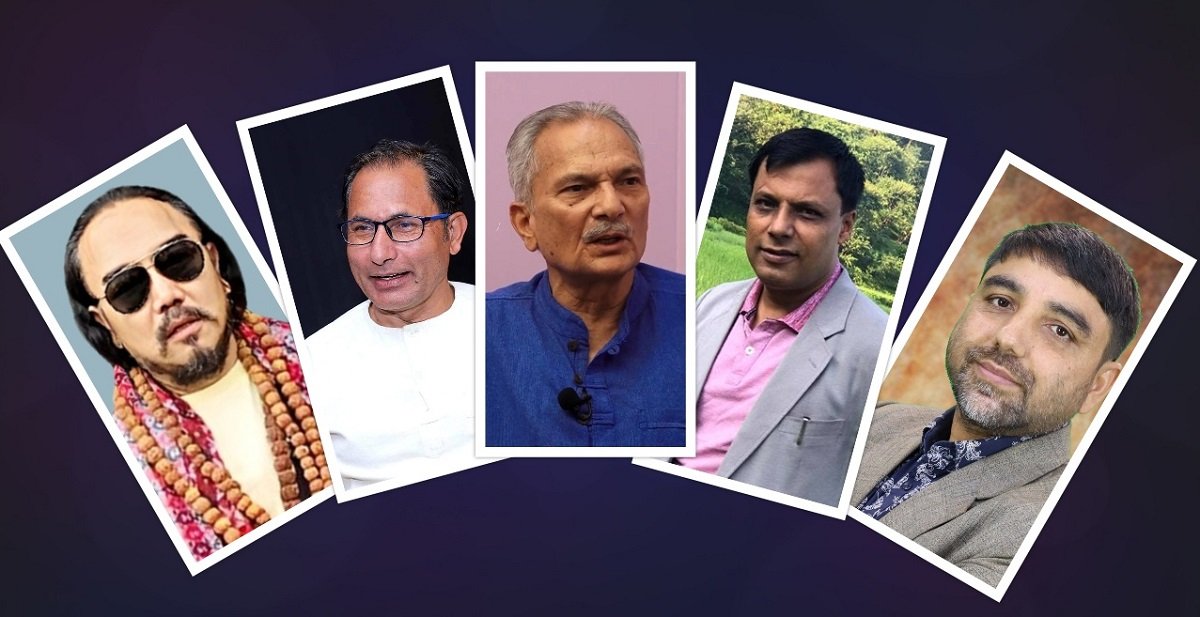
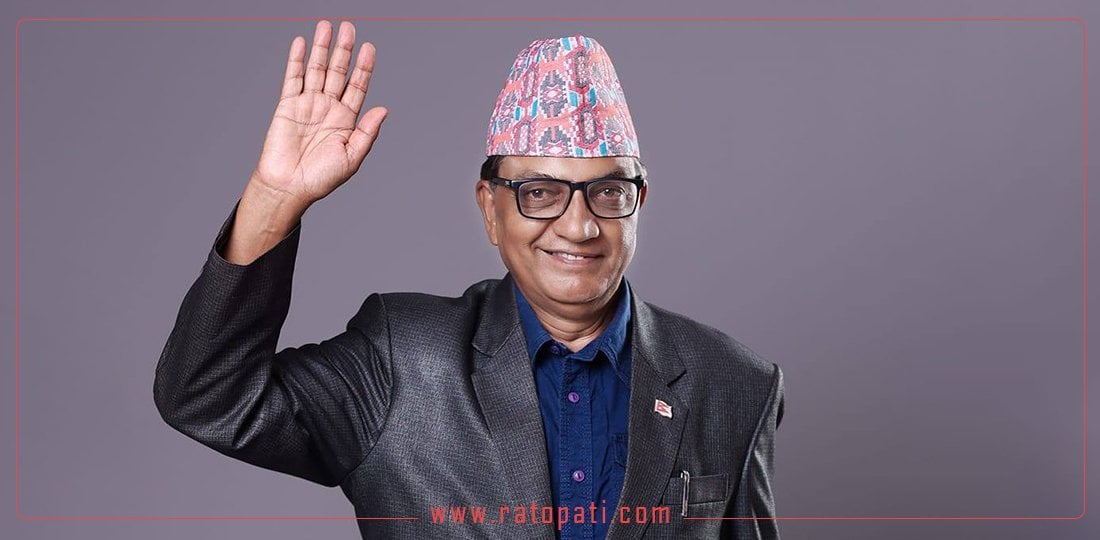
Pokhara. Lekhnath, who has established an image as an intellectual leader within the party, had to wait 33 years of full-time politics for a single ticket. 52-year-old Lekhnath led the People's War from 2052 to 062 from the student front. At that time, Baburam Bhattarai was the top commander of the People's War. Both played active and leading roles in the People's War.
Although there are some differences in their style, they share many similarities. Both have their political foundation in their student life. Baburam served as the founding president of the All India Nepali Student Union in India, while Lekhnath led the student movement as the president of ANNISU (Revolutionary) in Nepal.
Both leaders spent long periods underground. Both have experienced arrest, custody, and jail time. Baburam was arrested multiple times in India and Nepal, while Lekhnath spent four years in jail during the People's War. Both are established as ideological leaders and writers. They have authored dozens of books. Until 072, their political journeys were also similar, starting from the same party. Baburam split from the Maoists in search of novelty in politics. Lekhnath was building new ideas within the party. The People's War commanders, who once shared the same path, are now competing against each other in the elections. They are candidates from Gorkha-2.
Along with these similarities, there are some differences between them. Baburam won the 064 election and became Finance Minister and later Prime Minister. In 070, he was elected from Gorkha-1, and in 074, he was elected from Gorkha-2, but in 079, Baburam unified the party and vacated his constituency for Pushpa Kamal Dahal ‘Prachanda’. After being elected from the same constituency, Prachanda took the helm of the country. Lekhnath, however, is a person who has never contested a parliamentary election until now.
Lekhnath did not get a chance as Baburam Bhattarai, Hitraj Pandey, Narayan Kaji Shrestha, and Prachanda contested elections in rotation. Gorkha is a base for the Maoists, but the main competitor, Nepali Congress, is not weak either. The electoral contest in Gorkha-2 is currently drawing national attention.
Prakash Chandra Dwadi of the Nepali Congress is also a candidate in this constituency along with Baburam and Lekhnath. He was elected in the 074 Provincial Assembly election, defeating the alliance of the Maoists and UML. He entered politics from business into social service. After being elected as a Member of Parliament, he dedicated all state benefits to social service, making him popular among voters.
Gorkha 2 has previously produced two prime ministers. Maoist Chairman Prachanda and senior leader Baburam Bhattarai became prime ministers after being elected from Gorkha.
CPN-UML has nominated Milan Gurung, who has a background in hooliganism. Known by the nickname 'Chakure Milan', he is a person burdened by numerous legal cases. Chakure, who has been arrested and released multiple times in homicide cases, is expected to receive support from the youth despite UML's weak organization. There is also a projection that he will receive a bonus of ethnic votes because the major parties did not field a candidate from the Gurung community. However, there is also significant criticism within the party for giving him the ticket.
The Rastriya Swatantra Party (RSP) has fielded its Central General Secretary, Kabindra Burlakoti. Burlakoti finished second against Prachanda in the 2079 election. Contesting without an organization, he secured 12,637 votes, while the victorious Prachanda received 26,103 votes. Prachanda contested the election in an alliance with the Congress and a merger with the then Naya Shakti party.
RSP has now widely expanded its organization in Gorkha-2. Therefore, the general election in Gorkha-2 is unpredictable. It is certain to be more interesting.
What was the previous result like?
Gorkha 2 has previously produced two prime ministers. Maoist Chairman Prachanda and senior leader Baburam Bhattarai became prime ministers after being elected from Gorkha. Hitraj Pandey, elected in 2070, also became a minister. He became the Minister of Federal Affairs and Local Development in 073. Kamala Pant, an MP from the same constituency, also became a minister. After the end of the Panchayat era, Gorkha-2 was a stronghold of the Congress in the general elections held thereafter. Kamala Pant was elected from here in the 051 and 056 elections. Since then, it has been the undisputed rule of the Maoists. In 064, Maoist's Baburam Bhattarai secured the highest votes across the country. He won by securing 46,272 votes, approximately 85 percent.
In 2070, when Baburam moved to Constituency No. 1, Hitraj Pandey became the candidate, but the Maoist dominance subsided. In the six-year interval, the Maoists lost 26,000 votes here. Pandey received only 20,761 votes. After Baburam split from the Maoists in 072, the Maoist legacy in Gorkha began to erode. In 074, Baburam contested from Constituency No. 2 for Naya Shakti. But even with an alliance with the Congress, he could not cross 32,000 votes. While winning with 31,807 votes, Maoist's Narayan Kaji Shrestha became the closest competitor, securing only 24,933 votes. In 079, the Maoist influence shrank further. Even with the alliance of Congress, Maoist, and Naya Shakti, Prachanda could not cross 26,000 votes.
The Maoists rose in Gorkha but failed to preserve their legacy. Today, the party no longer carries the old Maoist name, nor has it retained its old voters. RSP is in a growing phase. The Congress remains competitive even by securing its own votes. UML is confident of winning by fielding a popular face despite a weak organization. Baburam Bhattarai is aiming to become an MP by pitting everyone against each other. That is why the election in Gorkha-2 is the center of maximum interest.
This specific news has been automatically translated by AI. As a result, there may be some inaccuracies or language errors.

_18aawmzmsd_sTzy83VQGv.jpg)