Climate Change Intensifies European Droughts, New Study Reveals

Kathmandu. A new study by international scientists has shown that climate change, exacerbated by human activities, has made droughts in Europe more severe. According to the study, reduced rainfall is not the only major cause of drought; increased temperatures have led to a rapid decrease in moisture from soil, rivers, and lakes, intensifying the dryness.
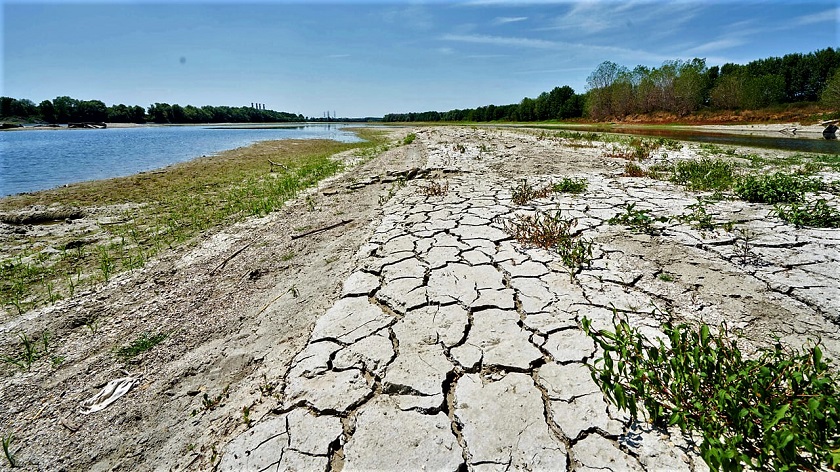
Following an historic heatwave in June, many countries from France to Romania have been facing drying rivers, restrictions on water use, and severe wildfires. Europe is currently grappling with widespread drought.
Mariam Zacharia, co-author of the study by the World Weather Attribution (WWA) group, stated that although many parts of Europe received below-average rainfall in spring, the increased temperatures due to climate change have made the drought more severe. According to her, the study indicates that the main cause of drought is not a lack of rain but rather the hot environment drawing more moisture from the land.
Zacharia, working at Imperial College London, said that even in areas where rainfall is expected to remain normal or slightly increase in the future, the risk of drought is growing due to the hot environment. Scientists say that for every one-degree Celsius increase in temperature, the atmosphere can hold about seven percent more water vapor, leading to intensified evaporation of water from soil and vegetation.
The study mentions that compared to the pre-industrial period of 1850–1900, the Earth's average temperature has already risen by about 1.4 degrees Celsius due to the excessive use of coal, oil, and gas.
Scientists say that climate change is making extreme weather events such as droughts, floods, and heatwaves more frequent and intense. The study highlights that Europe, being the continent with the fastest-warming temperatures globally, is showing its effects more clearly.
According to the Copernicus Climate Change Service, last June was the hottest June on record for Western Europe. It is estimated that thousands of excess deaths occurred due to that heat.
Dominic Schumacher, another co-author of the study and from ETH Zurich, said that even areas with sufficient rainfall during winter have become exceptionally dry within a few months. According to him, hot air rapidly reduces soil moisture, creating a vicious cycle where temperatures rise further, and the soil dries out even more. He added that this also significantly increases the risk of wildfires spreading.
For this study, scientists from Europe, the United States, and the UK analyzed meteorological data and computer models, comparing the current hot climate with the pre-industrial period.
The study indicates that compared to a situation without climate change, the probability of extreme soil dryness in Western Europe is now five times higher, and in Eastern Europe, it is 11 times higher. Similarly, the atmospheric capacity to absorb moisture from soil and vegetation in Western Europe from April to June is estimated to be about 80 times higher.
Zacharia stated that the study concludes that the current atmosphere is much more 'thirsty' than before, meaning that even a previously considered normal lack of rainfall can now lead to very severe droughts.
This specific news has been automatically translated by AI. As a result, there may be some inaccuracies or language errors.