India's 'Kukrooch' Movement Demands Education Minister's Resignation Amidst Protests

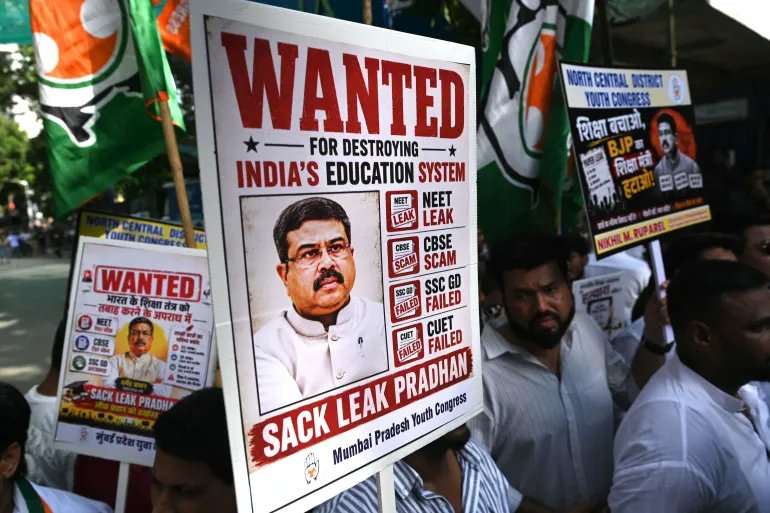
Kathmandu. Thousands of supporters of the 'Kukrooch' movement, operating under India's youth leadership, have been staging a sit-in protest in the capital New Delhi for over a month, demanding the resignation of Education Minister Dharmendra Pradhan.
During this movement led by Gen-Z, more than 100 protesters were seriously injured on Monday when the police resorted to lathi-charge and tear gas. This movement, occurring in Modi's third term, has emerged as the biggest public challenge so far.
Major opposition parties in India have also participated in daily street protests, offering themselves for arrest, and have further strengthened the demand for Dharmendra Pradhan's dismissal. However, while unpopular governments or controversial ministers often resign or are removed in other democratic countries worldwide, Dharmendra Pradhan remains in office in India. This is not new to those who closely observe Indian politics. Rather, it aligns with an established pattern seen repeatedly during Modi's 12-year tenure. During this period, despite widespread calls for resignation against many ministers who faced serious controversies, Modi has refused to remove them. Here are other controversial ministers whom Modi has refused to remove:
Mahesh Sharma
A year after Modi became Prime Minister in 2014, a 50-year-old Muslim iron trader, Mohammad Akhlaq, was dragged from his home and beaten to death by a mob in Bishada village, Dadri, Uttar Pradesh, on suspicion of stealing a cow and storing beef in his refrigerator.
As many Hindus consider cows sacred, cow slaughter is banned in most states of India. The murder of Akhlaq on September 16, 2015, became the first incident in a series of cow-related killings by Hindu mobs and triggered nationwide protests.
At that time, Mahesh Sharma, the Union Minister of Culture and Tourism, elected from the Gautam Buddha Nagar constituency which covers the Dadri region, called the incident a 'mere accident,' leading to demands for his resignation from the Muslim community and opposition parties.
However, he did not leave office and remained in Modi's cabinet. A year later, Sharma visited Bishada to meet the family of Ravi Sisodia, one of the 18 accused in the Akhlaq murder case, after Sisodia's death. Pictures of him paying respects in front of Sisodia's body, draped in the national flag, were published, leading to nationwide criticism and renewed calls for his resignation.
Finally, Sharma was only removed from the cabinet after Modi was re-elected for his second term in 2019. However, he is still a Member of Parliament for the Bharatiya Janata Party (BJP).
Smriti Irani and Bandaru Dattatreya
A few months after Akhlaq's murder, on January 17, 2016, Rohit Chakravarty Vemula, a 26-year-old PhD student at the University of Hyderabad, was found dead in his hostel room.
Some time before that, Vemula and four other students had been expelled from the hostel and their monthly scholarships stopped on allegations of attacking a leader of a student organization affiliated with the RSS.
All five belonged to the Dalit community, historically the most marginalized in India's caste structure. As they had no other place to stay, they began a hunger strike by pitching tents on the university campus.
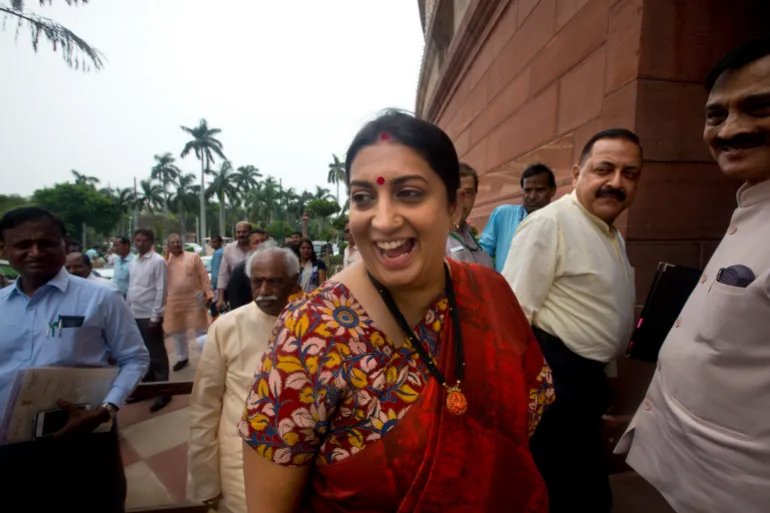
They alleged that they were expelled from the hostel due to the influence of letters written by then Union Ministers Smriti Irani and Bandaru Dattatreya to the university administration. As tensions escalated, Vemula committed suicide by hanging himself in a friend's room. After his suicide note was made public, student protests erupted nationwide, and demands for the resignation of Irani and Dattatreya arose.
Irani, who transitioned from a television actress to politics, was accused of providing false information to Parliament about Vemula's death and defending the university administration.
However, both ministers remained in Modi's cabinet. Later, in July 2016, Irani was transferred to the Ministry of Textiles and the following year given the responsibility of the Ministry of Information and Broadcasting.
Dattatreya resigned as Labour Minister in 2017, but was subsequently appointed Governor of Himachal Pradesh and Haryana.
Ajay Mishra Teni
In 2021, Ashish Mishra, son of the then Union Minister of State for Home Affairs Ajay Mishra Teni, was accused of running a vehicle over farmers protesting against agricultural laws in Lakhimpur Kheri, Uttar Pradesh. Four farmers and a journalist died in the incident. Three BJP workers and Mishra's driver were also killed in the subsequent violence.
Despite widespread demands for Ajay Mishra Teni's resignation after the incident, he remained in office. He was only removed from the ministerial post after being defeated in the 2024 general election.
The Only Resignation Under Public Pressure During Modi's Rule
The only notable resignation by a minister in the Modi government following demands for public accountability came only after the Corona pandemic. In 2021, as India battled the deadly second wave of the Corona pandemic and criticism of the government mounted, the then Health Minister Harsh Vardhan, who was also a doctor, resigned from his post.
The BJP did not nominate him as a candidate in the 2024 general elections, after which he took a break from active politics.
Comparison with the Previous Government
Critics of Modi compare his government's style to the previous Congress-led government in India. There are many instances where ministers holding important portfolios like Home and External Affairs in the Congress-led government resigned or were removed from office following public pressure and demands for accountability. However, many are now arguing that it is precisely the 'Modi-pattern' of shielding the controversial that is causing Education Minister Dharmendra Pradhan to cling to his chair. He may perhaps have to bear even greater damage before being removed from his post.
This specific news has been automatically translated by AI. As a result, there may be some inaccuracies or language errors.