Top 10 Greatest Footballers in World Cup History
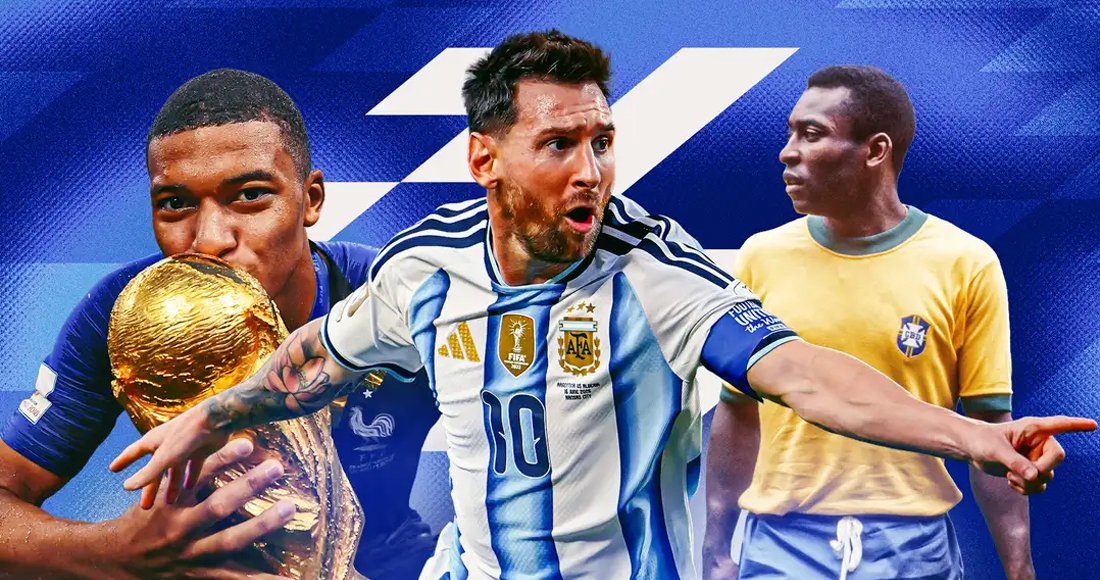
The Football World Cup is the most prestigious sports competition in the world. New superstars are born on this stage, some players' dreams are shattered, and some players become immortal in history.
Sometimes a goal, a decisive pass, a tackle, a save, or an outstanding performance can turn an ordinary player into a national hero overnight. Players who consistently perform exceptionally in the World Cup eventually become established as the greatest figures in football history.
The question of who among these great players is considered the best has always been a subject of debate. Evaluating players who have consistently made an impact in various editions of the World Cup, here is a presentation of the contributions of the top ten greatest footballers.
10. Miroslav Klose (Germany)
Based on club football, it is difficult to call Miroslav Klose the greatest player in history. Although he performed excellently for various clubs, he never became a superstar on the level of Pelé, Maradona, or Messi. However, for the national team, he was a completely different player.
Klose, who scored 71 goals in 137 games for Germany, proved even more lethal in the World Cup. He scored 16 goals in four World Cups, holding the record for the highest scorer in World Cup history for 12 years. In the 2014 World Cup, when Germany achieved a historic 7-1 victory over Brazil, he broke Ronaldo's record of 15 goals. In the same tournament, he also became the first footballer to play in four consecutive World Cup semi-finals.
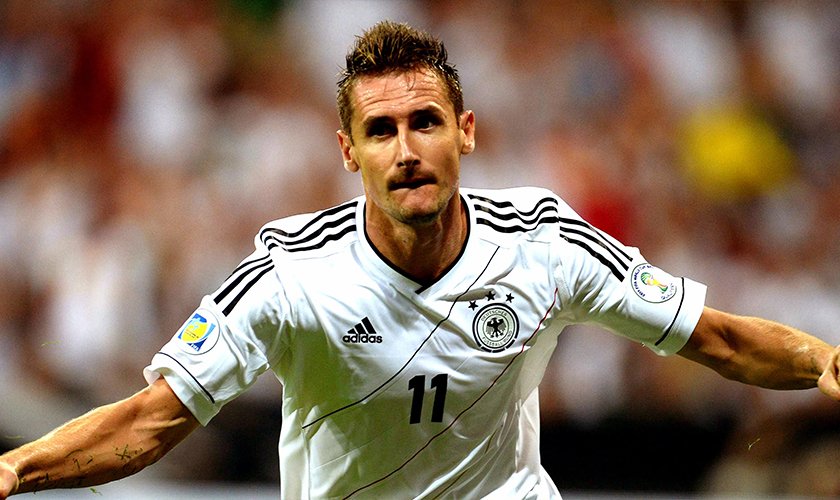
Another characteristic of Klose was his consistency. Germany never lost a World Cup match in which he scored. He was known as a unique striker who excelled in aerial play, scored with headers, and converted chances into goals. With Germany winning the World Cup by defeating Argentina in 2014, he bid a happy farewell to international football.
9. Zinedine Zidane (France)
Zinedine Zidane is considered one of the most talented yet emotionally volatile players in football history. His game possessed incredible beauty, balance, and creativity, while at times he was also known as a player who could not control his impulses.
In the 1998 World Cup, after stomping on a Saudi Arabian player, he received a red card, and his tournament was in danger of ending prematurely. However, France progressed past the quarter-finals without him, and after Zidane returned, he scored two goals in the final against Brazil, leading the home team to their first World Cup title.
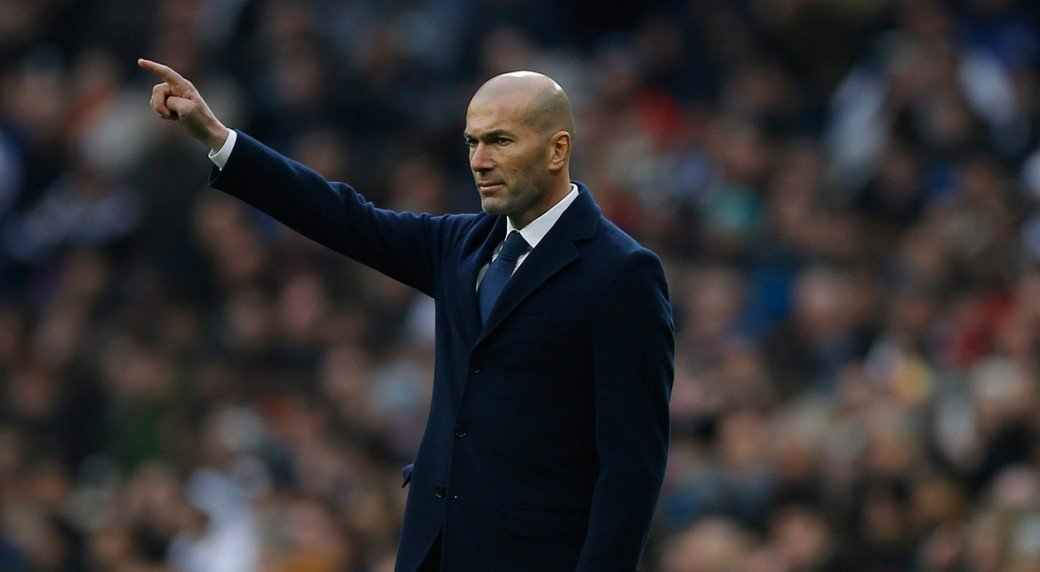
In 2002, France was eliminated in the group stage. After that, Zidane, who had retired from international football, was brought back for the 2006 World Cup. Throughout the tournament, he performed exceptionally, leading France to the final.
However, in the final against Italy in Berlin, after Marco Materazzi made a derogatory comment about his family, Zidane headbutted him. Due to the infamous 'headbutt' incident in world football history, he received a red card and was sent off the field. Despite this, based on his impressive performance throughout the tournament, he won the Golden Ball.
8. Gerd Müller (Germany)
Gerd Müller is considered by many to be the greatest 'goal poacher' or opportunistic striker in football history. He was incredibly fast over short distances. Despite his short stature, he was equally effective with headers.
His greatest asset was his natural ability to score goals. He was exceptional at creating chances and converting them into goals within the penalty box. Even Franz Beckenbauer considered himself fortunate to have played with Müller.
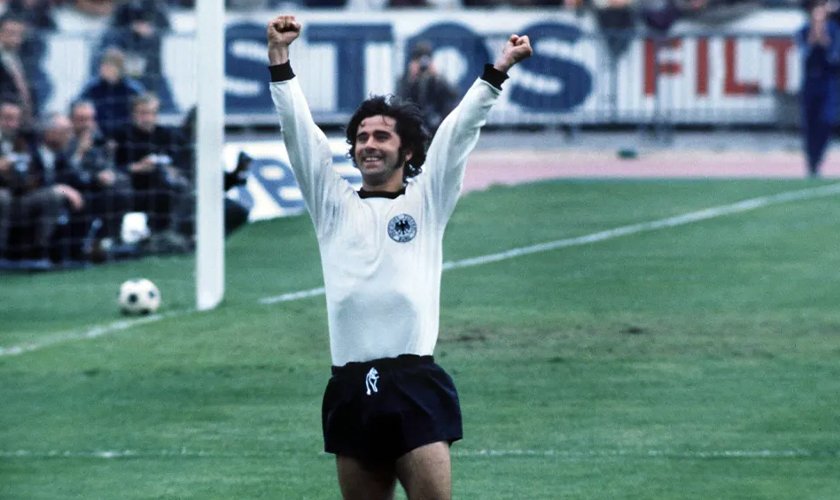
Müller scored over 68 goals in 62 games for Germany. In two World Cups, he played 13 games and scored 14 goals. The decisive goal he scored against the Netherlands in the 1974 final helped West Germany become world champions.
He later said, 'I have scored more beautiful goals, but the goal that made me world champion was the most important goal of my life.' This achievement secured him a permanent place among the greatest World Cup players.
7. Cafu (Brazil)
Brazil's great right-back Cafu was known in Italy as 'Il Pendolino' or 'the high-speed train' due to his tireless running. He constantly ran up and down the right flank for the entire 90 minutes. Former Manchester United manager Sir Alex Ferguson jokingly commented that Cafu must have two hearts.
Cafu took the concept of the modern attacking right-back to new heights. While playing the role of a winger in attack, he never neglected his defensive responsibilities. Therefore, he became a source of inspiration for defenders of later generations.
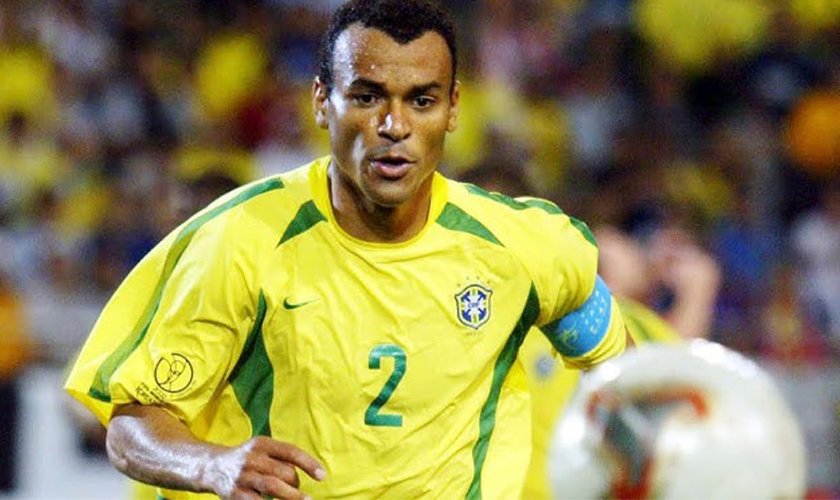
Cafu played in four World Cups and became the first player in World Cup history to play in three finals. In the 1994 final, he was not on the field from the start, but he came on after Jorginho was injured and contributed to Brazil's title win against Italy.
Brazil became runners-up in 1998. Then, in 2002, as captain, he achieved the greatest success of his career by leading Brazil to their fifth World Cup title. His picture standing on the podium lifting the trophy is considered one of the most unforgettable moments in World Cup history.
6. Franz Beckenbauer (Germany)
Franz Beckenbauer is considered one of the players who transformed the face of modern football. Known by the nickname 'Der Kaiser', he popularized and elevated the 'sweeper' role by moving from midfield to defense.
In the 1966 World Cup, he played a crucial role in leading West Germany to the final. Scoring four goals, he became a key player for the team. In the historic semi-final against Italy in the 1970 World Cup, his shoulder was dislocated. As all substitutions had been used, he completed the match with his arm in a sling. That courage is considered one of the most inspiring events in World Cup history.
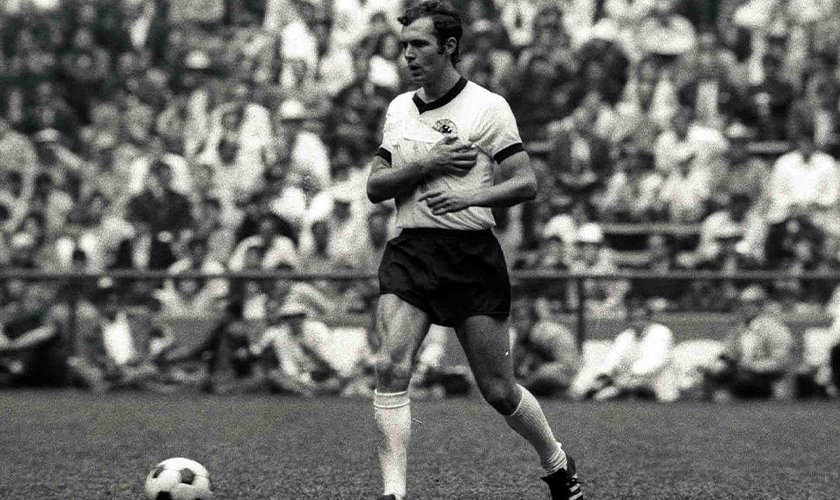
Four years later, in the World Cup held on home soil, Beckenbauer captained West Germany to victory over the Netherlands' famous 'Total Football' team, defeating them 2-1 to become world champions. Former German player Karl-Heinz Rummenigge described him as 'a complete player in both style and impact.'
Beckenbauer was not just an excellent defender but an extraordinary footballer who controlled the game's rhythm, led the team, and brought success. Therefore, he will always be remembered as one of the most influential players in World Cup history.
5. Kylian Mbappé (France)
Kylian Mbappé has not yet won the Champions League or the Ballon d'Or. At the age of 27, the French star may still have many achievements left in his club career. However, he has already secured his place in World Cup history.
In the 2018 Russia World Cup, his first appearance, Mbappé introduced his extraordinary talent to the football world. In the process of making France world champions, he scored four goals, including one in the final. With that, he became the first teenager since Pelé in 1958 to score in a World Cup final. At that time, Pelé himself congratulated him on social media, saying, 'Welcome to the club, another member to join me has arrived.'
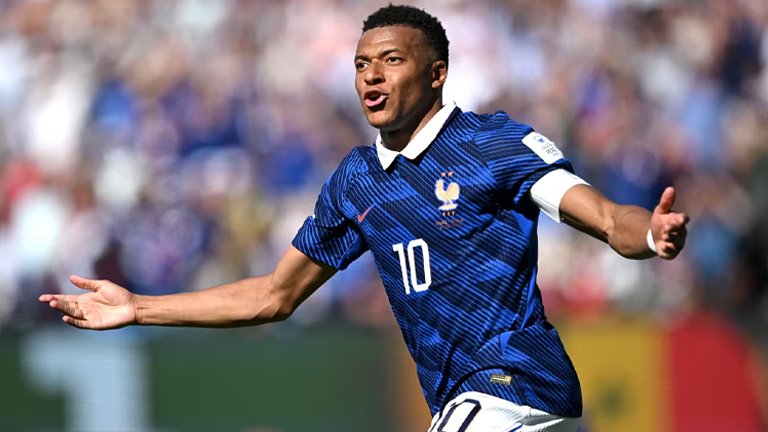
In the 2022 Qatar World Cup, Mbappé achieved another historic milestone. He became the second player in World Cup history to score a hat-trick in the final. Previously, this record was held only by England's Sir Geoff Hurst. Although France failed to retain the title, he won the Golden Boot as the tournament's top scorer. His total goals in finals alone reached four, the highest in World Cup final history.
The 2026 World Cup further elevated Mbappé's greatness. He scored 10 goals throughout the tournament, bringing his total World Cup goals to 22. Notably, he achieved this feat in just 22 games. With this, he became the all-time leading scorer in World Cup history. He also set another new record by winning the Golden Boot for the second time. These achievements at such a young age place him fifth on the list of the greatest World Cup players.
4. Ronaldo (Brazil)
The World Cup journey of Brazil's great striker Ronaldo Nazário is filled with ups and downs. The real reason for the serious health problem that suddenly afflicted him before the 1998 World Cup final remains unclear to this day. Many believe that if he had played the final in full physical and mental condition, the outcome of the Brazil-France final in Paris could have been different.
At that time, Ronaldo was considered the most fearsome forward in world football. The nickname 'O Fenômeno', meaning 'The Phenomenon', was fully justified by his play. His speed, exceptional dribbling, explosive attacks, and incredible goal-scoring ability made him a challenge for all defenders worldwide.
_W037HtixVQ.webp)
Although he did not perform to his usual standard in the final, based on his excellent performance throughout the tournament, he was declared the best player of the World Cup. Four years later, the 2002 World Cup in South Korea-Japan was like a rebirth for Ronaldo. After struggling with serious injuries for four consecutive years, he scored eight goals in seven games in the World Cup, including two goals against Germany in the final. He was the most influential player of the tournament when Brazil won their fifth World Cup title.
After the title, an emotional Ronaldo said, 'Being able to play football again, to run and score goals was my greatest victory. But being able to help Brazil win its fifth World Cup was the greatest reward for my comeback.'
3. Diego Maradona (Argentina)
The impact Diego Maradona showed in a single World Cup edition in 1986 has not been replicated by anyone since. Considered one of the greatest players in football history in terms of natural talent, Maradona was at the peak of his career at that time and had focused his entire attention on football.
After a disappointing performance in the 1982 Spain World Cup, he prepared himself thoroughly. In the Mexico World Cup, he was an unstoppable player. Argentina scored 14 goals in the tournament, and Maradona was directly involved in 10 of them. The quarter-final against England, in particular, became the most talked-about match of his career. He scored one goal with the 'Hand of God' and another goal, dribbling past five players, which is recorded as one of the greatest goals in world football history.
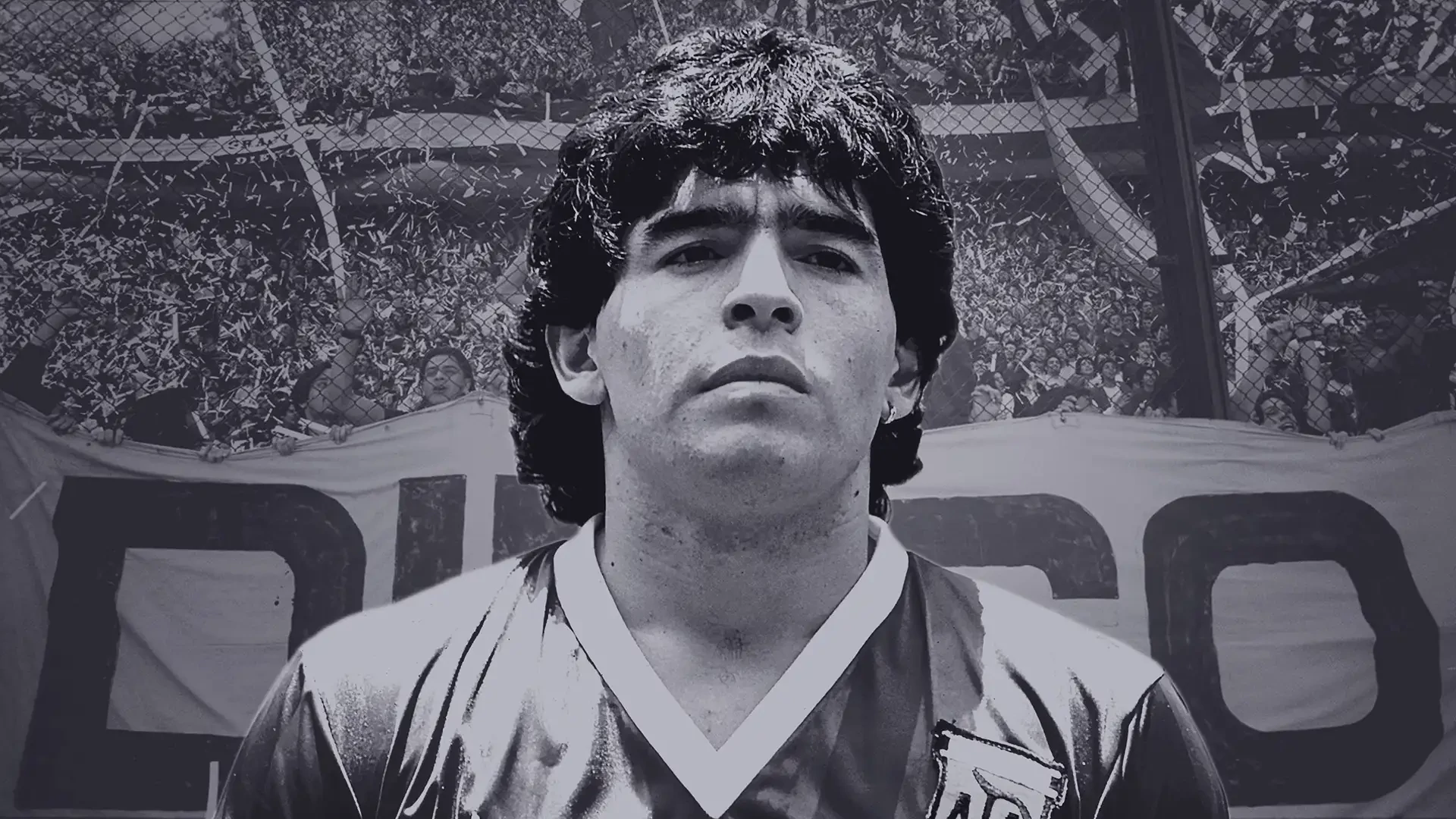
However, his image suffered a blow after failing a doping test in the 1994 World Cup. He is still considered one of the most controversial figures in football history. But there is no dispute that his performance in the 1986 World Cup makes him one of the greatest players in World Cup history.
2. Lionel Messi (Argentina)
Lionel Messi consistently performed at the highest level in world football for over a decade and a half. However, many hesitated to consider him the greatest player in history until he won the World Cup title. In the 2014 World Cup, although he won the Golden Ball, his dream of winning the World Cup trophy remained unfulfilled after losing 1-0 in extra time to Germany in the final. Then, in 2018, when Argentina was eliminated in the Round of 16, many thought Messi's World Cup journey was over.
But in Qatar 2022, the 35-year-old Messi made history. He became the first player in World Cup history to score in every stage from the group stage to the final. Declared 'Player of the Match' in every knockout stage game, he won the Golden Ball for the second time, which was a record in itself.
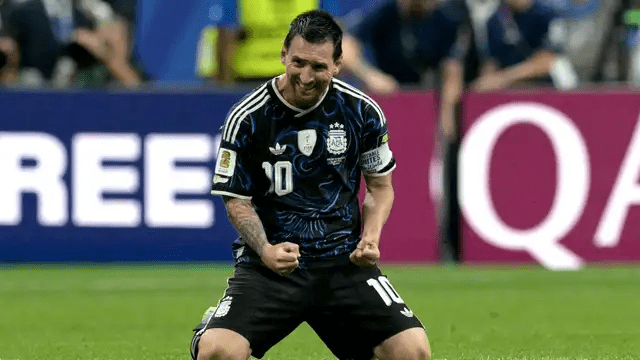
After leading Argentina to become world champions, many expected him to retire from international football. But he returned and led the team to the runner-up position in his sixth World Cup. Scoring eight goals and providing four assists throughout the tournament, he proved that age is just a number. With that, Messi further solidified his position as one of the greatest footballers in history.
1. Pelé (Brazil)
It is no surprise that Pelé tops the list of the greatest players in World Cup history. Known as the 'King of Football', Pelé is the only player in world history to be a member of a World Cup-winning team three times.
In 1958, at the age of just 17, he introduced his talent to world football in Sweden. He led Brazil to their first World Cup by scoring the decisive goal against Wales in the knockout stage, a hat-trick against France in the semi-final, and two goals against hosts Sweden in the final.
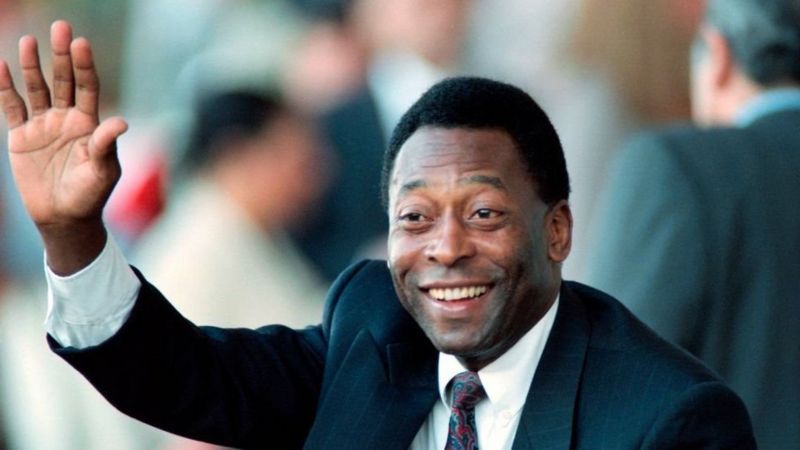
At that time, France's Just Fontaine won the Golden Boot. But he later admitted, 'After seeing Pelé play, I thought about retiring from football.'
In 1962, his role was limited due to injury. But in the 1970 Mexico World Cup, he delivered his career's best performance. He led Brazil, considered by many to be the greatest national team in history, to the title with his incredible play. He scored four goals in the tournament and also scored in the final against Italy, leading Brazil to a 4-1 victory.
Italian defender Tarcisio Burgnich said, 'Before the game, I thought Pelé was made of flesh and bone like other players, but I was wrong.' With three World Cup titles, unbelievable talent, and an indelible mark on world football, Pelé is still honored today as the greatest player in World Cup history.
From Goal.com
This specific news has been automatically translated by AI. As a result, there may be some inaccuracies or language errors.