Parbati BK Discusses Parliamentary Experience and Development Agenda

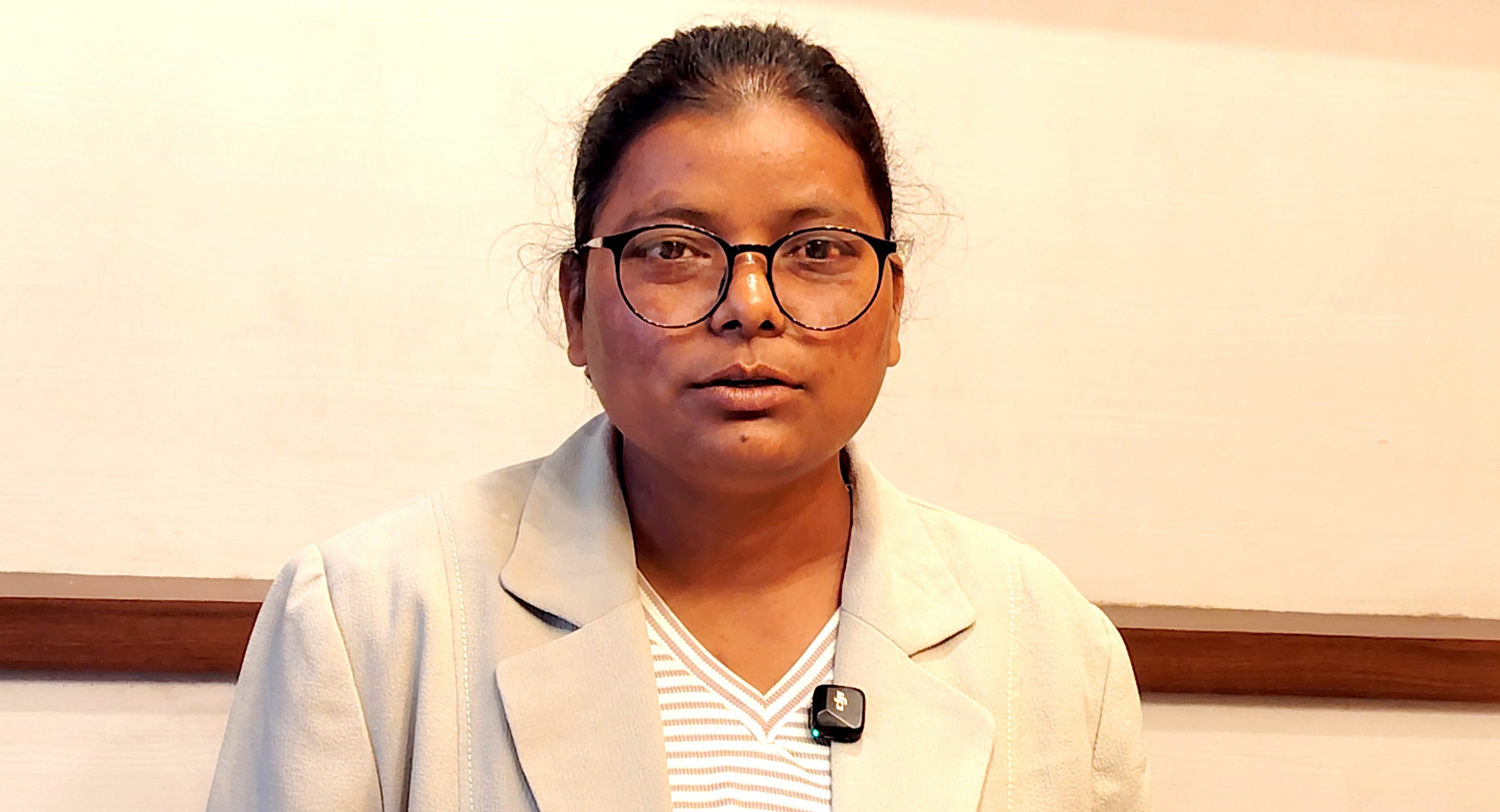
Parbati BK, a central member of the Nepali Communist Party (NCP), strongly opposes social discrimination, untouchability, and social inequality. Having led various campaigns and left a distinct mark, Parbati has served as the President of All Nepal Women's Association Revolutionary, Karnali Province.
Active in the Dalit Liberation Front and ANWA during the armed conflict, she is a warrior who has continuously worked to provide justice and relief to the families of conflict victims, the injured, and the deceased.
Parbati, who holds a Master's degree in International Relations and Diplomacy from Mid-Western University, is preparing for her PhD studies. A leader of various campaigns to end ethnic and gender discrimination, Parbati from Jajarkot got the opportunity to reach the Federal Parliament for the first time.
An interview with MP and NCP Parliamentary Party Chief Whip Parbati, dedicated to the development and prosperity of Karnali, for RatoPati's 'With the MP' column:
What was the experience like entering Parliament for the first time as someone who was involved in the armed conflict?
We had one understanding during the elections. After the election results, we had another understanding. Based on the mandate through which we reached Parliament, we had already realized that our role would not be significant. We formed a thought process to hold the ruling party accountable and monitor their work. We went there with the idea that we must raise the people's agenda and work towards solving them. Being an MP is a first-time experience for me. I am happy to be able to raise some of the people's agendas, but I feel awkward not being able to work as expected.
Did you ever think you would become an MP?
I never thought so. Because I am a warrior who joined the war at the age of 14, swearing an oath of death and liberation. After that, the concepts of power, authority, and parliament were not even in my mind. We came from a situation where it was a matter of life and death – if we die, we become martyrs; if we survive, we return. My dream was not to become an MP, but rather the social change we desired, and that dream still exists. I believed society should change. Responsibility called me, and I came to fulfill that responsibility.
What were your agendas during the election? What promises were made to the people?
Looking at the election atmosphere, one could get some idea. Those of us who are constantly in the field have some understanding. During the election, I had only one point: how can social discrimination be ended? How can the constitution be protected? We went to the elections after the People's War and the People's Movement. It was not easy for us. I used to tell voters that I would play a crucial role in protecting this constitution and system, and I still say so. That was my agenda during the election. How can the ills in this society, especially untouchability and discrimination based on caste, be ended? How can this state machinery be made serious? I used to raise these issues when I went to various communities, and I still do.
What issues do you primarily want to raise in Parliament now?
I feel that the current system might be in jeopardy. My role is more focused on protecting this system and the constitution. I feel like raising issues related to this from the bottom of my heart. Secondly, I want to raise more about how the ills in society can be ended. How can we truly provide a way out for this country, rather than just making it a place for constant conflict? This is what I feel from the bottom of my heart.
What role will you play to make this term meaningful? What are your plans?
As long as I am in this Parliament, I will play a strong role. We will protect the constitution and the system, and then we will hold the government accountable for its wrongdoings. Even today, the construction of houses for earthquake victims in places like Jajarkot has not been completed. Recently, the landless have been in distress. Young children are suffering in the cold. How can they be resettled? How can the increasing number of murder and violence cases be ended? MPs are facing a lot of cyberbullying, and women MPs are more often its victims. I myself am one of them. How can this evil be ended? How can it be controlled? We will continue to draw attention to these issues. We will fight for them continuously.
How much time do you get to speak in Parliament? How much struggle is involved?
I am the Chief Whip of the party, so I never lack time. The excuse that one doesn't get time to speak in Parliament is not true. Parliament does not stop anyone. Naturally, the ruling party has a larger number of MPs, and MPs from other parties have to wait for their turn, but Parliament does not prevent the raising of people's agendas. I am the Chief Whip, so there is no difficulty.
How much are the issues raised in Parliament implemented? How much are they enforced?
I have found that 100% of the issues I have raised have been implemented. I once raised an issue about a religious text in the Pigeon Hall. There was a Gita. The Speaker then instructed that nothing other than parliamentary documents should be kept there. There was an orientation program for MPs in the Parliament hall itself. I spoke in Parliament against this, and the program was moved elsewhere. Some time ago, a religious tune was being played in Parliament, and I said, 'This should not be done; our country is secular.' Nowadays, the national anthem is played for at least 2 minutes. The tunes of the national song are played, and I have found this to be 100% implemented. As for other issues, the government has its own stances.
What message do you want to give to the voters in your district?
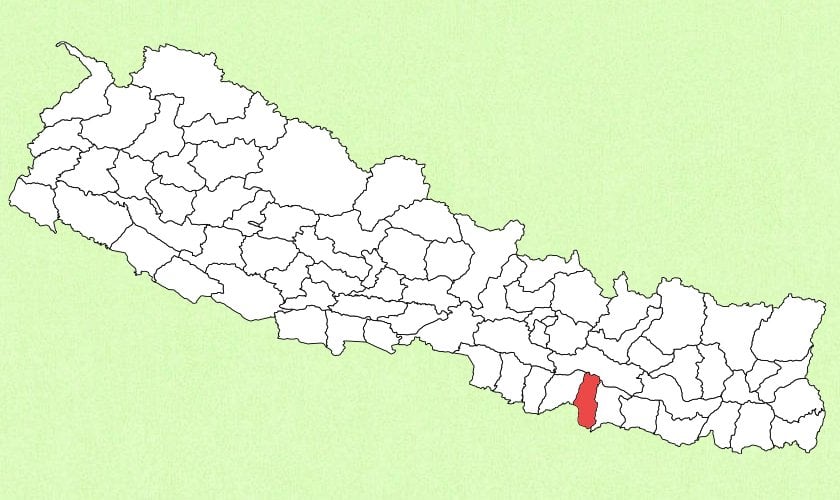
Jajarkot is a district far from the capital. Houses and shelters destroyed by the earthquake have not yet been rebuilt. The state has not been able to advance the reconstruction work. Although the government has made DDA plans, the people have not been able to receive facilities. How can safe housing be provided? How can an environment be created for people to live in safe housing? This was my first agenda, and it remains my last. I will continuously raise my voice. This is my commitment to them.
This specific news has been automatically translated by AI. As a result, there may be some inaccuracies or language errors.




_zp49KLQnq8.jpg)