US President Trump Threatens New Tariffs on Canada Amid Wildfire Smoke

- Nadim Yusuf, Marco Silva, Zahara Fatima
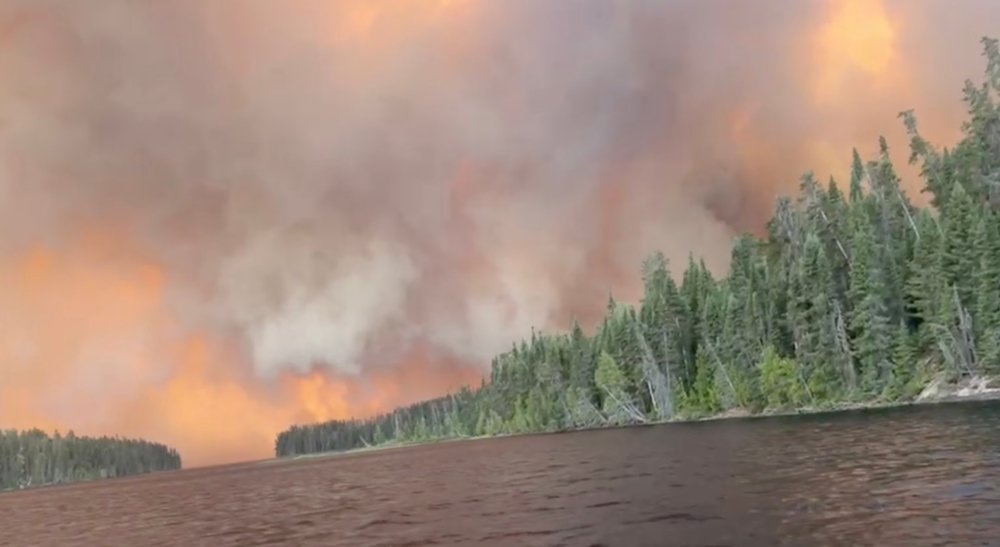
US President Donald Trump has threatened to impose new tariffs on Canada after hundreds of wildfires spread across Canada, covering many areas of North America with smoke. Trump's warning came after US lawmakers criticized Canada's wildfire management and Ontario Premier Doug Ford urged the US to send help to fight the fires instead of criticizing.
Trump wrote on his social media platform Truth Social, 'The United States is under unnecessary attack from dirty, polluted, and unhealthy air.' He also warned that new tariffs could be imposed due to Canada's 'deliberate negligence.'
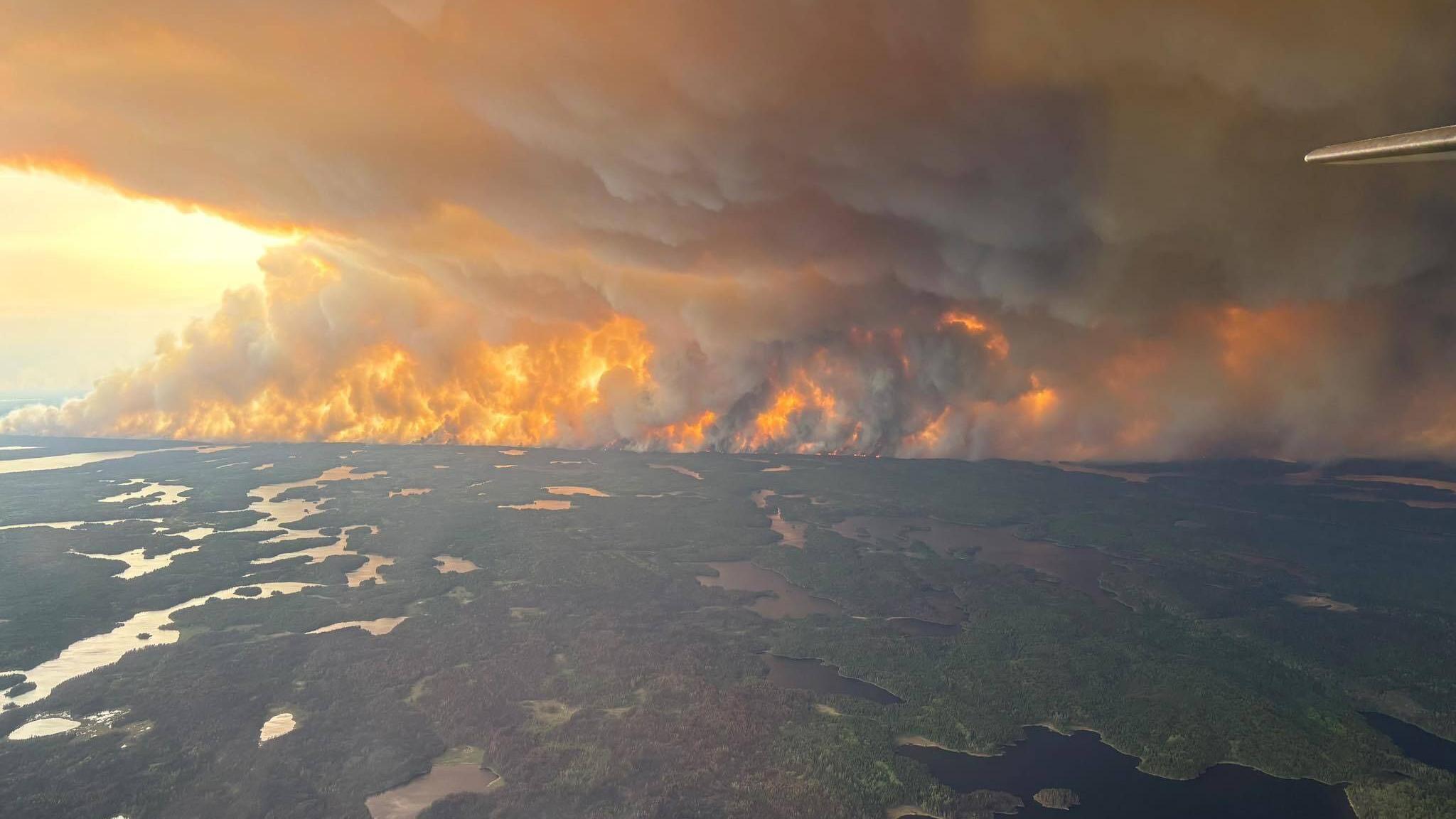
According to the Canadian Wildland Fire Information System, as of Friday, 888 wildfires were active across Canada, most of which are still out of control. More than 190 of these fires have spread in Ontario province alone.
Trump said he would call Canadian Prime Minister Mark Carney to seek clarification on Canada's 'deliberate negligence.' He also accused Canada of not properly managing its forests and brush.
Some Republican leaders, supporters of Trump, have revived this issue by linking it to Trump's old proposal to make Canada the 51st state of the US. That proposal has angered many Canadians, and many have stopped traveling to the US in protest. Some have even suggested delaying the inauguration of the Gordie Howe International Bridge, built by Canada, connecting Ontario and Michigan.
Canada has not yet issued any formal response to Trump's tariff threat. However, Prime Minister Carney had previously stated that both countries have a responsibility to combat climate change.
For the past year, US-Canada relations have been tense, mainly due to trade. After Trump imposed tariffs on Canada last year, a new trade agreement has not yet been reached between the two countries.
- How did the wildfire become so severe?
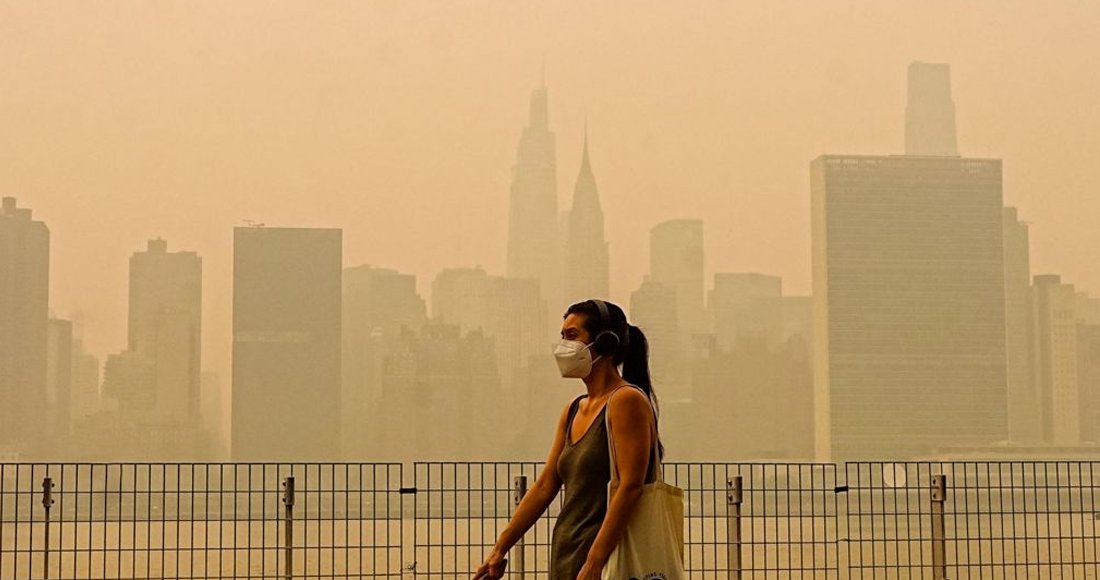
According to the Canadian Wildland Fire Information System, nearly 3 million hectares of land have been destroyed by wildfires so far this year. Smoke from these fires has spread to Minnesota, Michigan, Pennsylvania, Ohio, and New York in the US.
Air pollution has been declared at 'dangerous' levels in many areas, leading to the cancellation of outdoor events. According to Swiss air quality monitoring firm IQAir, Detroit had the worst air quality in the world measured on Friday. Chicago, Washington D.C., and New York followed in the list of worst-affected cities.
- US Lawmakers' Dissatisfaction
US lawmakers John James, John Moolenaar, Jack Bergman, and Lisa McClain wrote an open letter to Canadian officials stating, 'Our patience has run out.' They warned that 'We need action, not apologies,' and if Canada does not take effective steps, the US may become directly involved in controlling cross-border wildfires.
They accuse Canada of not investing enough in measures such as thinning forests, removing dry fuel (leaves and twigs), controlled burns, and preventing arson.
- What do experts say?
Speaking to BBC Verify, scientists said the reality is much more complex. According to Dr. Patrick James of the University of Toronto, 'Weather does not respect international borders.'
Once smoke enters the atmosphere, it spreads wherever the wind carries it. In recent years, smoke from large wildfires in the US had also affected Canada.
According to experts, many of the current wildfires are in Canada's vast and remote forests, where it is very difficult to detect or control fires early on. While good forest management can reduce risks in some areas, they say it is impossible to completely prevent wildfires in such vast forest areas.
- Impact of Climate Change
Wildfires are not new in Canada, but their number has increased rapidly in recent weeks. According to scientists in the US and Canada, the main reason for this is the consistently hot weather and below-average rainfall in Northern Ontario at the end of June.
Scientists say that climate change is increasing temperatures and making the environment drier, creating conditions for wildfires to spread quickly. Some wildfires were also started by lightning.
According to Dr. Annabella Bonada of the University of Waterloo, 'Climate change is a global problem. It would be wrong to conclude that only Canada was responsible for these wildfires or that it could prevent them alone.'
- 'Send Help, Not Criticism'
Ontario Premier Doug Ford, responding to the criticism from US lawmakers, recalled that Canada had previously assisted the US during wildfires in California and hurricanes in North Carolina.
'Send help instead of complaining. We did the same for our American friends,' he said. According to Ford, the states of Michigan and Massachusetts have already offered to send water bombers, firefighters, and rescue teams.
Prime Minister Carney also said at a press conference held in French, 'Climate change is everyone's responsibility, including the United States.'
Ford informed that more than 150 firefighting teams, over 80 water bombers, and helicopters are currently engaged in wildfire control. According to him, the Ontario government has spent over $1 billion on forest fire control since 2018. 'We have mobilized all our resources,' he said.
- Communities Destroyed, Thousands Displaced
Some residents in Northern Ontario have been forced to leave their homes due to wildfires. The chief of an Indigenous community said her settlement had been 'turned to ash.' In British Columbia, as of Friday, there were 59 active wildfires, 39 of which had started in the last 24 hours. Of these, 31 are out of control, according to the province's wildfire service.
Smoke from a large wildfire in northwestern Ontario has spread air pollution as far as the US. On Thursday, the smoke in New York was so thick that the Empire State Building and the Statue of Liberty were not clearly visible. National monuments in Washington D.C. were also covered in smoke.
Health officials have urged citizens to stay indoors as much as possible. Free masks have also been distributed in some places. As a result, outdoor activities have been canceled in many areas of Chicago, Detroit, Pennsylvania, and New England. Summer camps have been moved indoors, concerts have been postponed, and even some beaches have been closed. Flights have been delayed at some airports due to low visibility.
- Concerns Over World Cup Final Also Affected
Concerns have also been raised about the impact of smoke and poor weather on the World Cup final between Argentina and Spain, scheduled to be held at MetLife Stadium in New Jersey on Sunday. Trump is scheduled to attend the match.
White House officials, particularly World Cup task force chief Andrew Giuliani, have been in informal discussions with FIFA officials. However, no formal meeting has been scheduled yet. According to meteorologists, there is a possibility of rain over the weekend, so air quality is expected to improve before the match.
Due to wildfires in Northern Ontario, many residents of 'First Nations' communities have been forced to evacuate by boat. According to Matthew Hoppe, emergency commander for Namaygosagagung First Nation, locals had to rescue themselves in small boats on Monday as the fire rapidly advanced towards the village.
He stated that although there were no human casualties, the entire community was 'completely destroyed.' Community Chief Helen Pavola told local media that her settlement had been 'turned to ash.'
According to Premier Ford, 10 communities have been displaced so far, with many of their residents taking shelter in cities in Southern Ontario. 'It is a miracle in itself that no one has lost their life in such a major disaster,' Ford said.
(From BBC)
This specific news has been automatically translated by AI. As a result, there may be some inaccuracies or language errors.