Former Home Minister Narayan Kaji Shrestha Highlights Persistent Exploitation by Predatory Lending


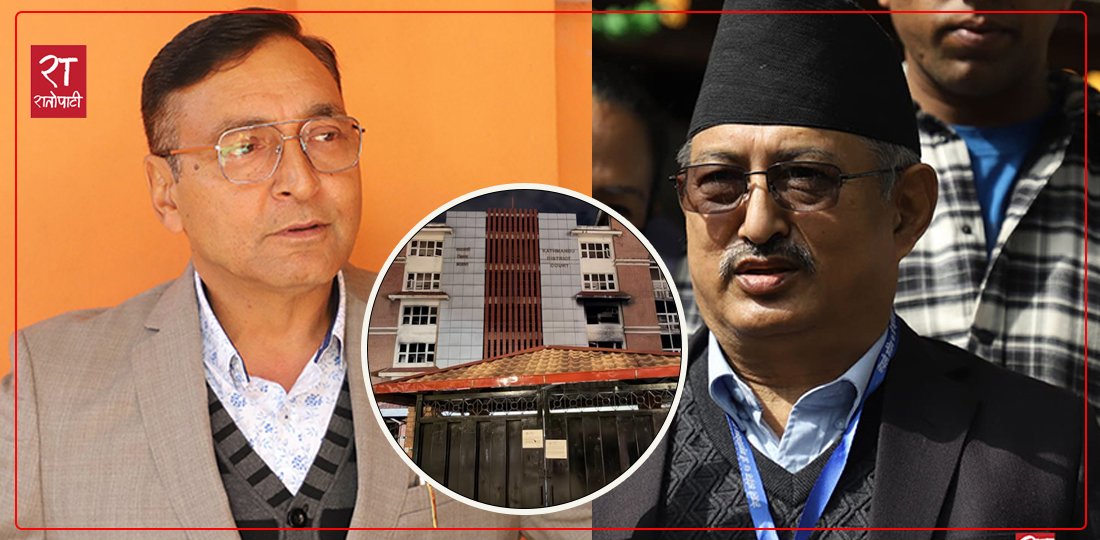
Kathmandu. Nepali Communist Party leader and former Home Minister Narayan Kaji Shrestha has stated that exploitative practices like predatory lending, a heinous manifestation of feudalism, still persist in Nepali society today, with thousands of poor people falling victim to it.
Posting on social media Facebook, he mentioned that many have lost their land and ruined their lives due to predatory lending. He stated that this problem is particularly severe in the Terai Madhesh region.
He recalled that during his tenure as Deputy Prime Minister and Home Minister, he had initiated a campaign by enacting laws related to unfair transactions, forming a commission, establishing facilitation committees in all district administration offices, and mobilizing the police administration.
He mentioned that even before joining the government, he had personally led the struggle of predatory lending victims by visiting their homes in Sarlahi and had taken practical steps to ensure justice by arresting some moneylenders.
According to Shrestha, during his tenure, about 26,000 victims had filed complaints with the commission, and among them, some had their fake promissory notes canceled and their land returned. He expressed sadness that despite numerous obstacles, the work of providing justice to the victims was moving forward, but after he stepped down, the issue could not be sustained.
He identified three main weaknesses for the victims' continued lack of justice. First, subsequent governments did not prioritize this issue, nor did they formulate any plans or take action to provide justice to the victims. Second, the courts began making decisions in favor of the exploiters based on fake documents.
Discussing this trend, former Home Minister Shrestha said, 'When I was Home Minister, upon observing such a trend in the courts, I personally went to the Supreme Court and met with the then Chief Justice and his team to draw their attention to this matter.' He stated that he had emphasized that if fake documents were to be considered the basis, then what was the meaning of the parliament enacting laws related to unfair transactions?
Although the team including the Chief Justice took it seriously and the courts made correct decisions in favor of the victims for some time, he alleged that after they left the government, the courts' role changed, and they started making wrong decisions. As a third weakness, he asserted that the district police administration completely neglected this campaign and instead began playing a role in favor of the exploiters by taking personal benefits.
He revealed that although efforts were made to further strengthen the law enacted at that time, they were unsuccessful due to the opposition from Madhesh-centric parties and leaders. However, he expressed the view that the campaign could have moved forward with clarity from the federal government, cooperation from the judiciary, and a victim-oriented role from the police, and that it would be appropriate to further amend and strengthen the law now.
Shrestha has expressed his support and solidarity with the ongoing foot march by predatory lending victims from Janakpur towards the federal capital demanding justice. He urged the government to take this issue seriously and address the movement to provide justice to the victims.
He humbly requested the lenders to present themselves in a manner befitting a democratic Nepali society of the 21st century. He said, 'We are not saying that those who have taken loans do not have to repay the lenders. Loans must be repaid after taking them. However, only the principal amount taken and the interest determined by the government on top of that should be given and taken.'
He claimed that after they started the campaign, new predatory lending transactions across the country were not as prevalent as before, and emphasized that the state should provide easy access to loans for the general public. He mentioned that during their time in government, positive discussions were underway regarding starting the provision of easy collateral-free loans for those going for foreign employment, but a decision could not be made.
This specific news has been automatically translated by AI. As a result, there may be some inaccuracies or language errors.