Historic 12 Bigha Ground in Janakpurdham Neglected, Becomes Dumping Site

Janakpurdham. Janakpurdham, the capital of Madhesh Province, is an important city in Nepal historically, religiously, culturally, and touristically. This city, famous worldwide as the birthplace of Mother Sita, a center of faith for Hindus, is visited by thousands of domestic and foreign religious tourists every year. The Janaki Temple, located in the heart of Janakpur, is the main attraction of this city.
This city, known as '52 Kuti, 72 Kund', has various monasteries, ponds, and religious heritages within it. The historic Barahbigha Rangabhumi Maidan, located about 500 meters west of Janaki Temple, has not only spoiled the beauty of the city due to being covered in garbage but has also been deterring tourists from visiting the city.
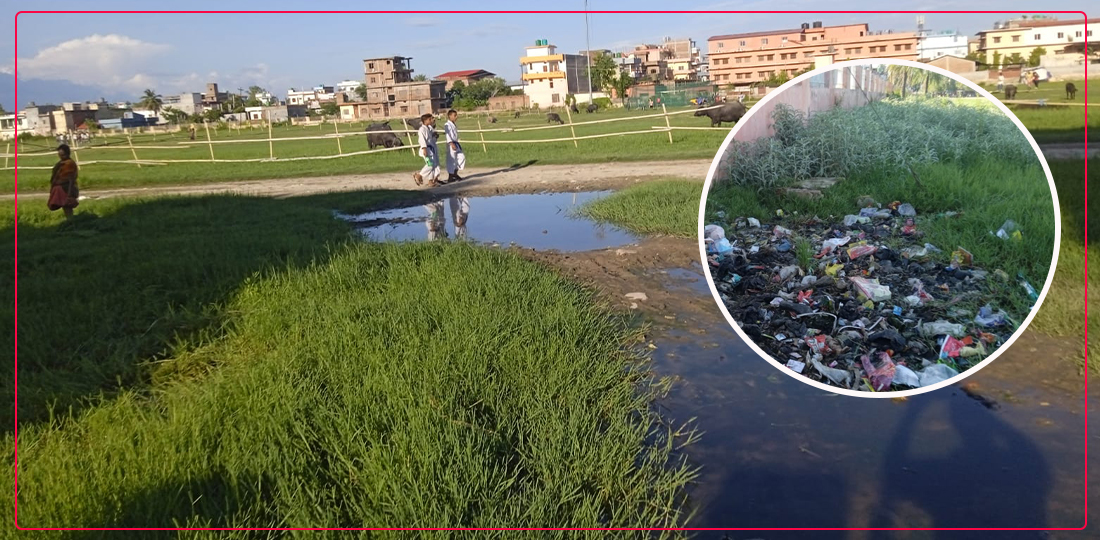
The dilapidated condition of this Rangabhumi Maidan, which falls on the main route to visit the temple, reflects the state of development and conservation in the Madhesh Province. The Barahbigha ground has now been turned into a dumping site for garbage. A pile of garbage is found accumulated at the main entrance to this ground, and upon entering, one worries about why they didn't wear a mask.
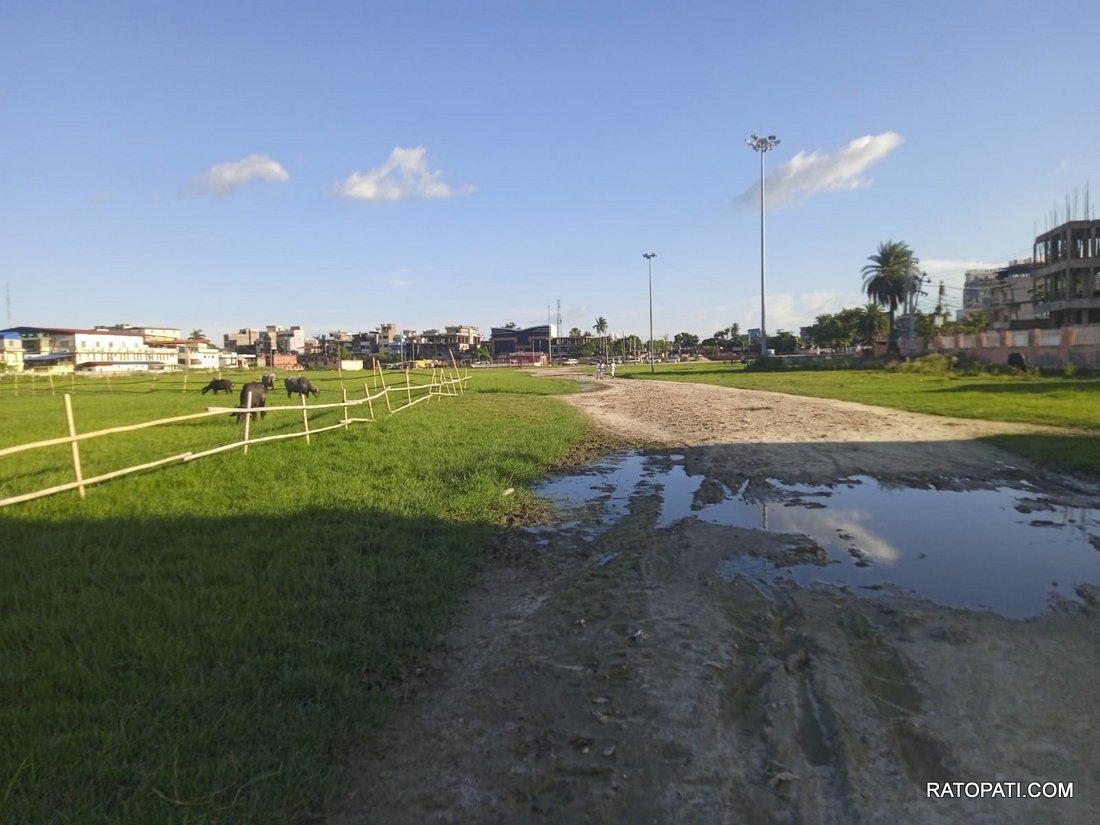
Dozens of buffaloes, cows, and goats can be seen grazing within the ground. There are many private hospitals around the ground. Some of these hospitals also dispose of infected waste in this ground.
During the rainy season, hospital waste disposed of is seen floating in the water accumulated in the Barahbigha ground. Tourists and city dwellers use this path in the middle of Barahbigha for commuting. With the onset of the monsoon, those who use this path have to face a lot of hardship.
Raju Karna, a local from Ward No. 10, adjacent to Barahbigha, said, 'During the Panchayat era, this Barahbigha was somewhat protected and clean, but now, even though the provincial government and the local level have become so strong, its conservation is not being paid attention to.'
Karna blames the Janakpur Sub-Metropolitan City and the Greater Area Development Committee for its mismanagement. He said, 'It is their main responsibility to protect such a historic site. The elected representatives themselves use the road next to this Barahbigha daily. They travel by car, but they do not pay attention to its protection and conservation.'
This ground, which was once a center for national and international sports competitions, cultural programs, political rallies, and various public activities, has now become a symbol of stench, garbage, and neglect.
'This ground has produced many national and international players in cricket and football. Those players have spread Nepal's name worldwide, but seeing its current dilapidated state makes me angry towards the players who lead the country,' said local sports activist Ramesh Mallik, adding, 'There is no alternative but for the local residents to unite to save its prestige and improve its condition.'
Due to the stench spreading around the ground, pedestrians commuting daily on the road adjacent to the ground are forced to walk with their noses covered. Due to the lack of regular cleaning and proper management, the condition of the capital's main public space is dire. The local resident of Janakpur-4, Amaresh Kumar Singh, said that although this ground is cleaned during the grand celebration of Vivah Panchami, Cleanliness Day, or any special ceremony in Janakpur, it is irresponsible to clean it for one day and pile up garbage on other days.
'To make Barahbigha organized, first, it needs to be filled with soil, and after managing the drainage of stagnant water all around, its condition will improve,' he said.
Governments have changed, federalism has come, representatives have changed, various development constructions and plans have been announced, but no effective work has been done anywhere for the improvement of the Barahbigha ground. Citizens are expressing dissatisfaction over the lack of interest from the concerned bodies regarding the conservation, beautification, and cleaning of the ground.
Local social activist Saroj Mishra said, 'The development of Barahbigha has been obstructed because the local level and the Greater Area Development Committee have turned the ownership dispute into a battle of egos.' He complained that although the provincial government allocated a budget for its conservation last year, the work could not be done due to these two organizations.
A decade ago, when the condition of the wall surrounding the Barahbigha ground became dilapidated, the Indian Embassy provided financial assistance of 500 million rupees for the construction of the wall and the Ganga Sagar and Dhanush Sagar ponds in the Barahbigha ground. However, as the work was of poor quality, a corruption case was filed in the special court against 13 people, including the then Chairman of the Greater Area Development Committee, Digambar Rai.
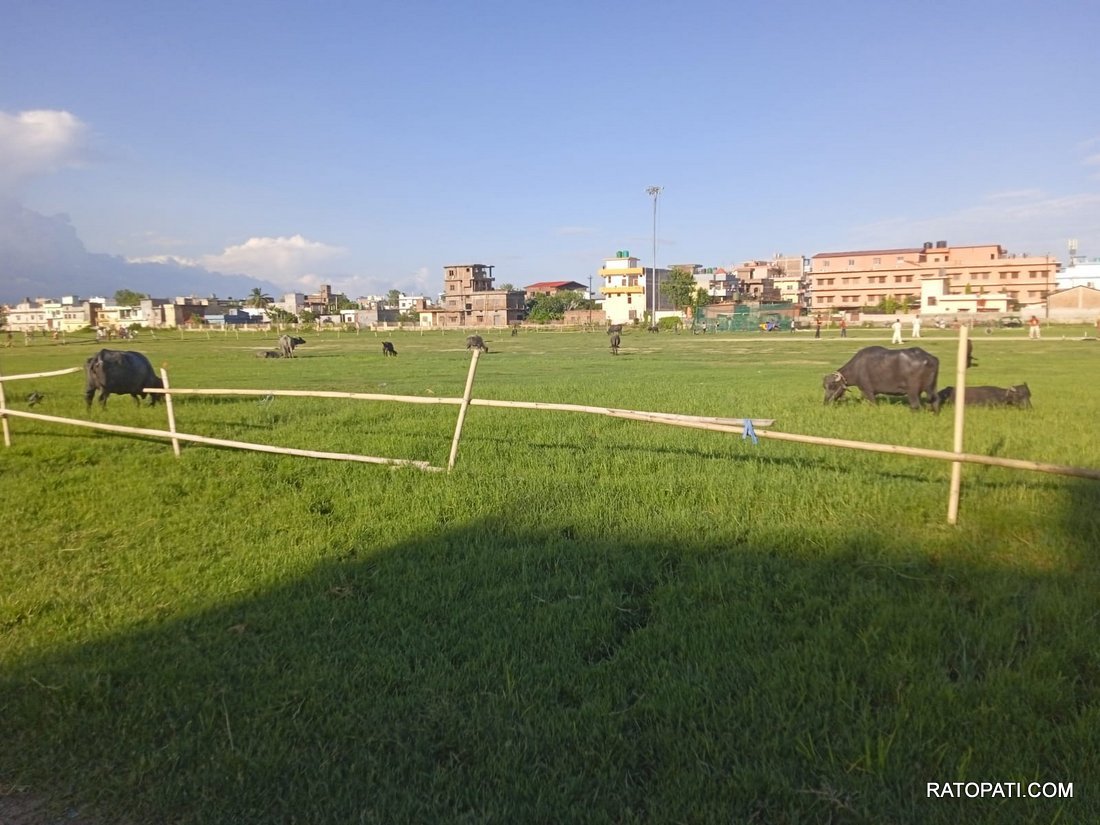
The question being raised by locals is why the provincial government, Janakpurdham Sub-Metropolitan City, the concerned ministry, and stakeholders have not paid attention to this historic site, a heritage of the capital of Madhesh Province and a cultural and religious site. They say that the indifference shown in the conservation and management of public property has affected the image of the capital.
Historic sites like Barahbigha have been made parking lots for buses, jeeps, and e-rickshaws operating within the city, coming from India and other districts. Dozens of four-wheeled carts selling fruits, clothes, and other goods are found at the main entrance of this ground, which falls on the main road from Ramananda Chowk to Janaki Temple. Thousands of tourists visiting Janaki Temple are disheartened by the chaotic state of the Barahbigha ground.
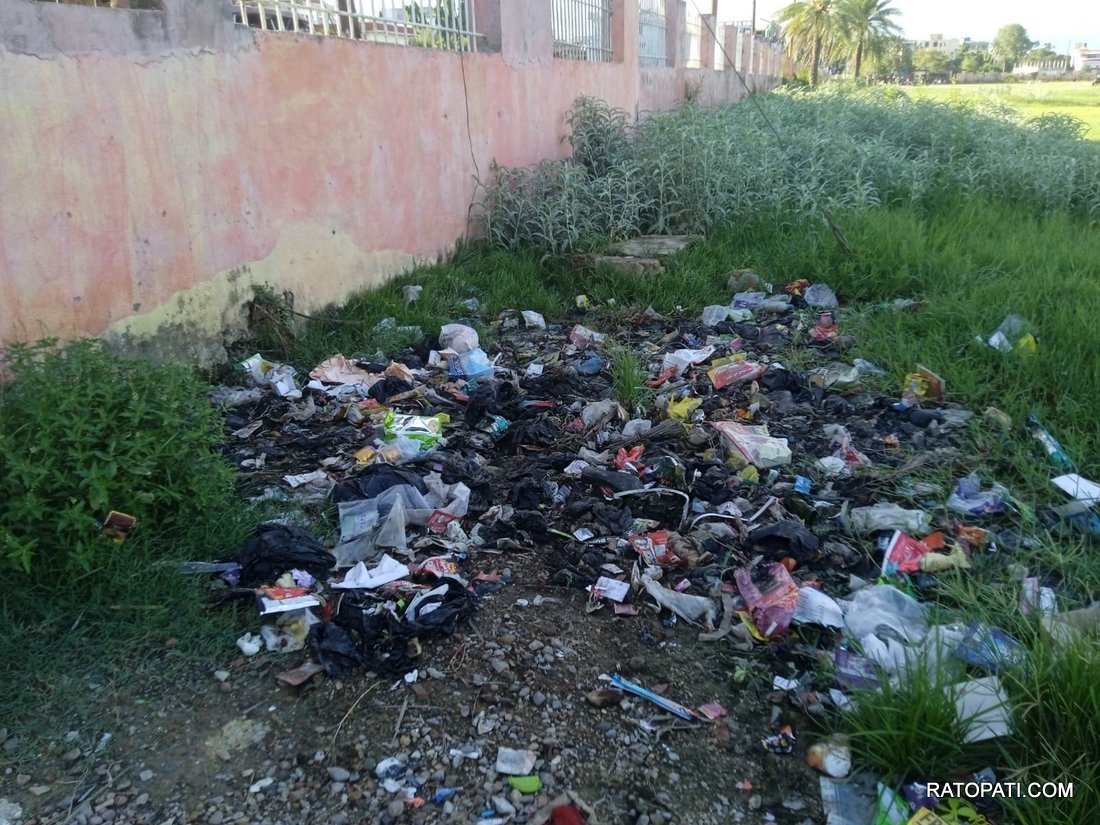
Ramudar Sah, who came from Uttar Pradesh, India, to visit Janaki Temple, was forced to cover his nose as soon as he got off the bus parked at Barahbigha. He said, 'A pilgrimage site should be a bit organized, what a dirty and smelly place this is.'
E-rickshaw, taxi, and ambulance drivers who park at Barahbigha also expressed concern over the dilapidated state of the historic ground. Locals suggest that the capital's identity should not only be as an administrative center but also that the conservation of public spaces, a safe environment, infrastructure, and development construction should build its true image, hence all bodies must unite in the conservation and management of the historic Barahbigha ground.
This specific news has been automatically translated by AI. As a result, there may be some inaccuracies or language errors.