National Planning Commission to Prepare 'Vision 2050' for Long-Term Development

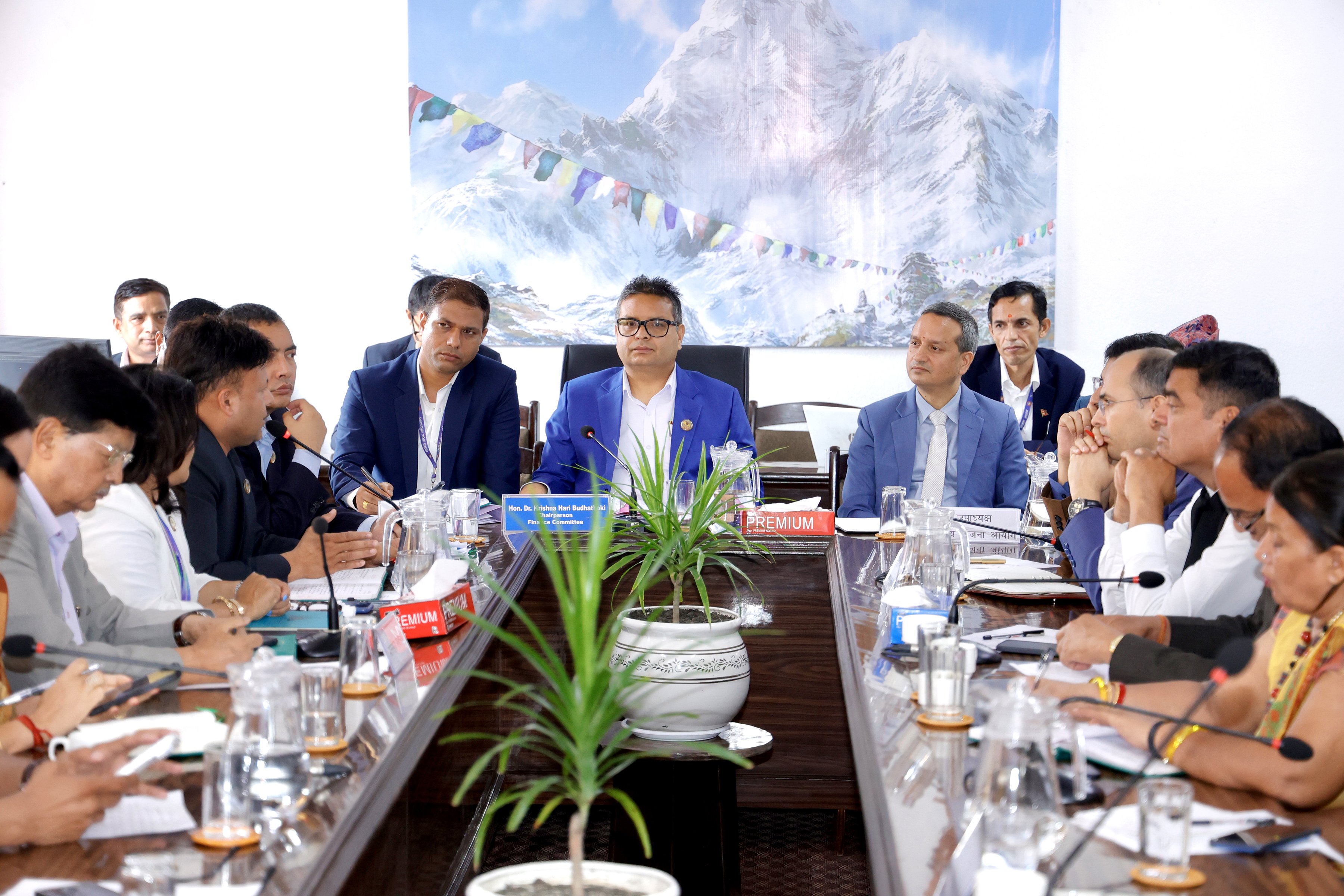
Kathmandu. The National Planning Commission is preparing to start work on the concept of 'Vision 2050' to prepare a long-term development roadmap for the next 25 years. Vice Chairman of the Commission, Dr. Gunakar Bhatta, informed that the upcoming fiscal year's work plan of the commission includes the national vision for the next 25 years.
Speaking at a meeting of the Finance Committee under the House of Representatives on Monday, he said that the 'Vision 2050' concept will provide long-term guidance for the formulation of upcoming periodic plans. Vice Chairman Bhatta mentioned that the new long-term vision 'Vision 2050' will be prepared in consultation with all stakeholders. The commission is also preparing to further strengthen coordination with the National Statistics Office to effectively manage statistical sources for evidence-based policy making.
Recalling that the Central Bureau of Statistics (CBS) was previously under the Planning Commission, he expressed the view that bringing the National Statistics Office back under the commission's purview would help in obtaining timely statistics, strengthening research, and making policy formulation effective. In the meeting, he said, 'In our work plan for the upcoming fiscal year, we have outlined what the country's vision for the next 25 years will be.'
Mentioning that a long-term vision up to the year 2100 BS was formulated in the 15th plan a few years ago, he added, 'We are also starting to work on the concept of Vision 2050, defining what our vision will be for the next 25 years.' According to him, the commission is also studying the concepts of Project Bank and 'Project Pipeline'. Preparations are being made to evaluate indicators by giving high priority to economic, environmental, and social sustainability in project selection and management.
Concern over centralization of resources, no grant proposals from local levels
In the meeting, Vice Chairman Dr. Bhatta mentioned that the state's resources are highly centralized, which has hindered inclusive and balanced development. He emphasized the need to ensure equal access to resources that provinces and other regions should receive when formulating policies, selecting projects, and allocating budgets in the coming days. He stated that he has found that many representatives do not have clear information about the role of the National Planning Commission.
Although village and ward chairpersons come to the commission to request projects in their areas, he said that many local levels do not formally submit proposals for special and complementary grants. He mentioned that no demands have come from about 100 local levels for special and complementary grants, while federal MPs from those areas come to lobby for development projects. He clarified that the situation where local levels do not complete the necessary procedures but MPs keep lobbying for development must be overcome.
This specific news has been automatically translated by AI. As a result, there may be some inaccuracies or language errors.


_aADS5ULwOP.jpg)