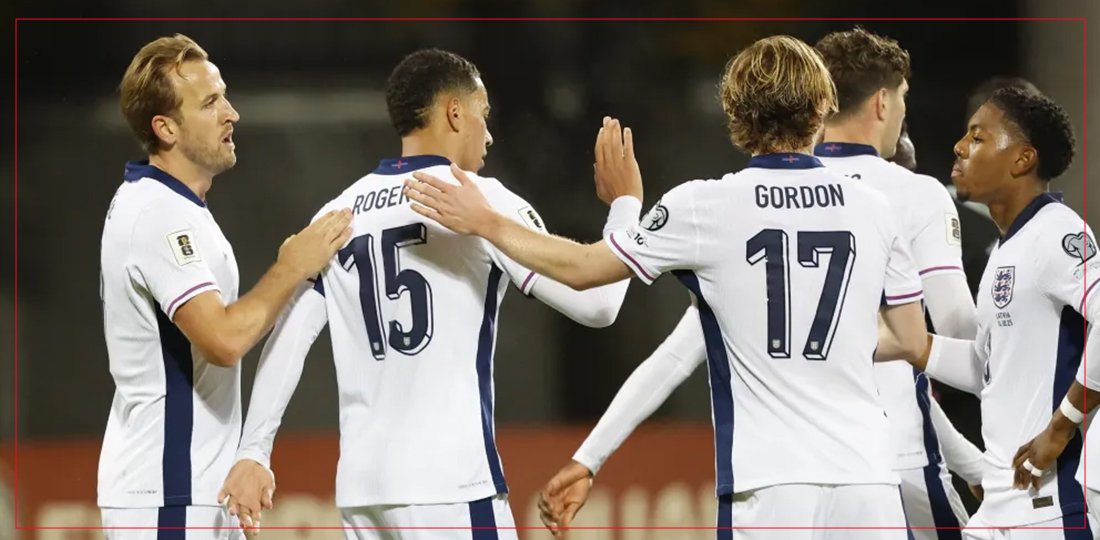
England and Argentina Clash in FIFA World Cup 2026 Semifinal

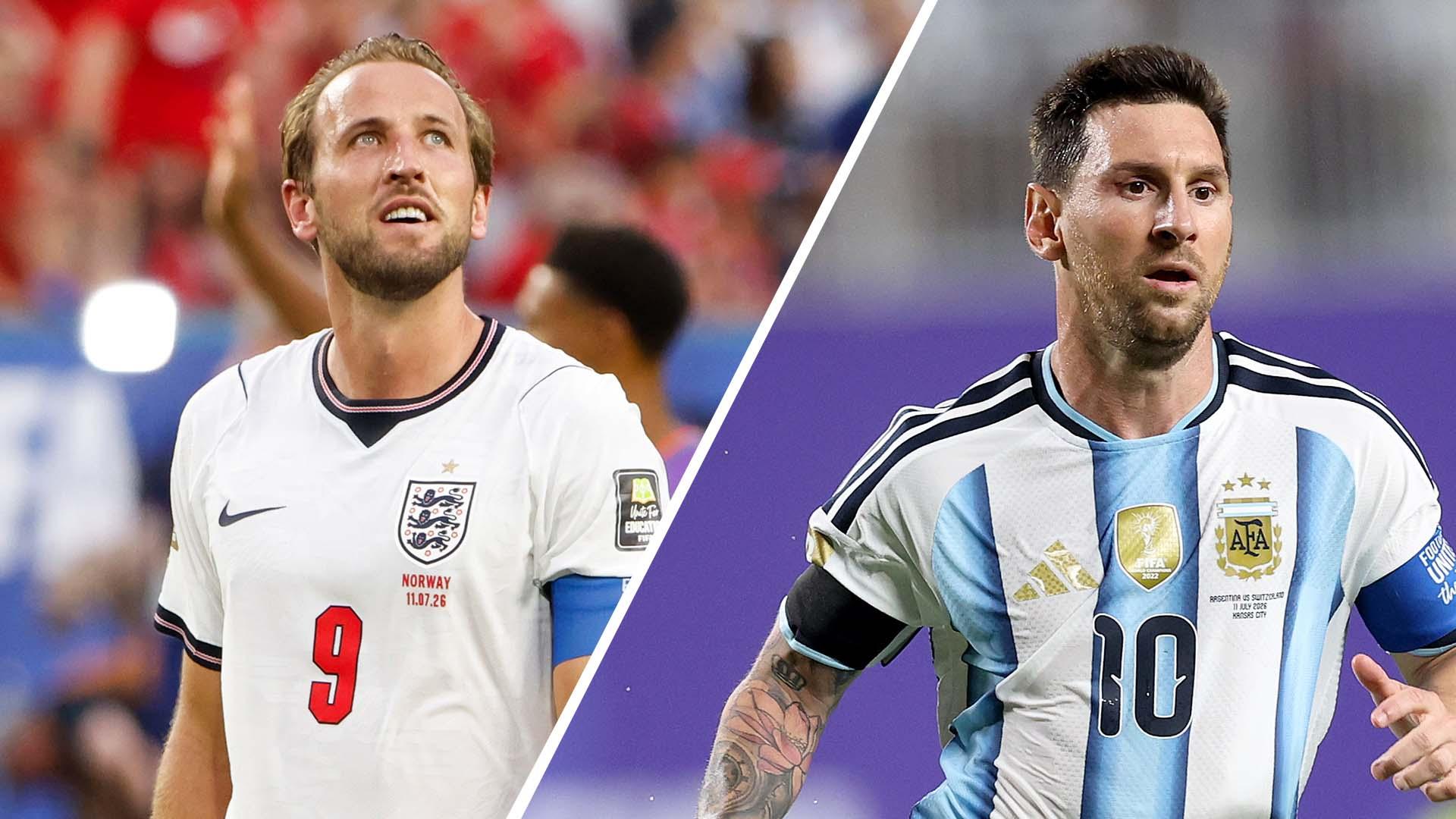
England and Argentina are clashing for a place in the World Cup final. Can a football match be bigger than this?
These two countries have a history of nearly two centuries of bloodshed. For six decades, there has been extreme enmity between them on the field. Which includes drama, controversy, and some magical moments.
It is difficult to describe in words the importance of the clash to be held in Atlanta on Wednesday. These two powerful teams are facing each other for the first time in 21 years.
In the last friendly match held in Geneva in 2005, 18-year-old Lionel Messi was suspended. In that match, England overturned a 2-1 deficit to win 3-2 in the final moments. This time, all eyes will be on Messi, the World Cup's all-time top scorer, who aims to lead the defending champions to the final again.
The roots of football between these nations are very deep. The first recorded match in Argentina was played in 1867 by British railway workers. Famous old clubs like Newell's Old Boys and Rosario Central were founded by foreigners (British). The names River Plate and Boca Juniors are also influenced by the English language.
Argentina was the second country after Scotland to face England at Wembley Stadium. Argentina was the second country after Scotland to face England at Wembley Stadium. England won that match 2-1.
But after initial friendship, it turned into extreme enmity. This enmity has been passed down through generations. Current Argentine supporters are still singing songs against England from the stands in this World Cup.
But where did all this start? Let's look back at some of the best moments of their enmity:
- 1966: England 1-0 Argentina
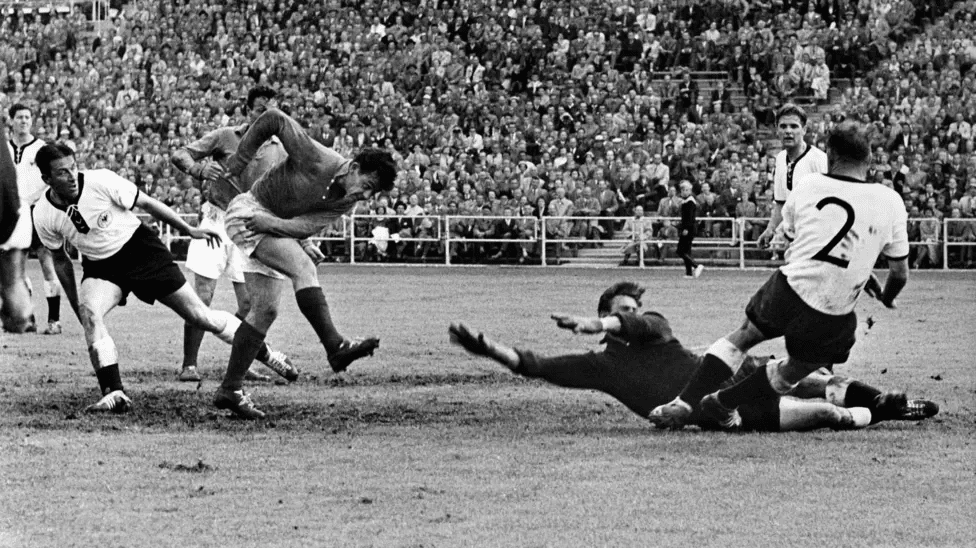
Their first meeting in the World Cup was not actually in 1966. It was four years earlier in Chile. England secured a crucial 3-1 victory in the group stage match held in Rancagua. England advanced to the quarterfinals on goal difference, ahead of Argentina. However, England was later defeated 3-1 by eventual champions Brazil in the last eight.
That match was completed without any controversy. But the same cannot be said about their meeting four years later.
The quarter-final clash at Wembley was dubbed 'The greatest theft of the century' (El Robo del Siglo) in Argentina. England, playing with more than half the time against 10-man Argentina, won 1-0. Claims of a conspiracy against the South American team were made after this match.
Argentina's slow pace was disrupting England's game. German referee Rudolf Kreitlein was very busy due to continuous fouls. The situation became tense before half an hour of play.
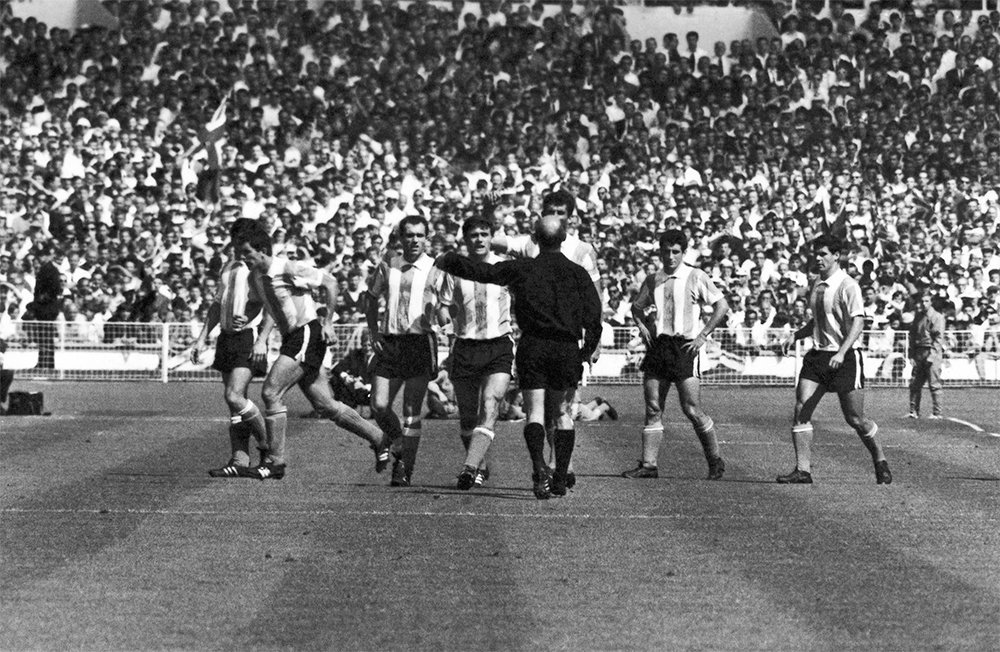
Argentina's captain Antonio Rattin received a warning after tackling opponent Bobby Charlton. Three minutes later, he received another warning. He argued with the referee after warning his teammates for not stepping back 10 yards during a free-kick outside the penalty box.
Argentinians claim the problem was due to not understanding the language. Rattin refused to leave the field. He insisted on needing a translator. Because of this, the game was stopped for eight minutes. Discussions took place on the sidelines. England's FIFA referee liaison officer Ken Aston also participated in that discussion. Later, on his initiative, the rule of yellow and red cards was introduced from the 1970 World Cup, replacing verbal warnings.
Police officers had to escort Rattin off the field. While leaving, he stomped on the corner flag bearing the British flag. Not only that, he sat on the red carpet laid out for Queen Elizabeth. This incident further angered the home crowd.
It was announced only on Saturday that Rattin had passed away at the age of 89. This news came just a few hours before Argentina defeated Switzerland in the quarterfinals. The players wore black armbands in that match.
England was not entirely innocent in this controversy. They committed 30 fouls throughout the game. Geoff Hurst did not receive a warning for a bad tackle on right-back Roberto Ferreiro. Hurst himself scored the only goal of the game with a header from Martin Peters' cross. But the Argentinians claimed that goal was offside.
After the final whistle, Ferreiro confronted the referee. The referee needed police escort to leave the field. Ferreiro was banned for three games after tearing the referee's jersey. Ermindo Onega was also banned for spitting at FIFA Vice-President Harry Cavan.
There was a tradition of exchanging jerseys at the end of the game. But England's coach Alf Ramsey ran onto the field to stop his players. In the post-match press conference, he described the Argentinians as 'animals'.
- 1986: England 1-2 Argentina
Tense friendly matches between these two countries ended in a draw in 1974 and 1977. England won another friendly match at Wembley in 1980 by 3-1. Diego Maradona faced England for the first time in this match.
Their second meeting in the World Cup was in the quarterfinals in 1986. This match was played at the Azteca Stadium in Mexico City. Just four years earlier, tensions between the two countries had escalated over the issue of the Falkland Islands (which Argentinians call 'Las Malvinas'). War had lasted for 74 days after Argentine troops entered the British territory in the South Atlantic. More than 900 people lost their lives on both sides, and Argentina eventually surrendered.
Argentina wanted revenge on the Mexico City field. They took that revenge in a historic and controversial manner.
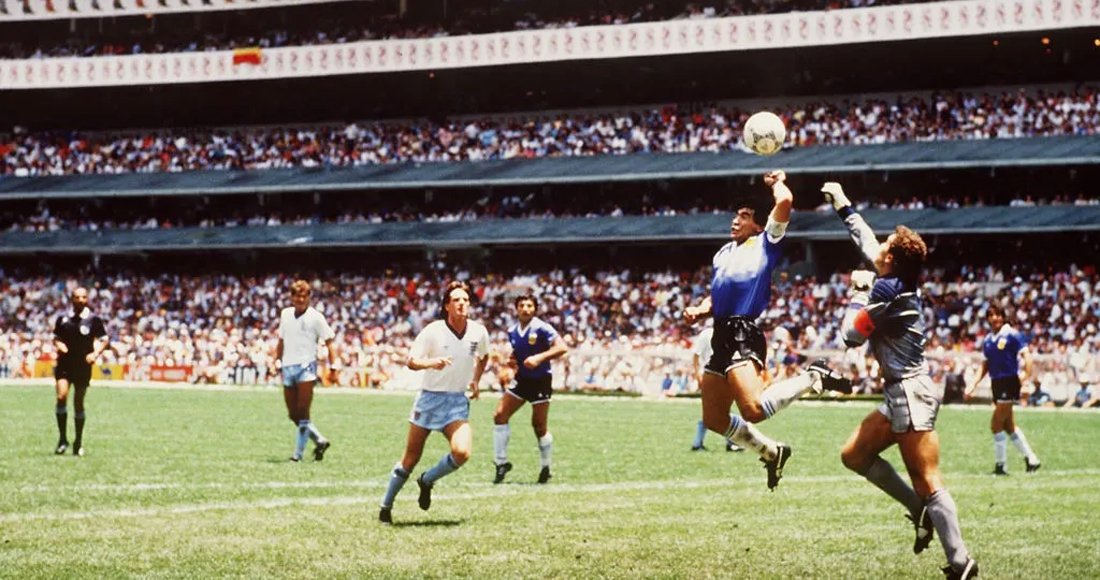
In the sixth minute of the second half, the game was goalless. Maradona ran into the penalty box to control the ball flying in the air. He hit the ball into the net with his hand, deceiving the advancing goalkeeper Peter Shilton.
England players protested. But the goal was allowed. Maradona later described it as 'The Hand of God'.
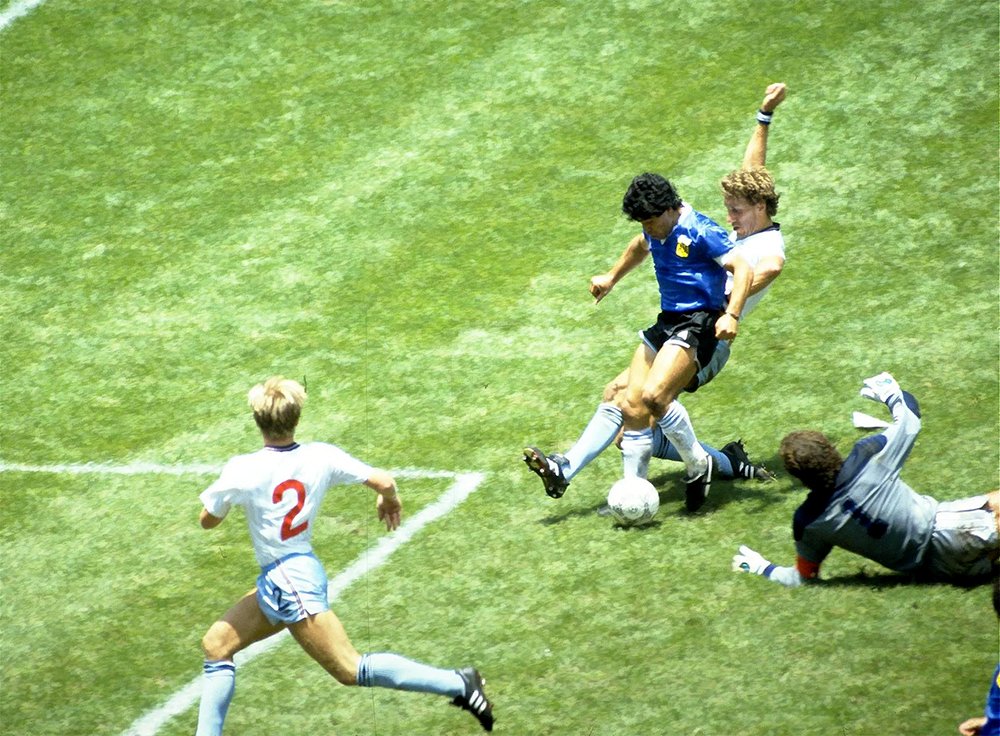
Another goal came four minutes after the first goal. Which was later known as the 'Goal of the Century'. Maradona advanced the ball from his own half. He ran brilliantly, evading England's defense. Touching the ball 11 times in 11 seconds, he beat five players. Finally, he deceived Shilton as well and scored a brilliant goal from the right side of the box.
Towards the end of the game, Gary Lineker scored a goal for England. This was his sixth goal in the tournament. Although England made a great comeback attempt, Argentina advanced. And finally lifted their second World Cup title.
- 1998: England 2-2 Argentina (Argentina won 4-3 on penalties)
In 1991, Argentina visited England for the first time in 11 years. Argentina came back from a 2-0 deficit to draw the friendly match at Wembley.
Their next competitive encounter was at the 1998 World Cup held in France. The Round of 16 match in Saint-Étienne was very exciting.
Gabriel Batistuta gave Argentina the lead from a penalty in the seventh minute. But four minutes later, teenage player Michael Owen won a penalty. Alan Shearer scored from it to equalize.
Then, in the 17th minute, Owen changed the course of the game with an excellent solo goal from midfield. But Javier Zanetti equalized with a clever free-kick just before the end of the first half.
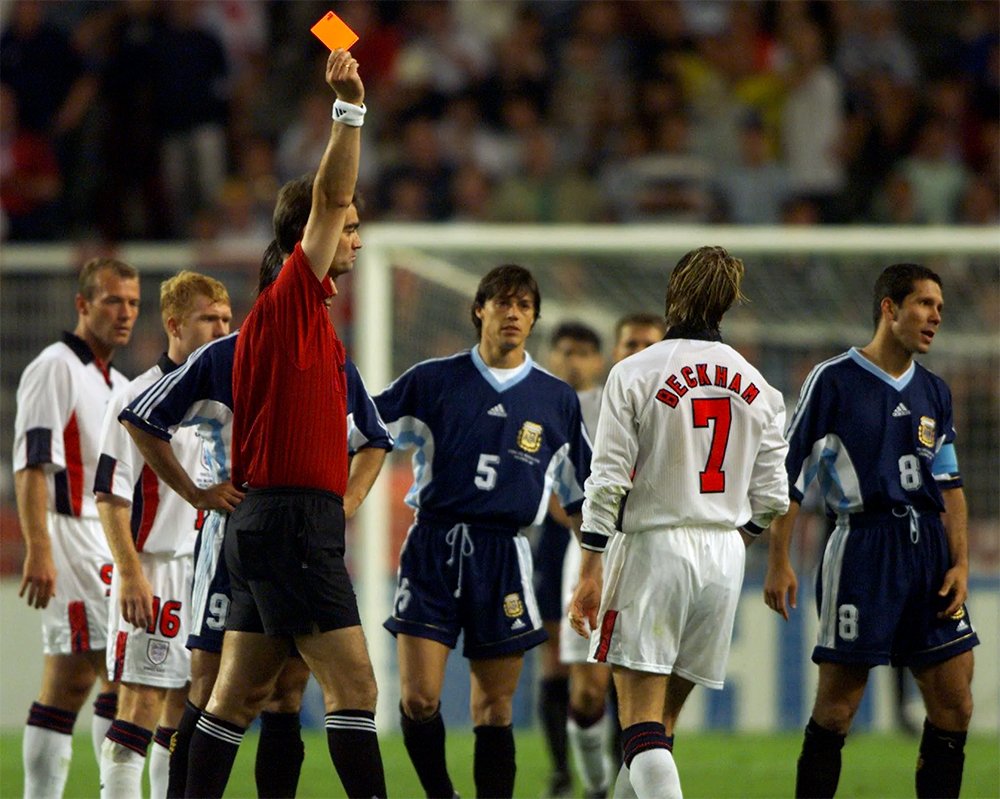
The complexion of the game changed a few minutes after the second half began. Diego Simeone fouled David Beckham in midfield. Beckham was lying face down on the field. At that moment, an Argentine player lightly kicked his head from behind. In retaliation, the then Manchester United player Beckham kicked Simeone's calf while still on the ground. Simeone fell to the ground. Danish referee Kim Milton-Nielsen showed Beckham a red card. British media heavily criticized Beckham after this incident.
England, reduced to 10 men, fought hard. They felt they had won the game with Sol Campbell's header at the end. But the goal was disallowed, with Shearer being ruled to have fouled goalkeeper Carlos Roa before the goal. Ultimately, Argentina won the penalty shootout 4-3. Goalkeeper Roa saved penalties from Paul Ince and David Batty, sending Argentina to the next round.
- 2002: Argentina 0-1 England
The friendly match at Wembley in 2000 ended in a goalless draw. Then, at the 2002 World Cup, England and Beckham got their first chance for revenge.
This group stage encounter in Sapporo, Japan, was very important. England had drawn their first match against Sweden and were under pressure to win to strengthen their chances of advancing to the next round.
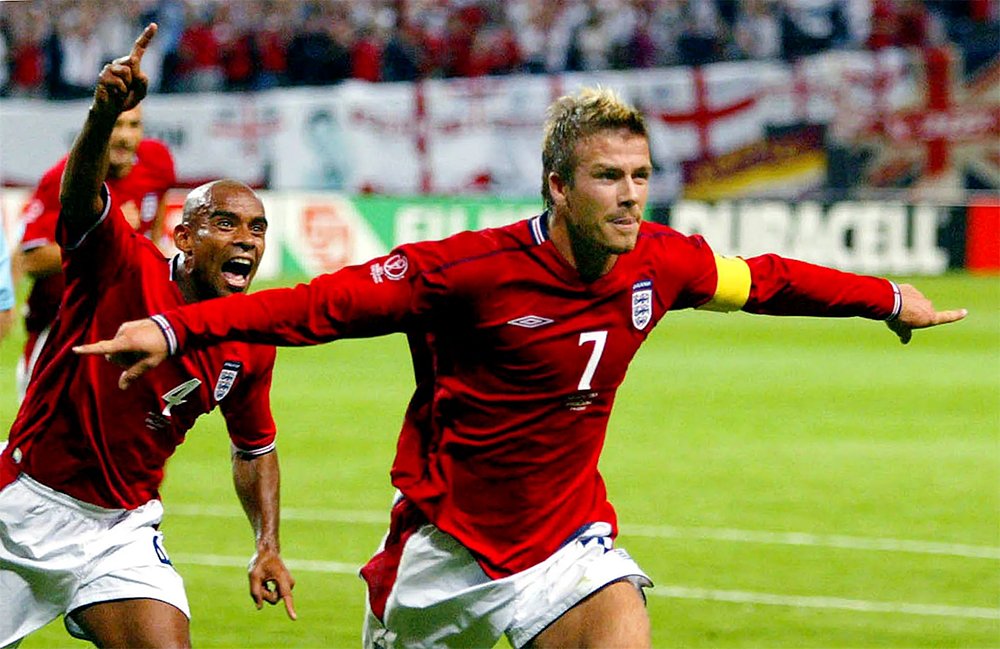
As the first half was about to end, Mauricio Pochettino fouled Owen inside the box. Beckham calmly scored from the resulting penalty by shooting directly into the middle.
This time, both Simeone and Beckham spent the full 90 minutes on the field. They even shook hands during the game. Although Argentina applied intense pressure in the final moments, England's defense remained strong. With this victory, England advanced to the knockout stage. Meanwhile, Argentina was eliminated from the group stage. This was the first and only time since 1962 that Argentina was eliminated from the group stage, where it all (the enmity) began.
This specific news has been automatically translated by AI. As a result, there may be some inaccuracies or language errors.