Typhoon Bavi Impacts Taiwan, Japan, and China, Causing Widespread Disruption

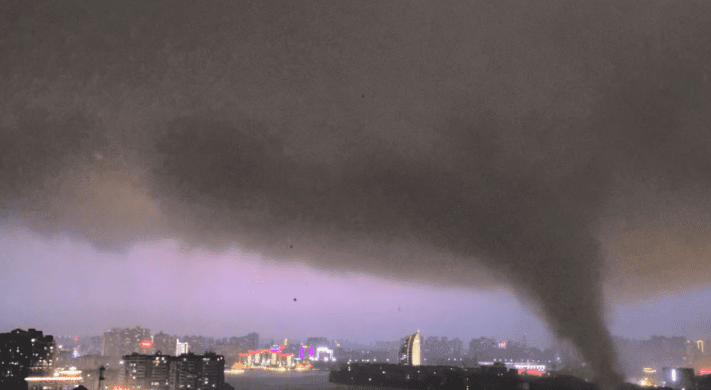
Beijing. Powerful Typhoon ‘Bavi’ has caused widespread impact in the northern part of Taiwan, southwestern islands of Japan, and eastern and northern regions of China on Saturday. More than 900,000 people have been evacuated to safe places in China, while thousands of households in Taiwan and Japan have been left without electricity.
At least 39 people have died due to extreme weather conditions in China’s southern and central regions this week. Dozens of rivers have flooded, and a reservoir dam has broken.
The typhoon ‘Bavi’ is estimated to make landfall in the city of Wenzhou in China’s eastern Zhejiang province on Sunday morning. According to local authorities, 887,801 people had been evacuated to safe places by late Friday.
Wenzhou officials have stated that all available resources are being mobilized, considering the potential for significant damage. Following forecasts of heavy rainfall in eastern Zhejiang and northeastern Fujian, local residents have made special preparations to secure windows and shutters of houses and shops.
More than one hundred thousand people have been displaced due to continuous rainfall in northern China. The amount of water released from the Miyun Reservoir near the capital Beijing has also been increased to control potential floods.
Flights Cancelled in Taiwan, Thousands Without Electricity
Most roads in the northern part of Taiwan appeared deserted on Saturday. Most businesses remained closed for the second consecutive day due to strong winds and rain. More than 14,000 people have been evacuated to safe places due to the storm. Hundreds of flights have been cancelled, and more than 170,000 households across the island have been deprived of electricity service.
A noodle shop owner in Keelung said he went out to deliver food to people working in essential services. Taiwan’s Central Weather Administration (CWA) stated that the maximum sustained wind speed of ‘Bavi’, which weakened from the ‘Super Typhoon’ level as it moved across the Pacific Ocean, had dropped to 137 kilometers per hour on Saturday. Gust speeds reached up to 173 kilometers per hour.
The CWA has warned of heavy rainfall in northern Taiwan and dangerous waves of up to 10 meters along coastal areas.
Philippines and Japan Also Affected
The death toll from rains, landslides, and other incidents caused by the typhoon in the Philippines has reached 18. Approximately 11,000 people have been displaced, dozens of ports have been closed, and 313 ships have been secured.
In Japan’s southwestern islands, more than 18,000 households in Okinawa and other structures have been left without electricity due to the storm’s impact. The Miyako region has been the most affected.
More than 26,000 passengers have been affected by the cancellation of dozens of flights.
Climate Change Increases Risk
According to the European Union’s Copernicus Marine Service, the world’s oceans recorded their highest temperature ever in June. Scientists have stated that rising sea surface temperatures increase the likelihood of tropical storms becoming more powerful and causing extreme rainfall.
The ‘El Niño’ weather system, which has reactivated this year, is also estimated to further intensify the impact of such storms by raising sea surface temperatures in the Pacific region.
However, some local residents in Taiwan have reacted that the government warnings were stricter than expected. According to them, some areas have not experienced the intense rainfall and gales as predicted, although authorities have urged caution.
This specific news has been automatically translated by AI. As a result, there may be some inaccuracies or language errors.




_WrGLrlWzvD.jpg)