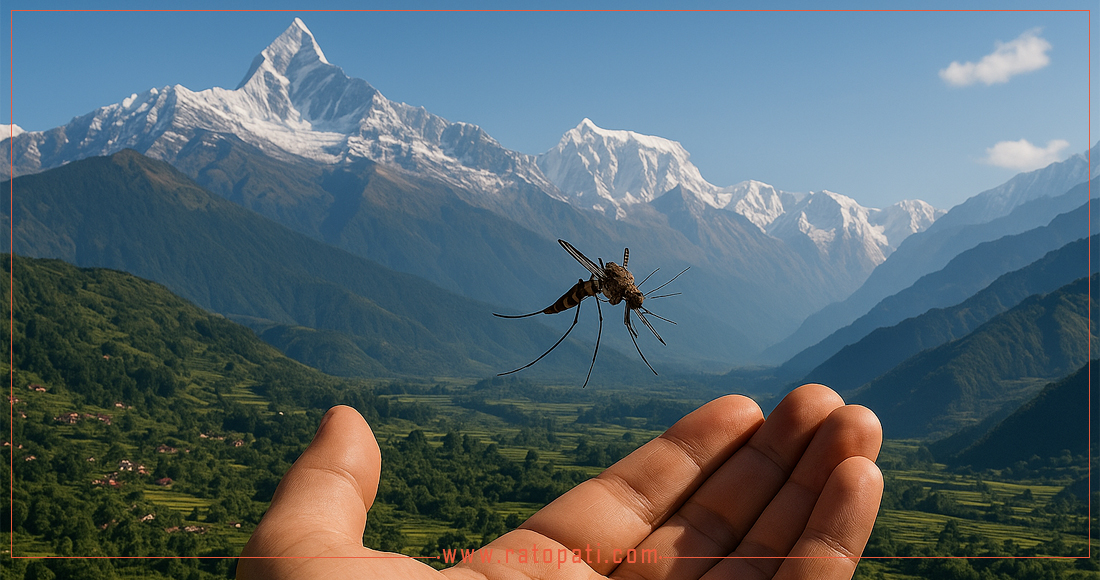
Sudurpaschim Region Sees Decline in Kala-azar Cases


Kanchanpur. The number of Kala-azar (Leishmaniasis) patients in the Sudurpaschim Province has been continuously decreasing in recent years. The infection is decreasing due to the expansion of treatment services in hospitals, availability of skilled health workers, free medicines and tests, active search for infected individuals, and effective monitoring of disease-transmitting sandflies.
According to Hemraj Joshi, Vector Control Inspector at the Directorate of Health, Sudurpaschim Province, Dipayal, Kala-azar treatment was previously available only in Dhangadhi. Later, the service was extended to Mahendranagar. Currently, testing and treatment facilities are available in most provincial and district hospitals. He stated that the number of Kala-azar patients is decreasing due to the enhancement of health institutions' capacity, management of necessary medicines, testing kits, and skilled manpower, as well as active search campaigns in villages where infected individuals are found.
Regular studies and control programs of the sandfly named 'Phlebotomus argentipes', which transmits the disease, have also been effectively implemented, said Vector Control Inspector Joshi. According to him, 63 Kala-azar patients were found in Sudurpaschim in 2023, 46 in 2024, 26 in 2025, and 13 by July 9, 2026.
Nationally, 249 infected individuals were confirmed in 2023, 318 in 2024, 249 in 2025, and 115 by July 9, 2026, informed Vector Control Inspector Joshi. "Kala-azar is a vector-borne communicable disease caused by a parasite called 'Leishmania'.
When an infected sandfly bites, the parasite enters the human body and affects various organs. Its most severe form is visceral leishmaniasis (Kala-azar), which affects major internal organs like the liver and spleen. If not treated in time, the patient may even die," he said.
According to him, cutaneous leishmaniasis (skin Kala-azar) causes sores and scars on the skin, while 'mucocutaneous leishmaniasis' affects the mucous membranes inside the nose, mouth, and throat, even distorting the structure of the organs. 'Post Kala-azar dermal leishmaniasis' refers to the scars or lesions that appear on the skin after Kala-azar has been cured, and Vector Control Inspector Joshi emphasized the need for necessary awareness as it plays a role in spreading the infection.
Symptoms of Kala-azar include prolonged fever, weight loss, weakness, anemia, enlarged liver and spleen, skin sores or scars, and sores inside the nose or mouth. If these symptoms appear, one should get tested at a health facility immediately. He stated that Kala-azar can be completely cured with timely treatment, and neglecting it can be fatal, urging everyone to seek immediate treatment if symptoms appear.
According to the Directorate of Health, avoiding sandfly bites is the most effective way to prevent Kala-azar infection. Vector Control Inspector Joshi suggested measures such as using mosquito nets, wearing full-body clothing, cleaning bushes around the house, sealing cracks in walls to destroy sandfly habitats, and spraying insecticides if necessary.
According to him, although the number of patients appears low at the beginning of the monsoon season, there is a possibility of increased infection during the rainy season and the subsequent period. Kala-azar patients are predominantly seen from January to October.
Vector Control Inspector Joshi informed that a study conducted with the support of the World Health Organization (WHO) found sandflies that transmit Kala-azar in about half of the 88 local levels in the nine districts of Sudurpaschim.
In 2025, the highest number of Kala-azar patients were found in Kailali with 11, followed by Kanchanpur. Kala-azar testing, medicines, and treatment are currently available free of charge at the district hospital. The necessary medicines and testing kits are provided with the support of WHO, the Directorate of Health stated.
The Government of Nepal has been making monitoring, treatment, and awareness programs effective with the goal of eliminating 'Visceral Leishmaniasis' as a public health problem by 2026.
This specific news has been automatically translated by AI. As a result, there may be some inaccuracies or language errors.