
Geetakeshari: A Literary Figure and Her Life

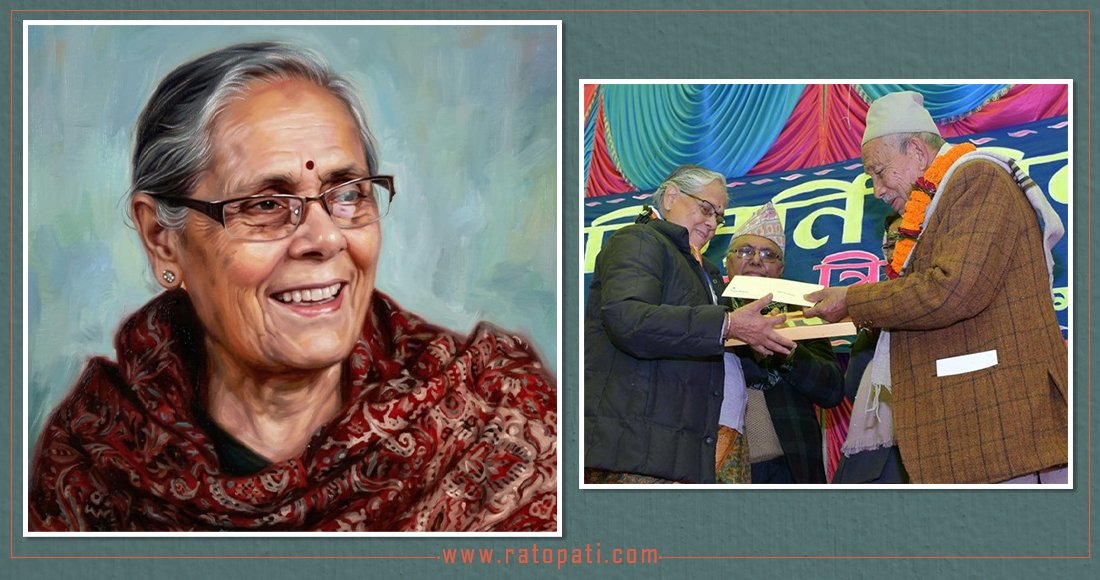
Geetakeshari, a person of serious demeanor, tall stature, and fair complexion, was tender-hearted, rich in thought, and beautiful in action. Just as she was adorned with a simple life, she appeared simple, easy, and pleasant in her writing. She was a creator who wrote with conscience in her heart and a creator who elevated her heart to a great height above conscience. She carried the novel on her shoulders throughout her literary journey because the novel is the cultivation of imagination. She was like magic in imagination. Geetakeshari often became an example of the art of writing on a social platform, swinging the swing of imagination. She would carry historical subjects in her cradle and walk along. When she wrote, she wrote stories of ups and downs. Sometimes she invented wicked characters and sometimes she embellished her characters to reach the peak. Just as she described her characters, she did not tire of describing events. Her writing was adorned with specific events. The heat of intellect in her writing was covered by the lid of emotion. Geetakeshari was born on Wednesday, Ashar 27, 1997 BS in Paknajol, Kathmandu. She was the only daughter after three sons of Ramraj Pant and Sita Pant. At one time, Ramraj Pant was a familiar name in the Nepali educational environment. He was known for writing bhajans under the name Shreepant and was also famous in Nepal's public administration. Pant also became the director of Radio Nepal. Geetakeshari, though simple from a young age, was sharp-witted. Her honesty was also exemplary. She was also pure gold in terms of politeness. Her personality was exemplary. From childhood to adolescence, she was guided by politeness. That politeness covered her youth, filled her mature life, and finally, that principle continued to provide stability in her old age. Therefore, she was considered a polite personality in Nepali society. In Nepali language and literature, Geetakeshari, who made her achievements known through her personality, reached the forefront. In fact, she was better than her creations. In the count of people dedicated solely to novel writing in Nepali language and literature, Geetakeshari is a name that comes to the forefront. Perhaps Geetakeshari was the only creator who mostly limited the power of her creations to novels. The art of novel writing was considered the whole form of her personality. Especially in the Nepali literary world, for almost all of a creator's works to be focused only on novels is an achievement in itself. Therefore, she became a more famous novelist in Nepali language and literature. Geetakeshari did not go to school in her childhood. At that time, brave parents were rarely seen to encourage female education. Nevertheless, Geetakeshari was educated at home. She received school-level education at home and became proficient. Therefore, when it was time to take the SLC, she was admitted to school. Accordingly, she was admitted to the tenth grade at Shanti Vidhyagriha in Lainchaur, Kathmandu. In the same year she was admitted to school, she passed the SLC examination. At that time, that feat was also very inspiring for other students. As soon as she was admitted to school and passed SLC, Geetakeshari's confidence in her studies began to grow. Her parents were also satisfied with their daughter's status. Therefore, with the advice of her family, Geetakeshari was admitted to Padma Kanya College. From that college, she passed IA and BA. Then, as time permitted, she also started studying MA. Around that time, she met a young man. Geetakeshari got married after completing twenty-two years of age. She had a love marriage with understanding. Her husband was a Brahmin of the Bhandari surname and had just returned to Nepal after studying in New Zealand. Geetakeshari tied the knot with Keshavraj Kesheri in Baisakh, 2019 BS. Although her husband was from Saptari district, her in-laws lived in Banaras. They also had a house there. At the time of marriage, Keshavraj Kesheri was an officer at the Animal Development Center. After marriage, this couple lived together for about twenty-three years. Then her husband fell ill, and he left Geetakeshari abruptly. Keshavraj Kesheri passed away on Mangshir 2, 042 BS in a hospital in Delhi, India, while undergoing treatment for kidney disease. After the sorrow of widowhood was added to Geetakeshari, she became even more enthusiastic in her writing. She poured the pain, jealousy, restlessness, sorrow, and anguish of her heart into her novels. As the stories of climbing the ladder of life were added one by one, her novels began to pile up in the temple of Nepali literature. Therefore, she became a complete creator of novel writing. She wrote twelve novels and three short story collections. Geetakeshari did not just immerse some novels and stories in the ocean of imagination but also connected them with factual details. And in most of her works, the soul of women's awakening speaks. She used to pour out the factual details of women's lives in her novels and stories. Geetakeshari worked after marriage. Initially, she took up teaching at Shri 5 Ratnarajyalaxmi High School in Baneshwor, Kathmandu. She taught there for one year. After that, she joined the Royal Nepal Airlines Corporation. At that time, she was an Assistant Sales Officer there. There too, she introduced her simple personality and worked diligently. Eventually, she became a director there. From there, she took voluntary retirement. Then she got involved in a travel agency, or rather, she was hired as the Deputy General Manager at Everest Express Tours and Travels. There too, she utilized her thirty-five years of airline experience. She worked in the travel agency for about five years. Just as Geetakeshari was dedicated to Nepali language and literature and was counted among the excellent in her professional life, she also reached a high official position in Nepali language and literature. In 061 BS, she became the Member Secretary of the Nepal Royal Academy. She was the first female Member Secretary at the Academy. The event of Geetakeshari becoming the Member Secretary brought about a great emotional change in the Nepali context. In fact, this was not just a victory for women; Geetakeshari's appointment as Member Secretary was the result of the modernization of Nepali literature. Regardless of who opposed or supported her appointment, she had reached a place to be included in the pages of history. Geetakeshari not only dedicated her mind, speech, and actions to literary creation; she also instituted awards in the names of her parents and encouraged her maternal relatives to help establish an organization called 'Pant Smriti Pratishthan'. She also established the Bheshraj Kesheri and Kadambini Endowment Fund in memory of her father-in-law and mother-in-law. She had established the Kadambini Award to encourage children's literature. Similarly, since 2052 BS, she had established the Keshavraj Kesheri Memorial Scholarship Fund in memory of her husband to be provided to students studying at the Institute of Agriculture and Animal Science, Bharatpur, by the Nepal Animal Science Association. Geetakeshari had three daughters – Dr. Neelu, Dr. Nisha, and Neeta. All three daughters received higher education. All three got married; accordingly, the eldest daughter Dr. Neelu in India, the middle daughter Dr. Nisha in Nepal, and the youngest daughter Neeta in Japan are engaged in professions according to their interests. Geetakeshari was a creator who loved originality. Her personal behavior was also bound by originality. Although she appeared simple, she would get angry when she disagreed with something. She used to say, 'Mistakes are made by humans, but they must be corrected.' She did not get involved in unnecessary arguments. She quietly did her work. She had traveled to almost all the districts of Nepal. She had also traveled to various countries in Asia, Europe, America, and Australia. Geetakeshari had won the hearts of many with her amiable nature. She had also established her own distinct stream in literature. For her long service in literary creation, she received the title 'Nepali Sahitya Nariratan' with a cash prize of one lakh rupees from Trimurti Niketan through Nai Academy. She received the copper plate and cash prize for that title from Shatabdi Purush Satya Mohan Joshi. She received the Bhanubhakta Award and Rashtriya Pratibha Award from the Government of Nepal, as well as Lokpriya Award, Dharanidhar Award, and Ganki Basundhara Award, among others. Geetakeshari passed away on Ashar 18, 2083 BS in the presence of her three daughters. On the same day, her mortal remains were taken to Aryaghat, and her daughters lit her pyre. Geetakeshari's novels are 'Kasingar' (2034), 'Saugat' (2046), 'Awaj' (2047), 'Mukti' (2048), 'Khoj' (2050), 'Antim Nimto' (2051), 'Biswas' (2052), 'Khula Akash' (2054), 'Nokari' (2055), 'Nishkarsha' (2060), 'Badalindo Kshij' (2066), and 'Fakrindo Kopila' (2068), while her short story collections are 'Taranga' (2057), 'Bhumari' (2059), and 'Lahar' (2065).
This specific news has been automatically translated by AI. As a result, there may be some inaccuracies or language errors.


_3Po4PXPkov.jpg)

