
Itumbahal: A Buddhist Monastery Rich in Legends

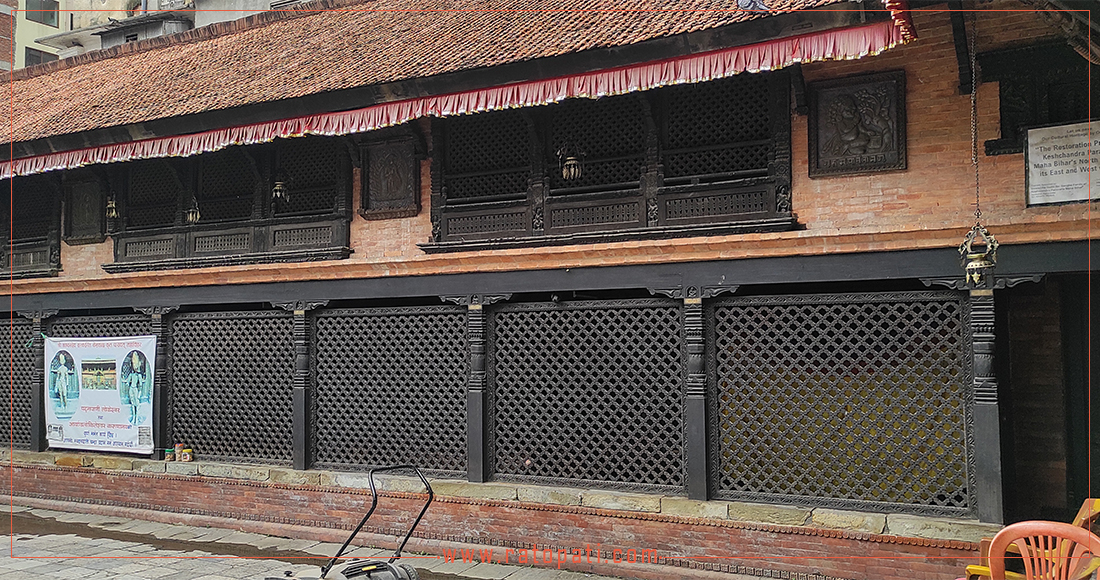
The Buddhist monastery famous by the name Itumbahal, located in the central part of ancient Kathmandu settlement, is full of fascinating legends. The legends of the speaking Tara goddess statue established here, the founder of this monastery Keshchandra, the Gurumapa of this place, and the beautiful Rajamati of this place can still be heard from the elders.
The combination of the legends of the extremely beautiful Rajamati and the fearsome-faced Gurumapa adds thrill when visiting this area. This article has been attempted to be prepared based on those legends and related historical evidence.
1. Gambler Keshchandra:
The Itumbahal monastery is believed to have been founded by Prince Keshchandra. He was a notorious gambler and lost everything playing. He had a sister married in Thamel Bahal. When hungry, he used to go to his sister's house for food. He would even steal the plate of rice his sister served and go to gamble.
Frustrated, one day his sister served rice on the floor of the kitchen. After being insulted in this way, Prince Keshchandra, without eating the rice, gathered it in a handkerchief and went towards Gosainkunda, crying. On the way, he was greatly tormented by hunger and decided to eat the rice he had brought in his handkerchief.
He thought of drying the rice in the sun for a while before eating it, as he saw mold on it. While drying the rice in the sun, Keshchandra fell asleep. While he was sleeping, the pigeons there pecked at the dried rice and defecated there. Upon waking up and seeing only droppings, he began to cry profusely.
Overjoyed to find a pile of gold he could not carry, he decided to return to the city. Just then, he saw a demon named Gurumapa coming to kill and eat him. Keshchandra cleverly saved himself by calling Gurumapa 'uncle' and made him carry the pile of gold back home. In memory of those divine pigeons that produced gold, he established the monastery called 'Paravat (Pigeon) Mahavihar'. This is called Itumbahal in Newari language.
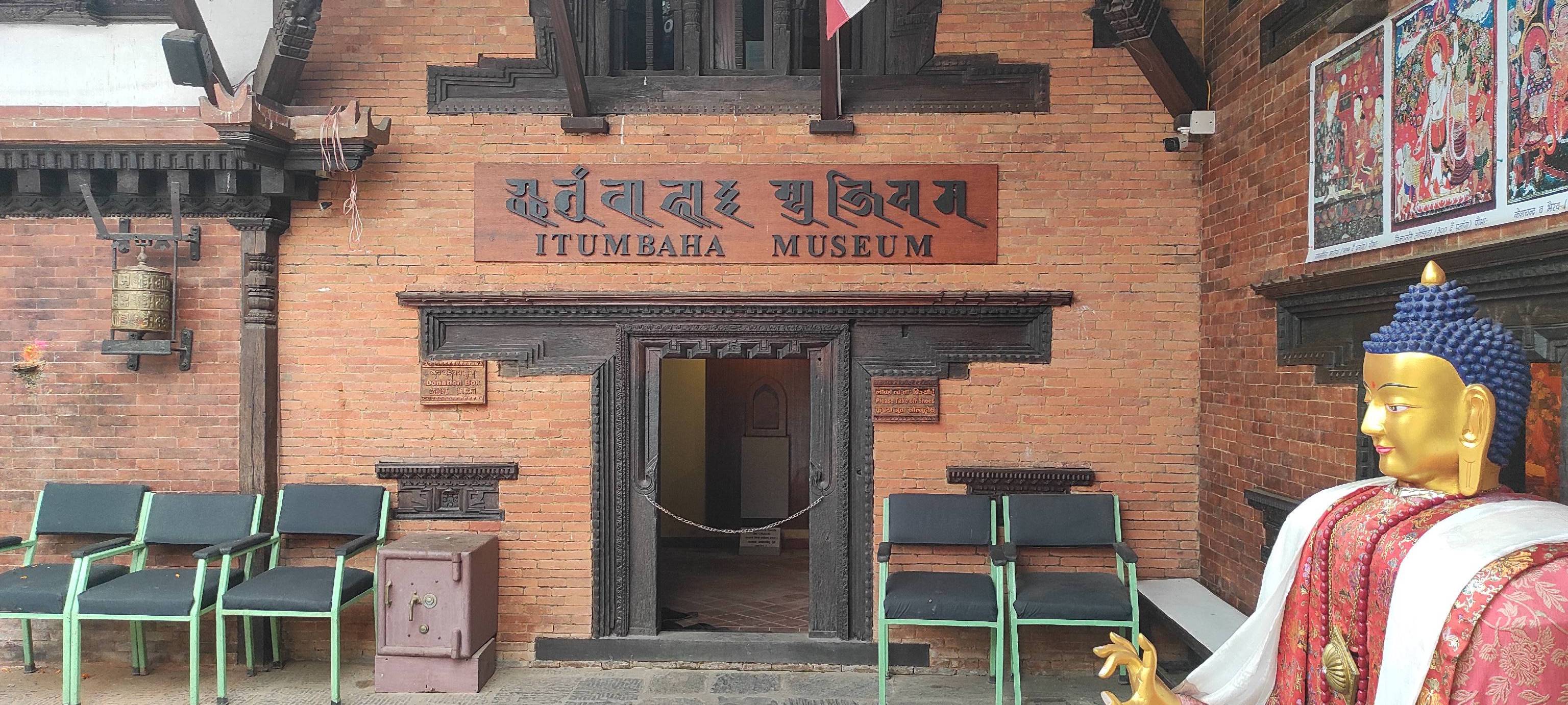
The Gopalraj Vamshavali, written in the 14th century, mentions 'Yambu Yatumbahar' in the date of 1240 AD. Similarly, a palm-leaf manuscript from 1357 AD mentions in its colophon 'Shree Bhaskardev Sanskarit Itishree Keshavchandra Krit Mahavihar'. Based on the fact that it was renovated by King Bhaskardev (1045-47), it is known that Keshchandra or Keshavchandra was also a historical figure like Bhaskardev. The house where he lived is believed to be the present-day Itumbahal Museum, Lang.
2. The Story of Gurumapa:
After Prince Keshchandra brought Gurumapa to his residence by calling him uncle, children in and around the monastery began to disappear. Rumors spread that Gurumapa was killing and eating the children. Since he was Prince's uncle, the local common people could not resist him.
If any child cried and caused trouble, saying 'O Gurumapa, take the child away!', Gurumapa would appear there and take that child away, because Keshchandra had given him the authority to take such children.
Finally, when it was found that Gurumapa had also killed and eaten Keshchandra's son, Gurumapa was driven out of the city with the condition that he would be fed a feast with the meat of a whole buffalo every year in Tundikhel, to the east of the city.
The tradition of performing Shraddha for Gurumapa, which continued until 2046 BS, proves that Gurumapa was also a historical figure like Keshavchandra. Shraddha is not performed for a fictional character. His Shraddha was performed in front of the Lang north of the main monastery, his residence. Four copper plates with engravings related to Gurumapa are kept in this building.
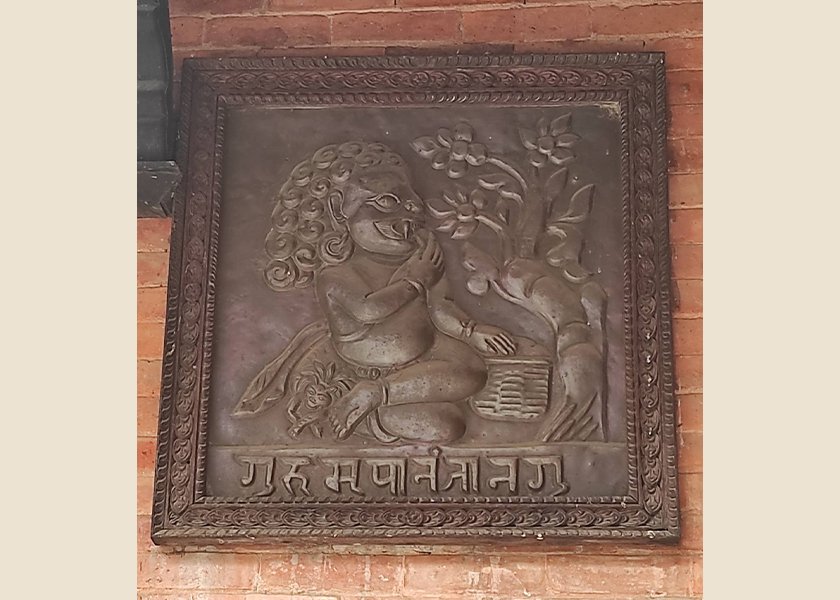
Mary Slusser's book 'Nepal Mandala' describes a Patachitra made in the 16th-17th century and displayed in Itumbahal during Gaijatra, which depicts Gurumapa causing trouble by stealing children, and then being released on the condition of being fed a feast of one buffalo and one muri of rice annually in Tundikhel.
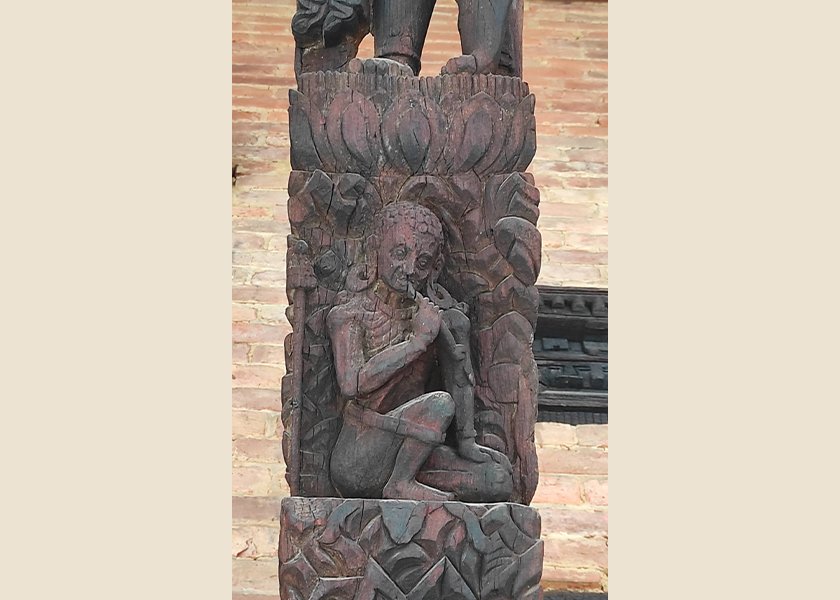
The statues of Mahasiddhas such as Kukuripa, Nagarjunapa, Dombipa, Samadhipa, Indrabhuti, and Rohinipa (Luipa) found carved on the 16th-century Tundals of Itumbahal suggest that the area was a Tantric meditation site in the medieval period. Therefore, it can be inferred that Gurumapa was also a Tantric who wanted to become immortal by sacrificing the children of Itumbahal.
3. Statue of the Talking Tara Goddess:
In a temple located in the north-south Tarani Chok of Itumbahal, sacred statues of Prajnaparamita Tara, Mahashwet Tara, and Harit Tara goddesses are established. Harit Tara is considered a representation of the Nepali princess Bhrikuti, while Shwet Tara is considered a representation of the Chinese princess. Both princesses were married queens of King Srongtsen Gampo of Tibet in the 7th century.
In Buddhism, the goddess Tara is considered the goddess of knowledge. According to Buddhist belief, the Shwet Tara goddess established here is believed to have come to Nepal from the Potala Palace in Tibet. Although this goddess is in statue form, it is believed that she converses with devotees and imparts religious teachings. Devotees come from various countries including Tibet and Bhutan to see this goddess.
According to a 14th-century inscription in Itumbahal, the Buddhist wife of the then feudal lord Madanram Vardhan, Jaitralaxmi, established the statue of Tara goddess. The belief that this goddess, although in statue form, converses with devotees seems to have originated in Tibet. Since the statue of this goddess is made to look extremely beautiful, lifelike, and divine, it can be assumed that the legend of her being a speaking goddess originated from this.
4. The Legend of Rajamati:
The character of Rajamati from the song
This specific news has been automatically translated by AI. As a result, there may be some inaccuracies or language errors.



_3Po4PXPkov.jpg)

