Supreme Court Registrar States Judgment Execution Requires Collective Effort


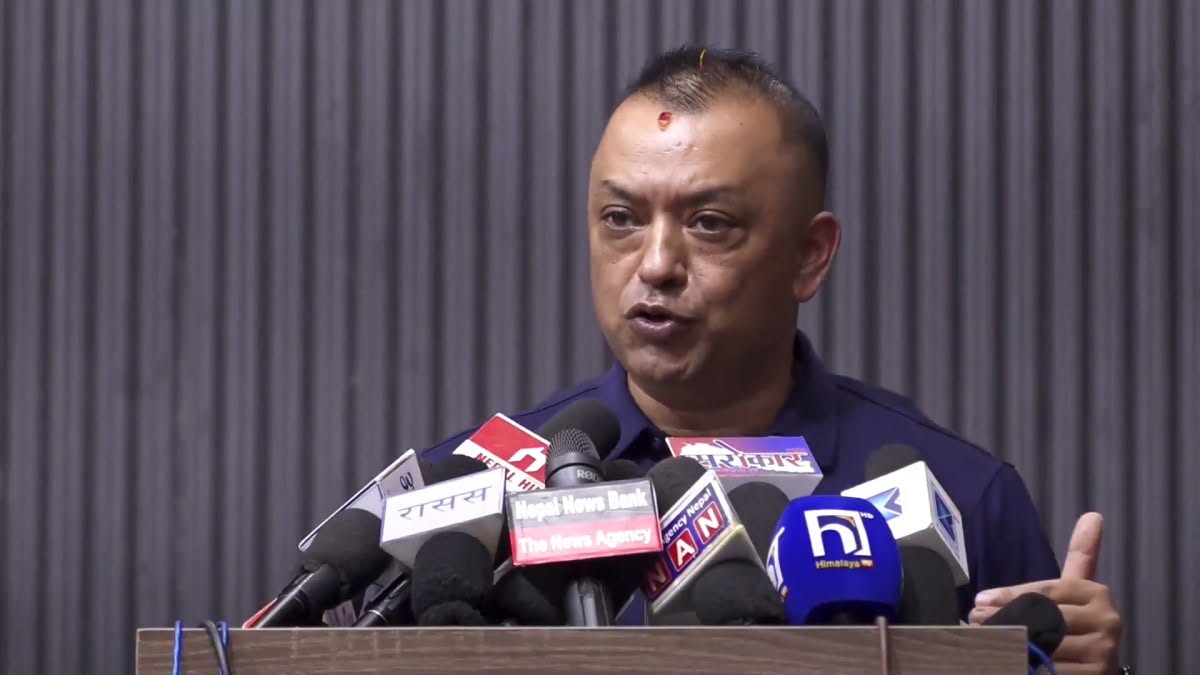
Kathmandu. Supreme Court Chief Registrar Bimal Poudel has stated that the matter of judgment execution is not possible with the judiciary's sole effort. While releasing a book, a collection of important laws related to judgment execution, Chief Registrar Poudel said that along with the judiciary, the police, land revenue offices, local levels, and concerned stakeholders involved in the judgment also need to be vigilant to execute judgments.
Similarly, emphasis was placed on further strengthening, making technology-friendly, and effective the judgment execution process of the judiciary. Speaking at the program, Chief Registrar Poudel praised the steps taken by the Judgment Execution Directorate. He said that in today's digital age, upgrading the software system to manage judgment execution data is essential.
"We need to make further efforts to achieve the overall objective of judgment execution by integrating the judiciary's data into the software being developed by the Information Technology Department," he said.
Shedding light on the importance of the released book, Poudel expressed confidence that it will help employees, officials, and related bodies involved in judgment execution to overcome legal ambiguities and bring uniformity in performance. According to him, by including circulars and legal provisions issued at various times in one place, it will help broaden the horizon of knowledge and make services faster.
Similarly, Gajendra Bahadur Singh, Director General of the Judgment Execution Directorate, said that the aspect of judgment execution in justice delivery is very important and technical. Singh referred to the Tahasil Branch as "the court within the court" and stated that its effectiveness determines the public trust in the judiciary. "Although people in the villages call the judgment paper a 'victory letter', it has no meaning until it is executed," he said. "Therefore, the public trust in the court is directly linked to the bailiff and judgment execution." Singh mentioned that the aspect of Tahasil execution is very technical and sometimes even experienced employees and lawyers do not have sufficient knowledge about it. "Even though I have been working in this field for a long time, I find it challenging to work in the field," Singh said. "Therefore, arrangements should be made to provide at least two days of special training to employees who will be appointed as Tahasildars from now on."
Discussing the background of the released book, Singh informed that its conception occurred during the tenure of former director Gyan Bahadur Khatri and that the current team led by Govinda Ghimire has completed it. Connecting to the context of former Chief Justice Anupraj Sharma's book 'Ko Anup?', Singh emphasized that the sensitivity of the Tahasil Branch should be understood by everyone. The program was attended by the Chief Registrar, Registrar, and other distinguished individuals from the justice sector.
This specific news has been automatically translated by AI. As a result, there may be some inaccuracies or language errors.