Karnali Province Government Prioritizes Small Distributional Projects Over Strategic Development
Surkhet. The Karnali Province government has set specific criteria for project selection in its project selection procedure. The procedure states that 'projects should be proposed or selected based on their contribution to the province's rapid economic growth, priority or comparative advantage areas, and contribution to achieving sustainable development sector goals.'
Contrary to this, the provincial government has prioritized small, distributional projects to appease individuals close to them and their cadres. The budget and projects allocated to the tourism sector can be taken as an example of this.
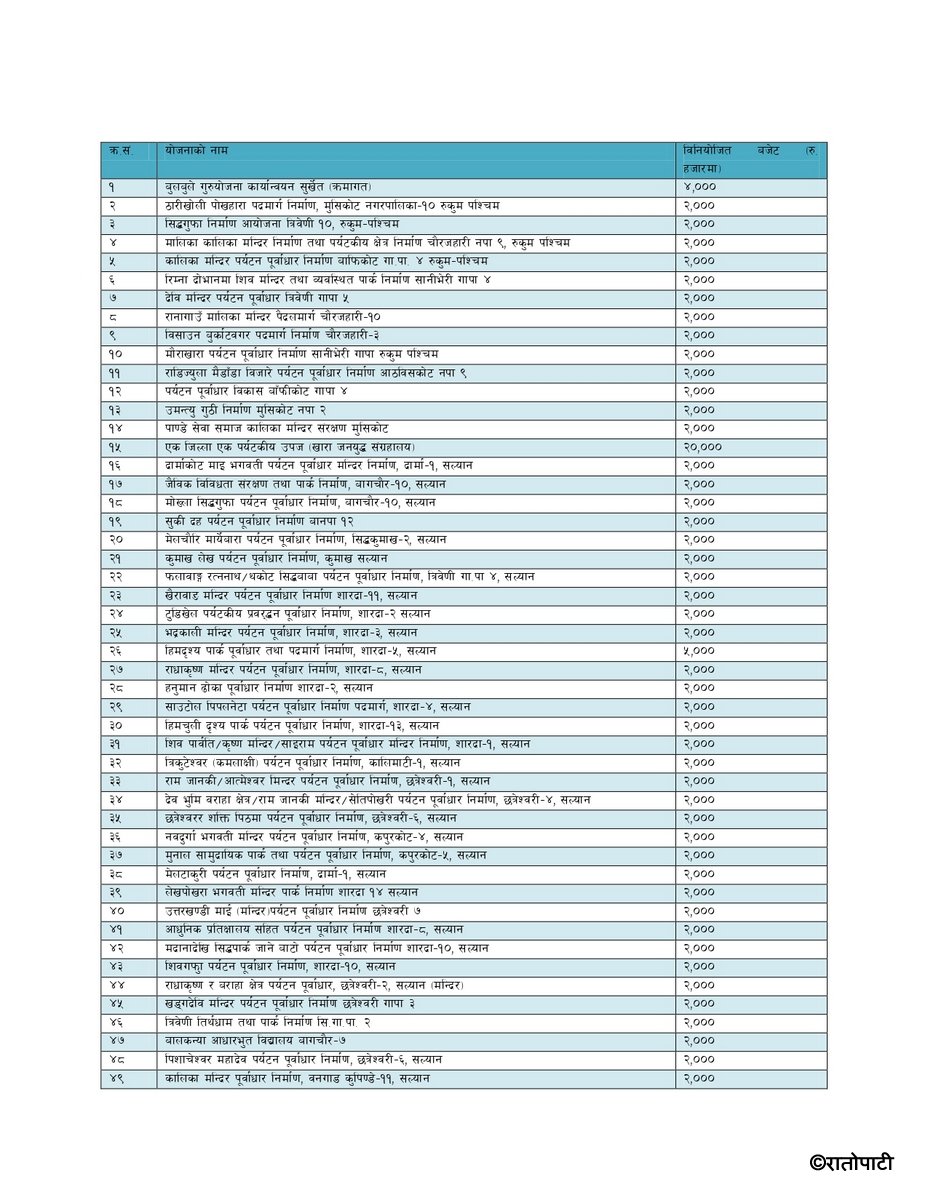
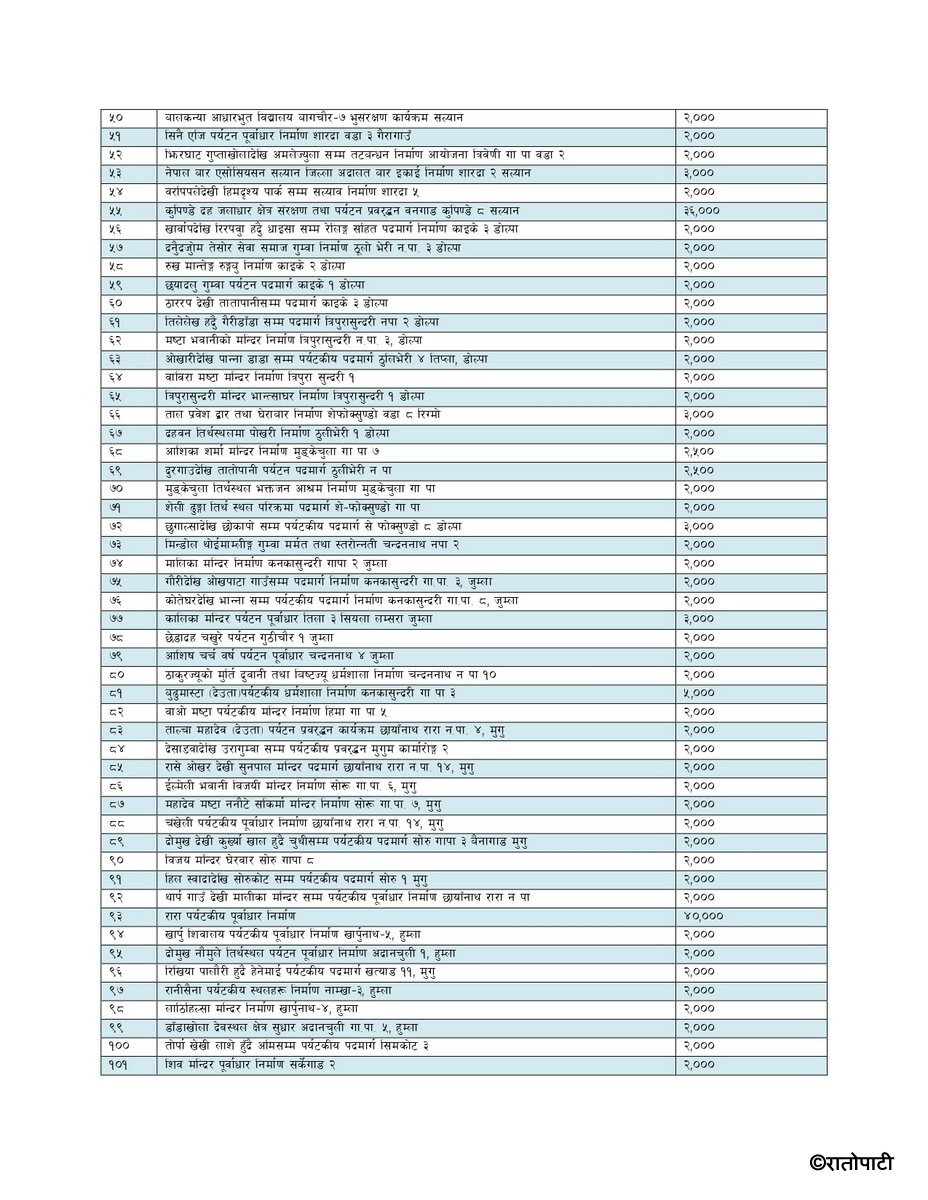
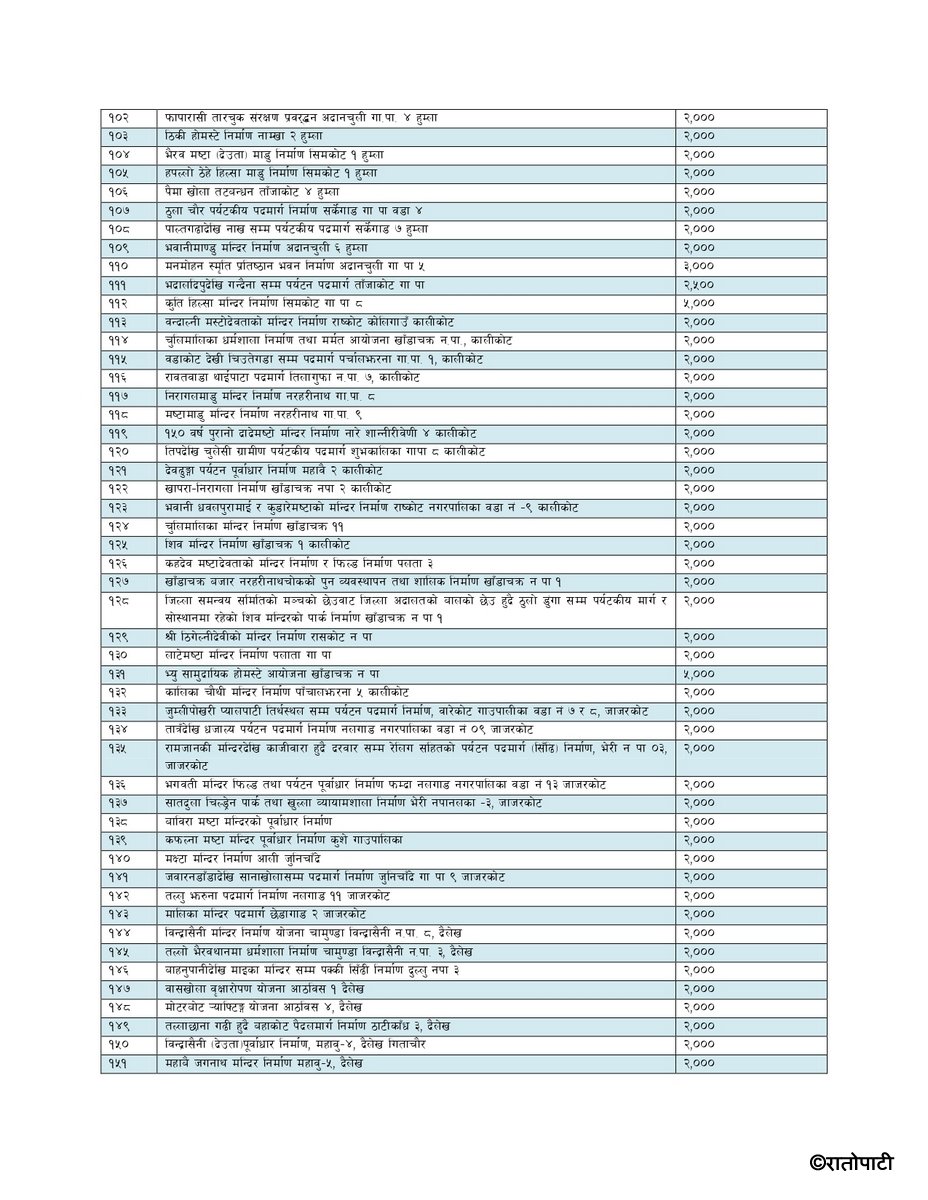
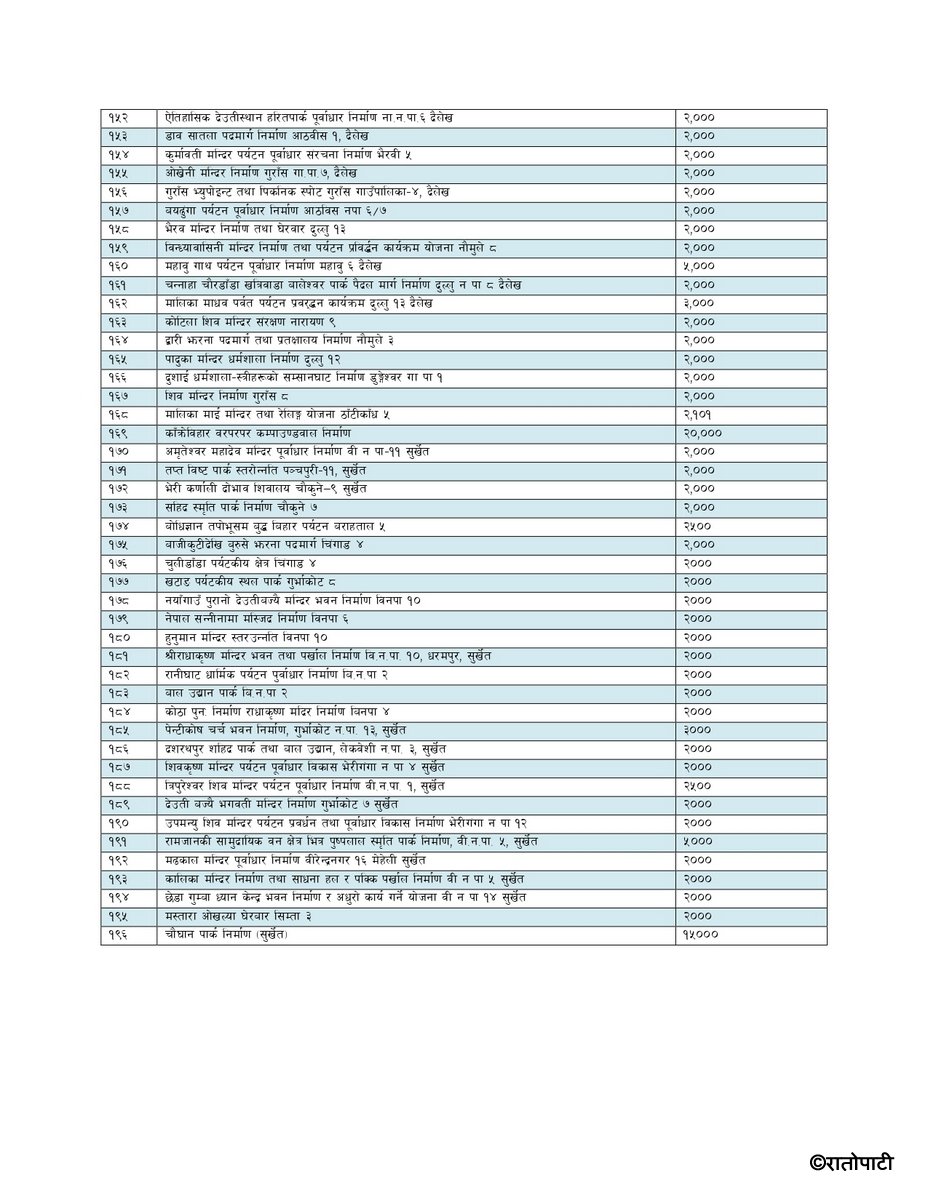
The Karnali government, which presented a budget of Rs 35.39 billion, 85.48 million, has allocated Rs 538.6 million to the tourism sector, which is only 1.52 percent of the total budget. Under the heading 'Tourism Promotion and Development,' there are about 195 projects, of which 80 percent are related to monasteries, kul devta shrines, goddesses, mothers, churches, and monasteries.
Out of 10 districts, Salyan, the home district of the Minister of Industry, Tourism, Forest, and Environment, Suresh Adhikari, has the most projects, with about 20 monasteries, mother goddess temples, and pilgrimage sites.
Similarly, Surkhet has 18, Kalikot 15, Dailekh 11, Humla 9, Dolpa 8, Mugu 7, Rukum Paschim 7, Jumla 6, and Jajarkot 6 such projects.
Among the devta shrines, most are for Masta. Masto Devta is worshipped in every household in every region of Karnali. Under goddesses and mothers, there are projects named Malika, Kalika, Mai Bhagwati, Radhakrishna, and Bhadrakali. In Minister Adhikari's district, Salyan, budgets have been allocated to Darmakot Mai, Khairabang, Bhadrakali, Radhakrishna, Hanuman Dhoka, Shiva-Parvati, Ram Janaki, Navadurga, Lekhpokhara Bhagwati, Uttarkhandi Mai, Khadgadevi, Pishachashwar Mahadev, and Kalika temples, among others.
In Kalikot, millions of budgets have been allocated in the names of family, individual, family, and community kul devtas such as Bandalni Masto, Niragalmadu, Mastamadu, Dademasto, Bhawani Dhavalpura Mai, Chulimalika, and Shiva Temple, Thigelnidevi, Latemasto.
In Dailekh's Thatikandha-5, there is a Malika Mai temple and railing project. A construction project was initiated in the current fiscal year, but as it was not feasible to implement, a railing project has now been allocated a budget of Rs 2.1 million. This is the kul devta of the Thakuri and Bahun communities there.
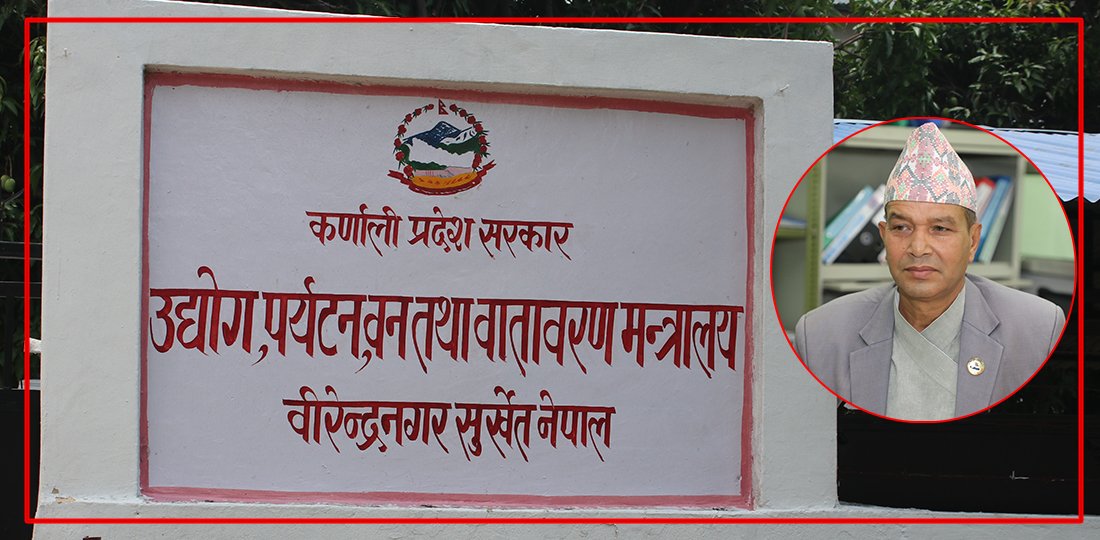
Such devta shrines and temples are worshipped in every home, hill, and stone in Karnali, but the government, claiming that the public demands such projects, has distributed nearly 200 small projects at a rate of Rs 2 million each.
In Rukum Paschim, the budget has been allocated at Rs 2 million each for the Pandey Sewa Samaj Kalika Temple conservation and the Dhakal family temple in Virendranagar-16 Mehli. According to the project selection procedure, projects for roads and buildings should not be less than Rs 5 million, and for others, not less than Rs 2 million. Since the limit is set, each project has been allocated Rs 2 million.
When the limit was Rs 1.5 million previously, hundreds of projects of a similar nature were distributed with that amount. 'If the limit had not been set, even projects of Rs 500,000 would have come,' said an official from the ministry. 'The reason for setting the limit is to encourage large and strategically impactful projects. However, the booklet has been filled with small, arbitrary projects that remain within the limit.'
After monasteries, projects like foundations in the names of leaders and footpaths have been included under tourism. These are against the procedure formulated by the government itself, and on the other hand, even ministry employees admit that millions of state investments are being wasted in unproductive sectors.
An employee of the Ministry of Industry, Tourism, speaking on condition of anonymity, said, 'This is something that needs to be explained to the parliamentarians. They don't understand. The tendency to make plans based on their political path is fatal.'
According to that employee, if investment had been made in important areas of Karnali Province, Karnali would have generated good revenue, but he stated that this needs to come from the political leadership itself.
Such projects not only waste investment but also neither contribute to tourism nor to the state's internal revenue. Mahesh Nepali, spokesperson for the ministry, said that there have been many discussions in the ministry about not allocating budgets to small monasteries.
'Discussions were held at the ministerial and parliamentary levels, but now the demand from the districts is for such projects,' he told Ratopati. 'There is a problem.'
According to him, there are more than 2,000 demands for monasteries in the project bank. Those projects are stocked in the project bank. Before this, out of 4,000 projects, approximately 3,000 projects are for monasteries. 'Except for some footpaths, all other tourism budgets and projects are for monasteries,' he added. 'We have also prepared a master plan, stating that we must implement according to the master plan. We need to present it to all the honorable members according to that.'
It is also necessary to make the public understand at the local level that tourism is not just about temples. While budgets are allocated to kul devta shrines and monasteries, areas of public importance have been neglected. For example, there is very little budget for the Panchakoshi area of Dailekh, Shayanath, Rara, and Shey-Phoksundo, which are tourist areas of the province. Despite the great potential for water tourism in Karnali, there is no budget for it.
- 'This is outright policy corruption and an act of appeasing cadres'
According to Devraj JC, a tourism entrepreneur who has been active in water tourism on the Karnali River for a long time, the government's investment in monasteries is merely a ploy to appease cadres and gain votes. He states that allocating budgets in the name of monasteries or personal foundations is policy corruption.
'Instead of distributing many small projects of Rs 20-20 million, investment should be made in large projects of strategic importance,' he added. 'Monasteries, devta shrines, and other religious sites can raise their own funds by organizing great sacrifices or Puranas; it is wrong to spend the state treasury there.'
JC says that the government should focus on international marketing and increasing tourist attractions for tourism promotion.
Instead, it is necessary to focus on constructing homestays in tourist areas and riverside settlements, promoting water tourism like rafting, providing hospitality training in trekking areas, and developing tourist packages, he said.
Karnali Province has a dire lack of tourist packaging and international marketing. He states that the tourism business in Karnali cannot flourish due to the lack of skilled manpower and quality hospitality.
JC added, 'The Ministry of Tourism of Karnali seems to be run within a circle of a few limited businessmen. It seems that priority is given only to expanding political organizations rather than tourism development.'
According to him, the promotion and marketing of Nepal's famous religious sites like Dolpa's Tripurasundari and Jumla's Chandannath should be done by reaching out to religious cities in India. Just as the Indian government has spread the glory of Badrinath and Kedarnath worldwide, we should also be able to market our heritage properly, he said. 'Investment made without planning will neither attract tourists nor yield any return to the state,' he added.
- Ministers Do Not Listen to Experts' Suggestions
A 'Tourism Promotion Committee' has been formed in the Ministry of Industry, Tourism, Forest, and Environment in Karnali, but the minister does not listen to the suggestions of the committee members.
'We have given many written suggestions to the government through the Karnali Tourism Promotion Committee,' said committee member Devikrishna Rokaya. 'But our suggestions are not heard.'
According to him, a proposal was made to allocate budget for marketing Karnali's products (Rara, Limi Valley, etc.) in world tourism fairs and to set up stalls there in coordination with the central government and the tourism board, but the government ignored it. He said, 'Not even a single meeting of the committee is called throughout the year.'
He states that it is wrong that budgets are currently being allocated to monasteries, devta shrines, and foundations in the names of leaders in the name of tourism. 'This work should be stopped immediately. Such activities will not make any concrete contribution to Karnali's tourism,' he added. 'The government is prioritizing projects that seem to be for nurturing its leaders and cadres rather than having a long-term vision, which is unfortunate.'
According to Rokaya, as long as Karnali is not effectively marketed internationally, the future of its tourism is bleak. He also stated that concrete programs are needed for domestic tourism promotion. He pointed out the need to focus on producing skilled manpower for the tourism sector, such as trekking guides, cooks, helpers, and hospitality-trained manpower.
'We had proposed a plan to make Murma village in Rara a model tourist village with an investment of Rs 8-10 crore,' Rokaya said. 'If that had been implemented, all 80 houses there would have had equally equipped homestays, and 500 to 1000 tourists could have been accommodated at once.' However, he states that the tendency of the state to ignore such matters and distribute budgets in unproductive sectors is fatal.
Surya Nath Yogi, Vice-Chairman of the Province Policy and Planning Commission, complained that appeasing cadres and people is happening in the name of tourism. 'I do not agree with how the current budget has been distributed in the name of tourism,' he told Ratopati. 'Instead of exercising discretion, an attempt has been made to please everyone in the name of fulfilling political obligations.'
He argues that such investments will not significantly help promote tourism in Karnali. He said that monasteries alone are not enough for tourism promotion; attention should have been paid to many other areas as well.
'We raised the issue in discussions that this style of distributing projects of Rs 20-20 million is not good,' Yogi said. 'We suggested prioritizing famous monasteries and tourist areas that can attract the international community over small projects, but we received the answer that it had to be done due to public demand.'
Krishna Bahadur GC, Chief Whip of the main opposition party, the Communist Party of Nepal, also considers such a practice to be a malady. 'Budgets have been given to shrines of individuals, clans, communities, and kul devtas; budgets have been allocated to shrines built for worshipping one's own clan,' he said.
GC stated that crores of rupees are being wasted every year in unproductive sectors in a way that pleases close associates rather than promoting religious tourism.
'When investing, it should be useful, increase budget productivity, or contribute to income,' he said. 'Budget allocated with malicious intent can be corruption, so such practices must be stopped. This is against the procedure. The government itself has violated the procedure.'
- See Projects and Allocated Budgets in the Name of Tourism:
This specific news has been automatically translated by AI. As a result, there may be some inaccuracies or language errors.
_Vh1wedG2Zd.jpg)