Government Completes 100 Days Amidst Mixed Reviews

Kathmandu. The government led by the Rastriya Swatantra Party (RSP) has completed one hundred days. Opposition parties have given 'negative ratings' to the government's progress, especially as the RSP, which emerged from the dissatisfaction of the 'Gen Z' generation and the rebellion against the 'syndicate' of traditional parties, came to power in a short period.
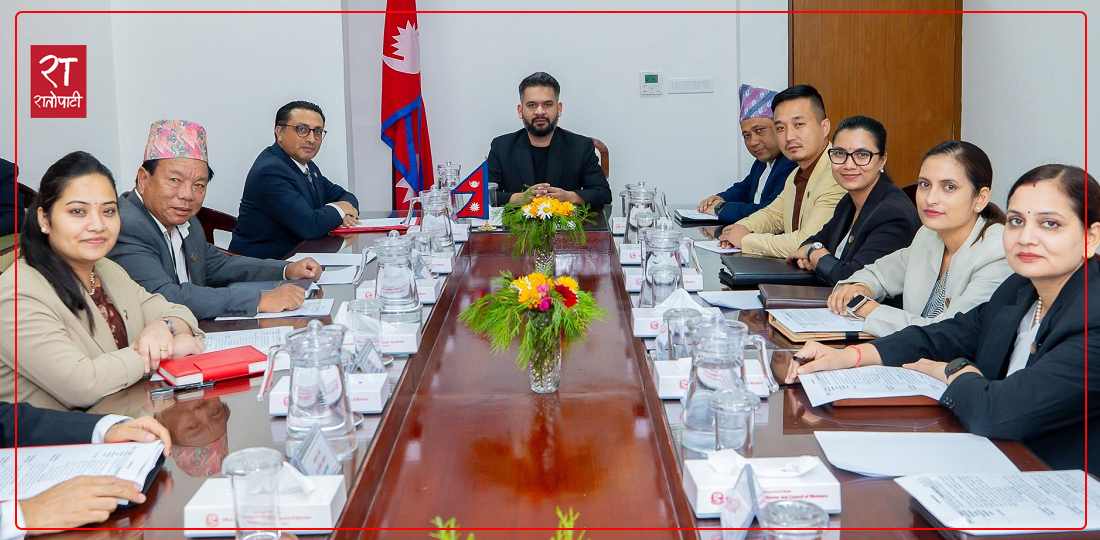
After the Gen Z rebellion last year in August, the new party RSP set a historic record in the elections held in February, winning 5.185 million popular votes and securing 182 seats, close to a two-thirds majority. Senior youth leader Balendra (Balen) Shah became the Prime Minister on Chaitra 13. On the same day, the first meeting of the Council of Ministers, formed under Shah's leadership, publicly announced a one-hundred-point agenda for governance reform.
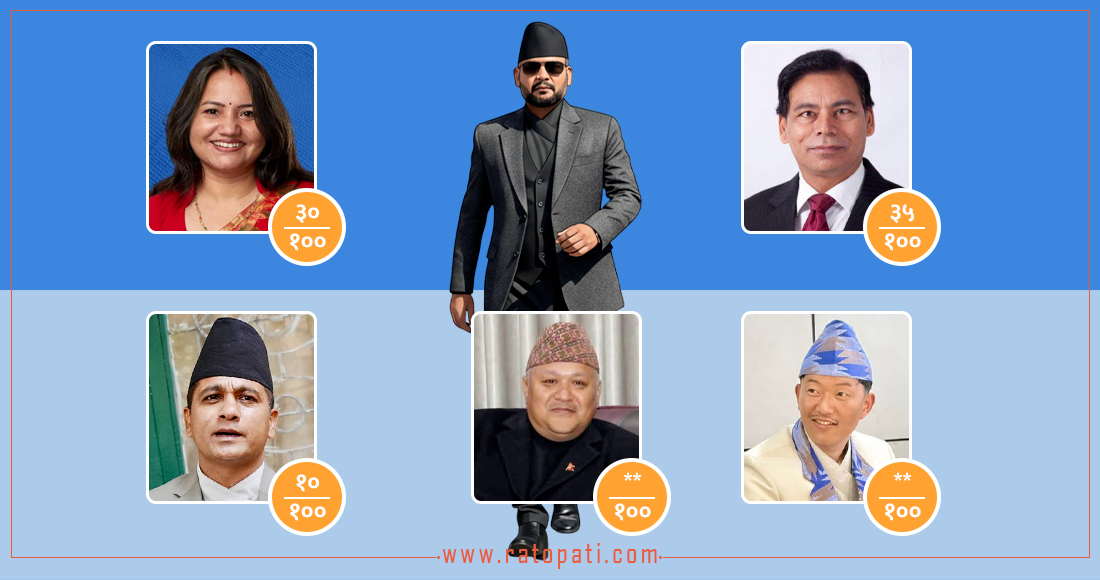
Opposition parties have given 'negative ratings' based on the promises presented to the general public during the election, the government's hundred-day agenda, policy and programs, and the budget for the fiscal year 2083/084. The main opposition party, Nepali Congress, is preparing to release a report card after studying the government's hundred-day progress. Chief Whip Basana Thapa claimed that only about 30 percent of the work has been done out of 100 points based on what the government said.

'Based on the government's public hundred-day agenda and its statements, about 30 percent of the work appears to have been done. We are studying it as a team and will release the report by this evening or tomorrow morning,' Thapa told Ratopati.
Upon closely examining RSP's 'Pledge Letter', the government's public '100-Day Governance Reform Agenda', 'Policy and Programs', and the budget for the fiscal year 2083/084, some new and hopeful signs for the journey of good governance and prosperity were seen in the initial phase. With opposition parties in a weak state, there seems to be no problem in achieving excellent results in good governance and prosperity over the next five years. Positive aspects of governance reform include a governance system based on good governance and delivery, digital transformation, hassle-free public service, a starting point for prosperity, economic prosperity, priority on social justice, corruption control, and money laundering.
In the initial days, the government appears to have advanced policy starting points, governance reform efforts, and prosperity plans. However, CPN UML Chief Whip Ain Mahar alleges that the government has been moving in the opposite direction in the last hundred days. Mahar claimed that he could only give the government 10 percent marks for respecting the public mandate.
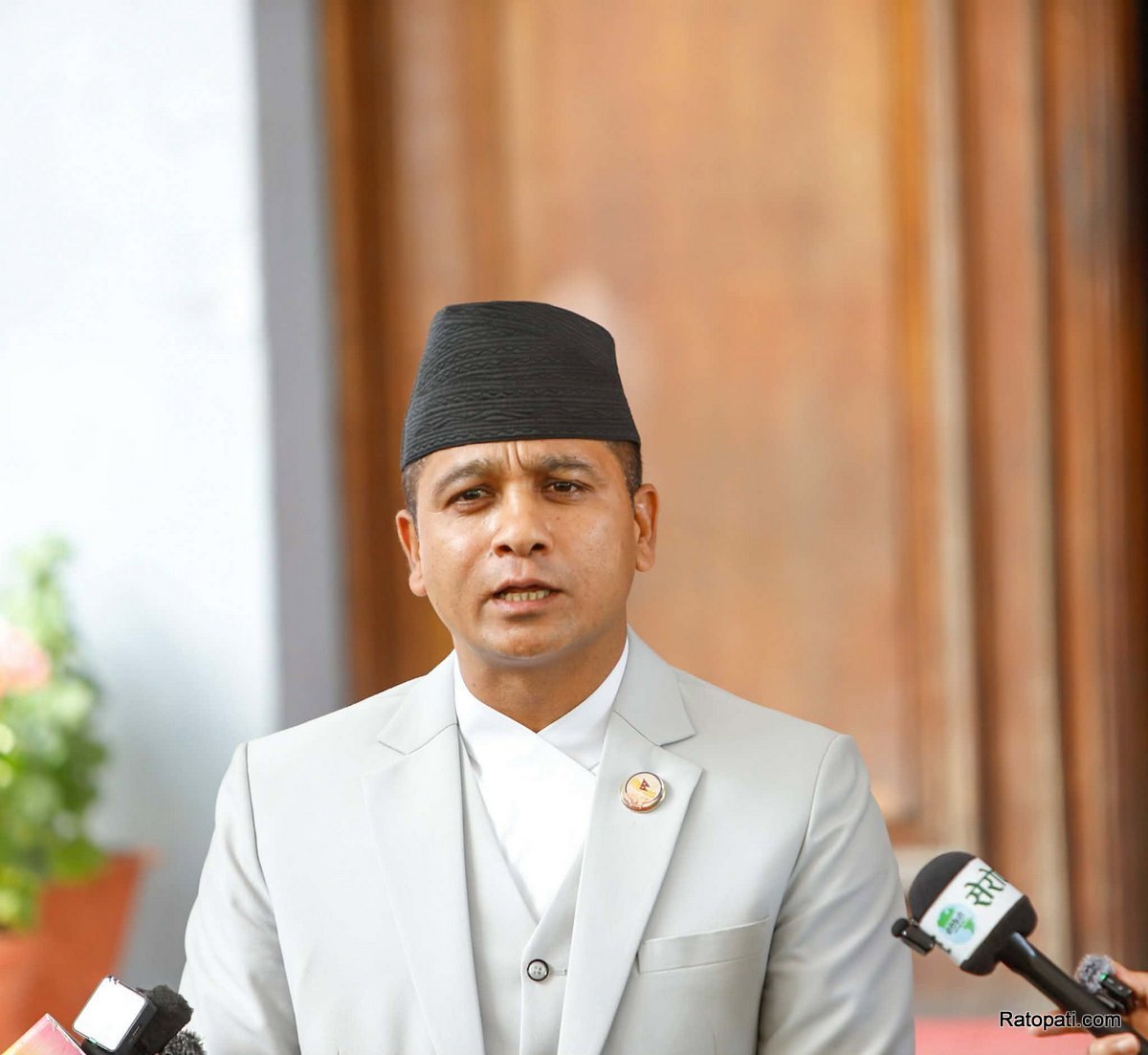
'The government, which the people had placed great hope and trust in, has left the squatters in distress. All sectors are discouraged and terrified. Democracy is in a coma,' he said. 'Everything is being broken down and hit. Corruption has not stopped. Nothing has been done in terms of good governance and delivery. Prices are continuously rising. Overall, the government is walking in the opposite direction, headfirst.'
Specifically, Prime Minister Shah's statement in parliament on Jestha 17, 'Nepal has also encroached upon India's border,' has drawn widespread criticism of the government. There is a provision for question-and-answer sessions with the Prime Minister in parliament every first week of the month. The government has also challenged this practice. He has not even responded to questions raised in the house regarding the policy and programs and budget that it introduced itself.
Nepali Communist Party leader Parmesh Hamal states that the current government's work capacity, political and diplomatic maturity are not evident, citing issues such as bulldozing squatter settlements along the Kathmandu river banks without proper management, pressuring constitutional bodies that monitor government activities, and the Prime Minister's secretariat, rather than the Prime Minister's Office, dominating the oversight of every ministry. Hamal analyzes that although the public gave the government a mandate to achieve distinction, it will be difficult to even pass.

'We and the public had high expectations from this government. It has failed to deliver good results in terms of nationalism, democracy, social transformation, and social justice,' he said. 'A report card is being prepared after a thorough study of good governance and employment. As a responsible opposition, we will express our views on the government's progress, but the spirit in which the government should have moved is not visible in these hundred days.'
Former Prime Minister and CPN Coordinator Pushpa Kamal Dahal 'Prachanda' had accused the government of not moving in the right direction based on its activities in the first hundred days. He stated at a party central committee meeting on Asar 15 that if the situation continues like this, the government will not last long.
'Looking at the government's activities for three months, it does not seem to be progressing correctly. The kind of crackdown on laborers-farmers, squatters, and other working classes, and the way the government has presented itself on nationalism and foreign relations – if this situation persists, another rebellion could occur,' Prachanda had said.
Aren Rai, Chief Whip of the new political party Shram Sanskriti Party, accused the current government of being a complete failure. Rai stated that the government has failed on issues such as the Prime Minister's treasonous statement in the sovereign parliament, the displacement of squatters, and controlling corruption.

'We cannot give the current government marks for its progress. It has already embarked on the path of failure. It has made squatters miserable. Good governance is limited to paper. Billions in debt have been added,' he said. 'On the issue of nationalism, the Prime Minister himself has made anti-national statements in parliament. Looking at all these activities, there is no situation to give the government a percentage.'
Rastriya Prajatantra Party spokesperson Mohan Shrestha said that although the government tried to take some new steps in the area of good governance, its administrative maturity was not evident. Shrestha advised the government to move forward by coordinating with all political parties, not by relying on its numbers, in the coming days.
_AJubgNV1eX.jpg)
'Although some new steps have been attempted in the area of good governance, person-centric actions are being pursued. There is uncertainty about the direction in which the country will be taken in the coming days. There is energy to do something, but the tune, rhythm, and tempo are not matching,' he said. 'Make corrections based on the hundred days and move forward. Do not show arrogance based on numbers, but go forward by coordinating with all parties. It is not yet possible to give pass or fail marks. The government's administrative immaturity has been observed.'
In the initial phase, the campaign against irregularities and corruption was prioritized. The day after the government was formed, high-ranking individuals including former Prime Minister KP Sharma Oli, former Home Minister Ramesh Lekhak, and former Energy Minister Deepak Khadka, accused of playing a role in suppressing the Gen Z movement, were arrested. However, they have been released by order of the Supreme Court due to insufficient evidence.
Similarly, an arrest warrant was obtained from the Kathmandu District Court against former Prime Minister Sher Bahadur Deuba and his wife Dr. Arzu Rana for investigation and inquiry into money laundering. The Supreme Court ordered not to arrest them, stating that the process was not followed correctly.
The withdrawal of cases related to organized crime and money laundering against RSP Chairman Rabi Lamichhane, former Chairman of Gorkha Media Private Limited GB Rai, and others in the district courts of Kathmandu, Chitwan, Kaski, Rupandehi, and Parsa has raised questions about the government's intentions.
Meanwhile, RSP General Secretary Bipin Kumar Acharya, from the ruling party, declined to comment, stating that the study of the government's hundred-day progress is yet to be completed. 'The party will study the government's progress. As the study is ongoing regarding the progress made by each ministry, it is too early to comment at this time,' Acharya said.
However, Prime Minister Shah, while addressing the party's general convention in Chitwan a few days ago, claimed that the government was moving forward in the right direction. He asserted that the vehicle was moving on an expressway, and the brakes would not be applied until the destination was reached.
'Our vehicle is not on a local road; it is on an expressway. The brakes will only be applied upon reaching the destination. There is no need to apply the brakes before reaching the destination,' Shah said. 'Our vehicle is not out of control either. The environment is also conducive. Therefore, I want to express my sincere thanks for the concern expressed about our party and government.'
Supporting Prime Minister Shah's statement, RSP Chairman Rabi Lamichhane, with the top leaders of political parties present on the stage as witnesses, urged them to be assured that the country is safe in the hands of RSP.
He pledged to preserve the achievements given by previous generations, such as the permanent principles of democracy, the theory of separation of powers, the constitution, the federal democratic republic, civil rights, human rights, and an inclusive society.
Lamichhane vowed to honestly uphold the prior agreement, with the public and history as witnesses, on which the government is based with hope and trust. 'RSP had already put the ball in the feet of senior leader Balendra Shah before the election for the operation of the government. Now, the responsibility to score is Balenji's. He is continuing it,' he assured. 'Even if that ball accidentally comes towards me, I will pass it back to his feet. There are many who will point fingers and lick sweets here, but I stand here to answer to history, not them.'
This specific news has been automatically translated by AI. As a result, there may be some inaccuracies or language errors.