Immune Deficiency and Rheumatic Diseases in Children Often Misdiagnosed

Immune deficiency problems and rheumatic diseases in children often go unnoticed. However, due to a lack of awareness, these diseases are still not considered at the public and medical levels. Many problems are misdiagnosed with irrelevant causes such as 'Vitamin D deficiency' or 'excess uric acid', leading to deformities.
Immune deficiency diseases primarily affect children, adolescents, and to some extent, young adults. Rheumatic diseases can occur in children of any age, from newborns to older children, and are often more severe and require more intensive treatment than in adults. Timely treatment can prevent adverse effects on growth and development and bring the condition under complete control. While there is significant public awareness about these diseases in developed countries, they remain undiagnosed and unconsidered in underdeveloped and developing countries, posing risks of deformities and even death in children.
Children can also suffer from congenital rheumatic diseases. In our society, there is a unfortunate misconception that rheumatic disease is solely an ailment of old age, or simply joint swelling, or a condition of increased uric acid. However, in reality, rheumatic diseases can affect any organ, and in children, joint-unaffected rheumatic conditions are more common. Furthermore, pediatric rheumatic diseases can present with various severities and sometimes involve complex or long-lasting complications.
Immunology, the comprehensive science of immunity, is a vast field. The immune system relies on various cells, organs, and molecules to function, protecting the body from external and internal attacks. Disruptions in this system lead to immunologic diseases. These can include allergic diseases resulting from an overactive immune response, immunodeficiency due to an underactive response, or rheumatic diseases caused by an imbalanced response.
When the immune system overreacts, problems like allergies arise. Similarly, many immunodeficiency diseases are congenital and are referred to as 'Inborn Errors of Immunity' or simply immunodeficiencies. Another category is rheumatic diseases, which are a group of various organ-specific or systemic diseases caused by severe imbalances in the immune system.
We often assume allergies only affect the skin, but they can impact various organs. Conditions like vernal conjunctivitis in the eyes, allergic rhinitis in the nose, asthma in the chest, various skin rashes, and dermatitis are all allergic diseases. Sometimes, the underlying cause of conditions that appear to be allergies can be rheumatic diseases or inborn errors of immunity.
Allergies can be accompanied by other issues, such as nodules and skin problems.
However, if a problem recurs frequently and persists for a long time, or if a child repeatedly suffers from ear infections, pneumonia, sinusitis, bacterial, viral, or fungal infections of the skin or internal organs, allergies, nodules, enlarged liver or spleen, fluctuating platelet counts, decreased or increased red or white blood cells, or recurrent organ problems without a known cause, it could be due to an immune disorder, which can be life-threatening.
Similarly, immune imbalances can lead to rheumatological problems such as joint swelling, nodules, hair loss, mouth sores, skin discoloration upon sun exposure, peeling skin on fingertips, oral ulcers, changes in liver, lung, and spleen size, swelling, epilepsy along with other organ issues, difficulty in movement, unusual skin lesions, non-healing sores, and various kidney problems like protein leakage, swelling due to protein deficiency, and blood in the urine.
Furthermore, recurrent fevers in children, occurring every 3-4 weeks, accompanied by muscle pain, body aches, inability to comb hair, or lift arms, can indicate rheumatic diseases.
There are instances in our society where children complaining of body aches have been referred to psychologists and given medication, which may not always be the correct approach. If a child has two or more organ-specific or systemic problems, they should be seen by an immunologist.
If a child has lupus, they may experience hair loss, mouth sores, fluid accumulation outside the lungs, and kidney problems. In such cases, if a specialist for a specific organ treats the child without a complete history of the entire body's condition, problems beyond that organ may not be resolved, and the root cause may remain undiscovered and untreated. Comprehensive treatment and addressing the fundamental issue require consulting an immunologist.
Lack of Awareness
Immunology is a new frontier in medical science. In countries like ours, there is insufficient awareness among the general public and even among physicians. The curriculum lacks specific focus, and development in this field will not occur without increased awareness.
These diseases cannot be fully treated without identifying their root cause. For example, in 'CTLA-4 deficiency,' inflammation of the eye's uvea, hepatitis, blood cell count abnormalities, and recurrent illnesses in the child can occur. If only eye drops are given for the uveitis, or if attention is focused solely on hepatitis (liver inflammation), complete treatment will not be achieved. Improvement is only possible after the child's actual problem is identified.
Therefore, symptomatic treatment does not cure immune diseases; it only provides temporary relief. 'ARPC-1b deficiency' can cause infections in the lungs, skin, blood vessels, and some other internal organs. Antibiotics may provide immediate relief for the direct infection, but the problem may recur after one or two months. Imbalanced cell counts may require steroids for a period, offering some relief. However, any medication given without identifying the cause will not lead to a long-term solution, and the child's condition will gradually worsen, leading to the full manifestation of the problem. Thus, without identifying the cause, the disease cannot be fully controlled. Relying solely on CBC, blood cell counts, and liver and kidney function tests will not diagnose many diseases.
For instance, a child had joint swelling. They were given such high doses of steroids that their face became swollen, their weight doubled, their bones became porous, and skin lesions and dermatitis did not heal even with topical applications. Upon testing, the child was diagnosed with 'BLAU syndrome,' which can be treated with specific biologics, although they are expensive. Until this condition is identified and the relevant biologic medication is administered, complete treatment is not possible, and the child will continue to suffer from the disease.
In some of these conditions, bone marrow transplantation may be necessary. Otherwise, deformities, organ damage, or even death can occur. Most rheumatic diseases lead to deformities.
Are Immune Diseases Hereditary?
Eighty percent of immune deficiency problems are congenital, known as 'Inborn Errors of Immunity.' The remaining 20% are caused by other factors such as malnutrition, viral infections, environmental influences, cancer, and medications for diseases like epilepsy, which can affect the immune system.
Most pediatric rheumatic diseases are acquired after birth due to environmental factors, autoimmunity, or inflammation, while only 20% are due to congenital genetic defects. In the remaining cases, although there might be a genetic predisposition, environmental factors, lifestyle, physical deviations, and various infections are considered major causes.
Allergic reactions are caused by a combination of environmental or genetic predispositions and hypersensitivity. If someone in the family has asthma or rhinitis, their children have a higher chance of developing these conditions, but this is not the sole reason.
Another misconception in our society is that hereditary problems will affect all descendants, from grandparents to great-grandchildren. This is absolutely not true, and the presentation of the same disease can vary in different individuals. Therefore, the same defect can manifest differently in different people. Furthermore, if both parents carry half the genetic defect, they may not show any symptoms, but their child could have a 25% chance of inheriting the full defect. It is also important to understand that a defect that has never appeared in parents or ancestors can occur for the first time in a child by chance (de novo). Therefore, assuming your child will not have a hereditary disease simply because you do not have one is a grave mistake. Most immune deficiency diseases are indeed hereditary. However, in our country, there is neither awareness about this nor a tendency to consider these diseases. As a result, even after a child is admitted 100 times, the depth of the illness is not considered, nor are tests beyond the basic ones attempted. The indiscriminate use of antibiotics and steroids only allows the root cause to fester. Therefore, in complex and chronic diseases, investigating the underlying cause is essential.
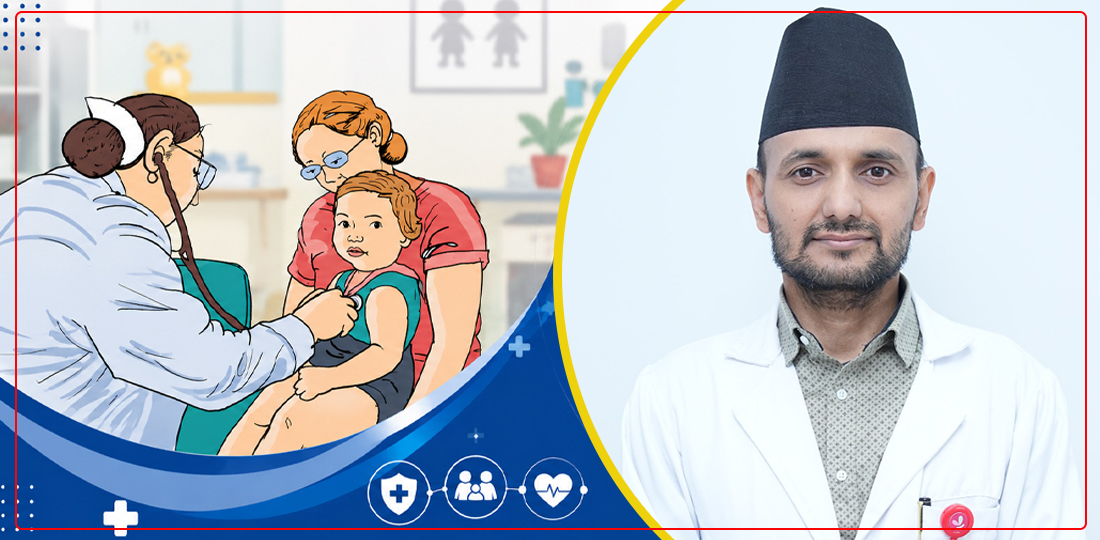
(Dr. Bhattarai is a Pediatric Immunologist, Allergist, and Pediatric Rheumatologist at Nerves Hospital)
This specific news has been automatically translated by AI. As a result, there may be some inaccuracies or language errors.

_cvUCBlwFTZ.jpg)
_sucFhOEREN.png)