First Dinosaur Bone Found in Antarctica Identified After 40 Years

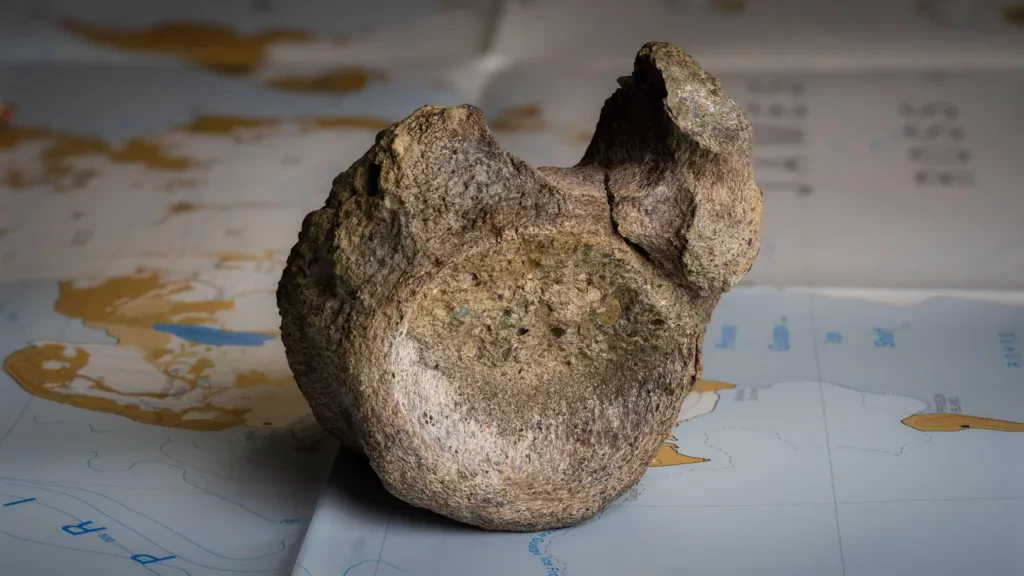
London. A seemingly ordinary fossil, forgotten in a drawer for 40 years, has been confirmed as the first ever dinosaur bone found on the continent of Antarctica. The dinosaur bone was discovered.
Excavated from James Ross Island in 1985, this fossil could not be identified at the time and was stored in a drawer in the collection room of the British Antarctic Survey (BAS) in Cambridge.
A recent study by fossil experts has confirmed that this bone belongs to the tail of a dinosaur called 'Titanosaur'. This species belongs to the largest group of dinosaurs that have ever walked the Earth.
Dr. Mark Evans, curator at BAS, found it while sifting through thousands of samples brought from various expeditions in Antarctica over the decades. He said, 'When you start thinking about what might be in these drawers and start digging, sometimes you find interesting things.'
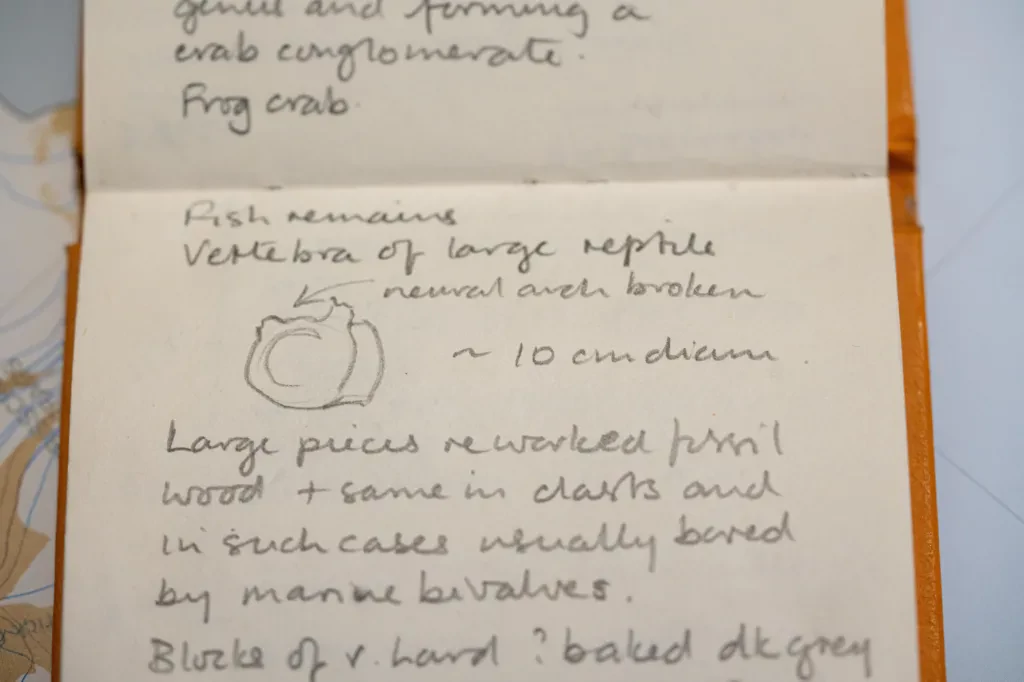
Geologist Dr. Mike Thomson, in his field notebook dated December 9, 1985, drew a small picture of it and described it as a 'giant reptile's spine bone' measuring 10 centimeters wide.
Initially, the team had assumed it was the bone of a marine creature. However, upon seeing it, Evans realized it looked like a dinosaur bone and, based on its discovery date, it would be the first dinosaur fossil found on the continent.
Evans called Professor Paul Barrett of the Natural History Museum for independent confirmation. Barrett stated that the bone's shape was very distinctive, saying, 'As soon as I saw it, I knew what we were dealing with; there is no doubt that it is a Titanosaur dinosaur. Such a combination of shape and features is unique to these dinosaurs.'
More than 100 species of Titanosaurs have been identified worldwide so far. All of them were quadrupedal, long-necked herbivores. The largest dinosaurs in this group were over 115 feet long and weighed up to 60 tons.
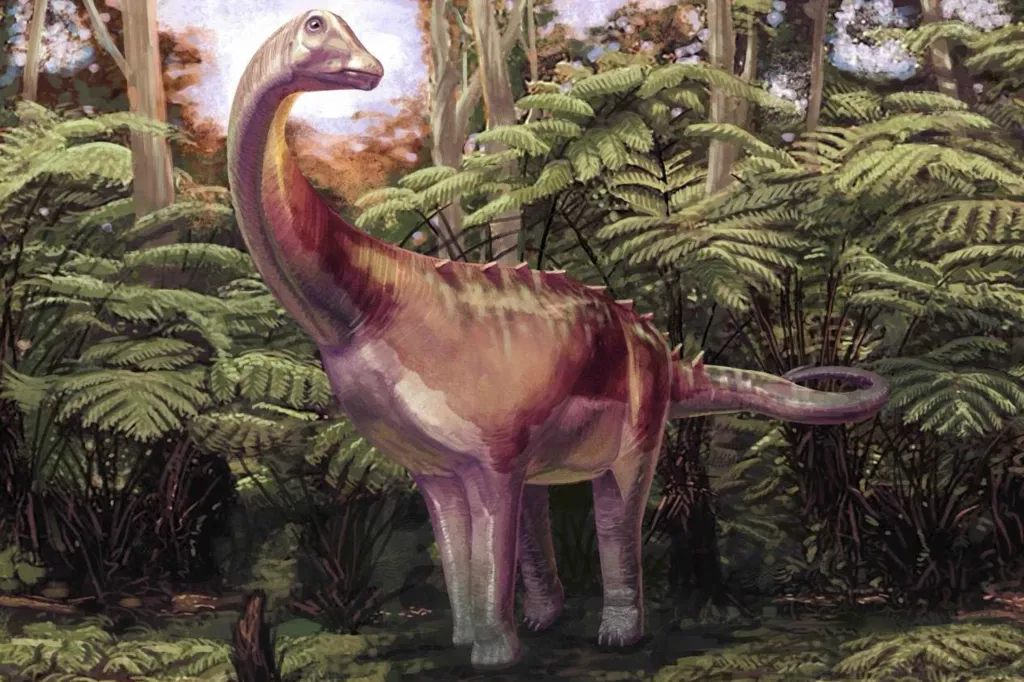
Based on the size of the discovered tail bone, scientists estimate this Antarctic Titanosaur was about 7 meters long. According to Professor Barrett, it could either be a young dinosaur or an adult of a smaller species than the average size of its group.
This creature lived 82 million years ago during the 'Late Cretaceous' period, when Antarctica's environment was not covered in ice as it is today, but was filled with green forests. Due to extreme cold and ice, finding fossils in Antarctica is considered a very challenging task.
After a long time, this identified bone now holds an important place in Antarctica's history. Barrett added, 'It shows that a place that is uninhabitable for us today was once very suitable for life and was inhabited by giant creatures.'
This specific news has been automatically translated by AI. As a result, there may be some inaccuracies or language errors.