South Korea and Japan Reaffirm Nuclear-Free Korean Peninsula Commitment

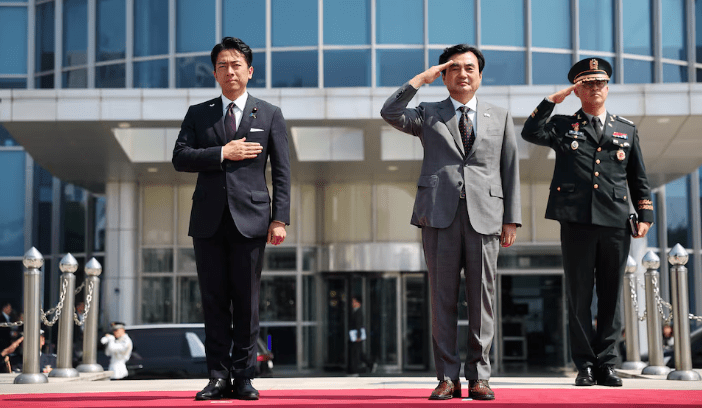
Seoul. Defense ministers of South Korea and Japan on Sunday reaffirmed their countries' commitment to making the Korean Peninsula free of nuclear weapons. Their statement came amid repeated announcements by North Korea to expand its nuclear arsenal.
South Korean Defense Minister Aajal Gyu Baek and his Japanese counterpart Shinjiro Koizumi met in Seoul after North Korean leader Kim Jong Un pledged to strengthen his country's defense capabilities, equip the navy with nuclear weapons, and intensify missile testing.
In a meeting with Koizumi, who is on a two-day visit, both agreed to explore ways to further deepen defense cooperation. Both Seoul and Tokyo are security allies of Washington, but cooperation between the two countries' militaries has not been possible due to historical tensions stemming from Japan's colonial rule in the early 20th century.
"Both sides reaffirmed their commitment to the complete denuclearization of the Korean Peninsula and the establishment of lasting peace, and agreed to continue bilateral cooperation between South Korea and Japan, as well as trilateral cooperation between South Korea-Japan-USA," the South Korean Ministry of Defense said in a statement issued after the bilateral meeting.
This meeting comes a few weeks after the first joint maritime search and rescue exercise between the two countries in 9 years, which is seen as another step towards bringing defense cooperation closer.
Although both defense ministers reaffirmed their commitment to making the peninsula nuclear-free, Pyongyang has recently pledged to maintain and expand its nuclear arsenal.
North Korean leader Kim Jong Un had announced earlier this month that he would increase his country's defense capabilities, stating that the military modernization efforts of South Korea and the US had pushed the region to the "brink of nuclear war."
He also pledged to equip his navy with nuclear weapons and build large warships. Since the summit between Kim Jong Un and then-US President Donald Trump in Hanoi in 2019 failed to reach an agreement on nuclear disarmament and sanctions relief, North Korea has declared itself an "irreversible" nuclear power.
Since the Korean War ended with a ceasefire agreement, not a peace treaty, North Korea and South Korea are still technically in a state of war.
This specific news has been automatically translated by AI. As a result, there may be some inaccuracies or language errors.