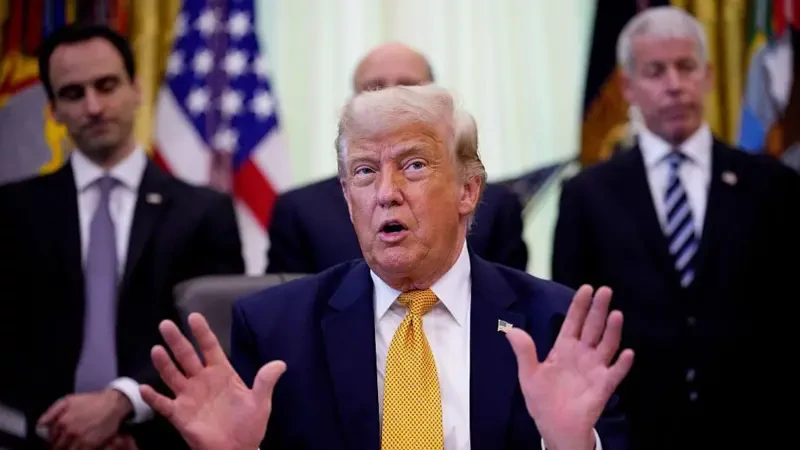
Russian Hardliners Urge Putin to Intensify Military Action in Ukraine Amid Drone Attacks
Moscow. Russian hardliners are outraged by Ukraine's continuous drone attacks inside Russia and the US's failure to end the war on favorable terms. They are pressuring President Vladimir Putin to abandon diplomatic efforts and intensify military action against Ukraine.
This is not the first time such strong measures have been demanded in Russia. Nationalist voices have long called for full military mobilization, the destruction of Kyiv's government headquarters, the assassination of Ukrainian President Volodymyr Zelensky, and attacks on drone factories in Europe. Some hardliners have even urged Kremlin chief Putin to consider the use of strategic nuclear weapons.
These demands have intensified this month after Ukraine targeted Moscow, St. Petersburg, and Crimea, and even carried out deadly attacks on passenger buses. According to analysts, this growing outrage has exposed the impact of Ukrainian drone attacks and the internal debate within Russia on how to defend its vast territory.
Nationalist businessman Konstantin Malofeyev expressed outrage after a Ukrainian attack on a Moscow oil refinery last week, saying, 'What more needs to happen before we truly start fighting? War means victory at any cost. Ukrainians are at war, so they are fighting with all their might. Why are we not using the nuclear weapons that our ancestors developed and stored with the full might of the nation?'
Some nationalist commentators have suggested Moscow adopt an aggressive military and diplomatic strategy similar to Iran's against the US. The blog 'The Obsessed by War,' with over 650,000 followers, has called for making major Ukrainian cities uninhabitable through bombing.
Another nationalist blogger, Yuri Baranchik, argued for abandoning peace talks mediated by the US, writing, 'Systematic air attacks by Ukraine on Moscow would have been impossible without Washington's permission. Why did Trump give Zelensky such permission? The answer is clear: after Iran put pressure on Trump, he was forced to sign a humiliating agreement. Now he has to take out his anger somewhere, so we have no choice but to either dominate him or surrender to him.'
According to sources close to the Kremlin, Putin can tolerate such criticism and pressure, as he has led the rigid political system he himself built for the past 26 years. However, analysts say such expressions can increase public anger and create expectations for a large military campaign, thus complicating the government's decision-making process.
Despite the pressure from hardliners, the Kremlin has not yet closed the door to negotiations. However, three senior government officials this week accused talks with the US of going nowhere and Washington of ignoring the peace proposals presented at the Putin-Trump summit in Alaska last year. Putin himself has not yet supported the extreme proposals of the nationalists, but in April, the Ministry of Defense publicly released the addresses of European factories allegedly manufacturing drones for Ukraine, warning that these locations could be targeted.
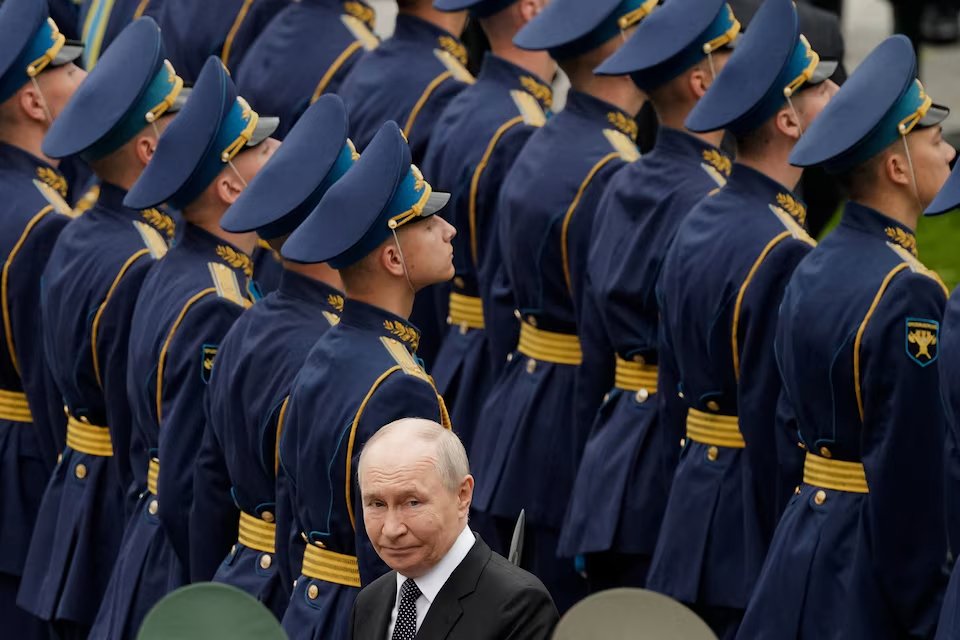
The Russian Foreign Ministry announced last month that it would carry out 'systematic attacks' on Kyiv's military targets, immediately after which Kyiv was heavily bombed, damaging a thousand-year-old monastery. For now, Putin appears confident in his current strategy. Addressing graduates of a military academy last Tuesday, he said that under the plan to take control of the Donbas region, the Russian army was close to capturing the city of Kostiantynivka in eastern Ukraine.
He claimed that European political forces hostile to Russia would soon be sidelined, saying, 'We are seeing the rise of those who want to restore normal relations and stop the game of strategically defeating Russia. In the end, everything will be in our favor.'
This specific news has been automatically translated by AI. As a result, there may be some inaccuracies or language errors.

_CJUItIXTM0.jpg)