Dr. Kapil Rizal Discusses New Film 'Gauthali' and Transition from Dentistry to Directing
_y89BBMlYsr.jpg)
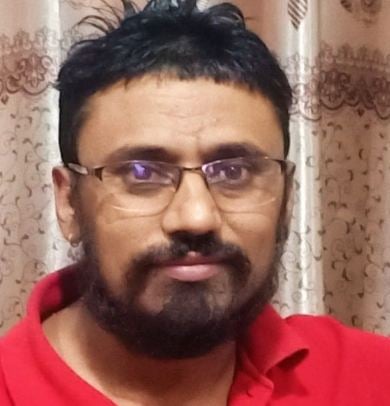
Kathmandu. Dr. Kapil Rizal, who has been active in the dental field for three decades, has added another identity to his name - film director. This physician, who takes care of the oral health of citizens, appeared on the new path of film direction a few years ago with 'Harry Ki Pyari'.
He developed an interest in medical service and film simultaneously from a young age. The reason for this is his proximity to his father, the renowned physician, lyricist, and film producer Dr. Bhola Rizal.
Kapil was interested in writing, directing, and acting in plays during his school and college life. While living in the UK, he even took a course in film direction. Therefore, following his dreams, he stepped into film direction.
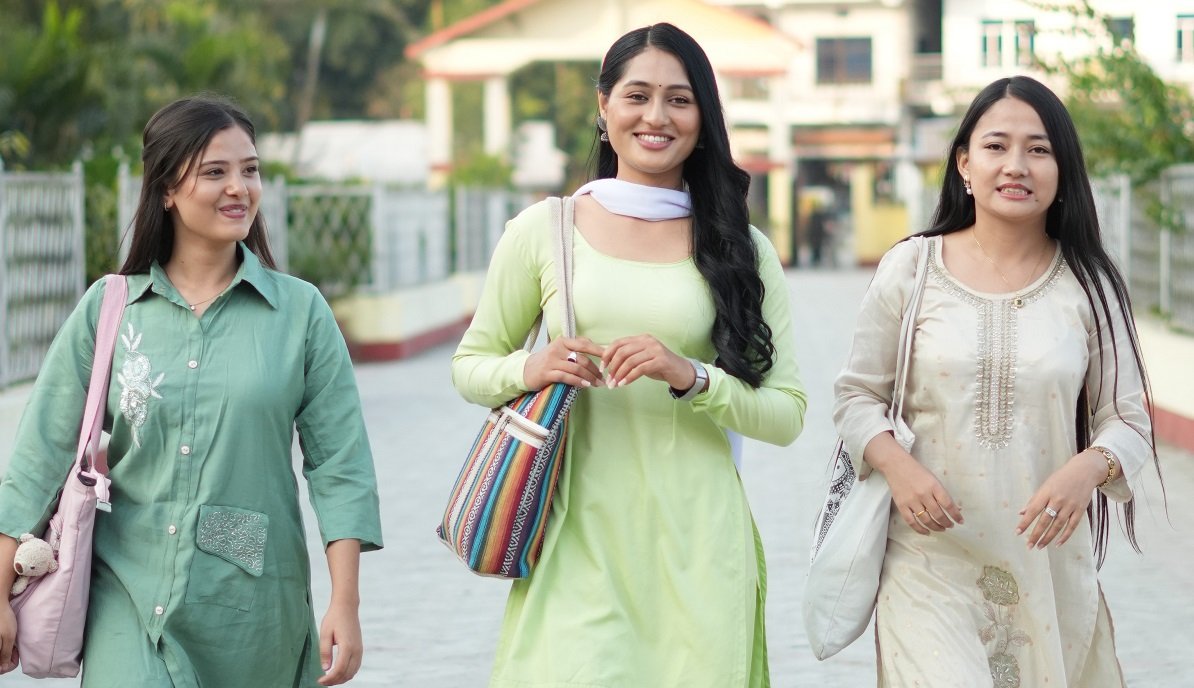
Although his first film did not achieve the status of a commercial hit, he learned a lot from it. Now he is coming before the audience with his second directed film 'Gauthali'. He is very optimistic about this film, which is based on the story of child marriage. He says that the film can play a role in bringing positive change in society.
During an interview in Ratopati's 'Star and Stories', he discussed his journey from his medical career to his film career. Here is the edited excerpt of the interview (can be watched and listened to in detail in the video):
You are coming with your second directed film 'Gauthali'. When you hear 'Gauthali', it reminds you of the film made by your father (Dr. Bhola Rizal) many years ago. What is the reason for making a film with the same name again?
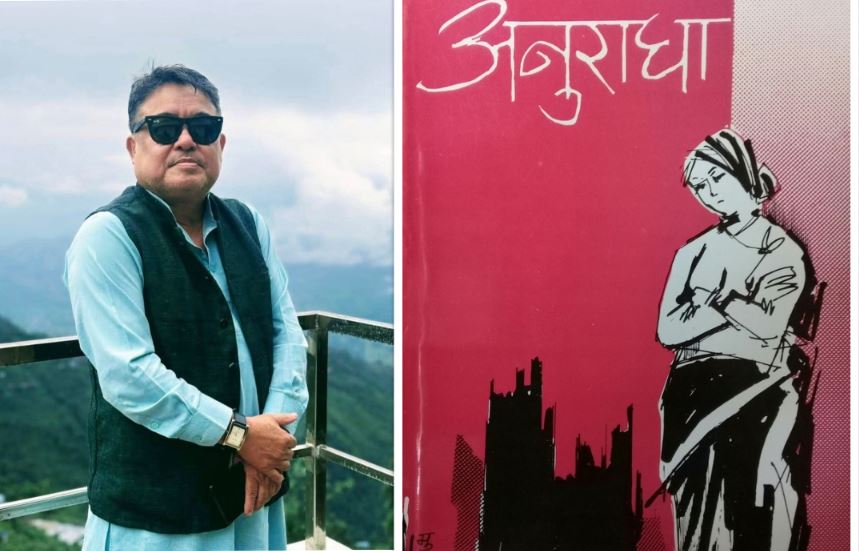
There is a family and emotional background behind this. My father married at the young age of 15 and my mother at 12. After marriage, the previous 'Gauthali' was made based on some of the experiences my mother went through in her childhood. At that time, 'Gauthali' came in the form of a musical story. I felt that this story could be shown with a new perspective in today's modern context. Holding the core essence of that old story, adding some new aspects, I have tried to make 'Gauthali' now in a way that today's generation can easily understand and feel.
How relevant and practical is the story of child marriage for today's modern society?
First of all, love and emotions never get old. Just as people loved yesterday, the feeling of love is felt the same way today. Therefore, this is an eternal love story. As far as child marriage is concerned, my mother was married at the age of 12. Even today, if we ask the mothers, grandmothers, or aunts of the previous generation in our society, we hear that their marriages also took place at a young age.
Although it is prohibited by law in Nepal, child marriage in various forms has not been completely eradicated yet. Looking at global statistics, we are still not free from the problem of child marriage. Although education has developed, in some families, discrimination still persists where daughters are sent to government schools and sons to private or boarding schools. This discrimination is solely due to gender inequality. Earlier, people used to express their anger directly or resort to physical violence, but today, mental and emotional violence and pressures have increased in society. Therefore, this story is equally relevant and sensitive even today.
_XurbLSVGzh.jpg)
You are a dentist by profession, how much have you incorporated the experience and sensitivity of the medical field into the film?
The story of the film was written by my father, which we have adapted into a script suitable for the current time. But one thing is true, the aspect of health or mental health is always connected in the films we make. In the old films made by my father like 'Pakhe', 'Saathi', or 'Apsara', this sensitivity was seen somewhere. In 'Harry Ki Pyari', which I directed earlier, we also showed an aspect of health.
Your debut film 'Harry Ki Pyari' was not commercially successful. How do you view this?
I take full responsibility and blame for this. Because the main captain or decision-maker of the film is the director. When successful, everyone's hard work is seen, and when unsuccessful, the blame falls on the director. The subject matter and style I chose for 'Harry Ki Pyari' turned out to be a bit different from the mainstream of the current Nepali film market and the audience's immediate desires. Also, I had the technical work, including background music, done in India, which I felt somehow overshadowed the original Nepali essence in the film. That's why this time all the work for 'Gauthali' was done in Nepal; it has the fragrance of Nepali soil.
Dentistry was probably a good profession. Why did you venture into film direction?
I had an inner interest in films since childhood. I used to write, act, and direct plays when I was in school and college. Even when I was living in the UK, I used to take courses related to direction in my free time. Since the family background was in both medicine and film, the influence of my father's company and the filmmakers who came to meet my father affected me from a young age. However, due to my studies and profession, I entered the medical field, but the dream within my heart never died. I stepped into film direction to fulfill my dream. Cinema is such a powerful medium through which we can spread positive changes and messages in society.
Is film direction just a hobby?
People are free to say whatever they think. But for me, film is a strong medium to convey what I want to say to the audience. The hard work done day and night for 40-50 days in the cold cannot be just a hobby. I try to answer this through my work and creations, and my continuity in this field will remain.
Dentist or Film Director, which identity gives more joy and satisfaction?
I have worked as a dentist for about 25-30 years. But film director is a new and exciting identity for me. When someone calls me a director, I feel immense joy, and a new energy arises within me.
_j1S2OsTI6g.jpg)
It is said that film investment is risky. Have you also been investing yourself?
Suman Giri and I made this film together. Film production is always risky commercially. But to create something new, one has to take some risks. Without taking risks, nothing new can be proven in life.
Do you have any dreams for the film industry?
My dream is to take Nepali films to the international level and introduce our culture to the world. We are slowly moving towards this. The goal is to be selected and awarded at the Oscars.
Video/Photo: MANOJ KHADKA, AYUSH DHAMI/Ratopati
This specific news has been automatically translated by AI. As a result, there may be some inaccuracies or language errors.


_CEfMMkipjd.jpg)