Foreign Employment Sector Faces Syndicate Issues, Government Plans Reforms

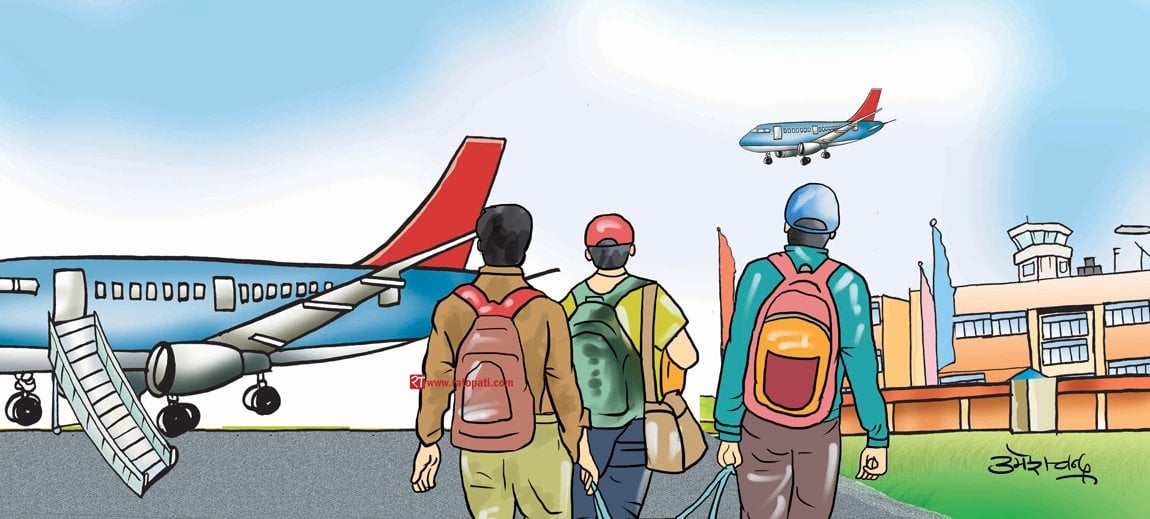
Kathmandu. Nepal's foreign employment sector has been notorious for the past few years. The backbone of the country's economy has been distorted due to government policies.
Policy uncertainty, foreign pressure, and internal syndicates are the main problems in the foreign employment sector.
However, with the arrival of a powerful government with a two-thirds majority, everyone from businessmen to the labor class has expected improvements, and the government has publicized some action plans to end the syndicate.
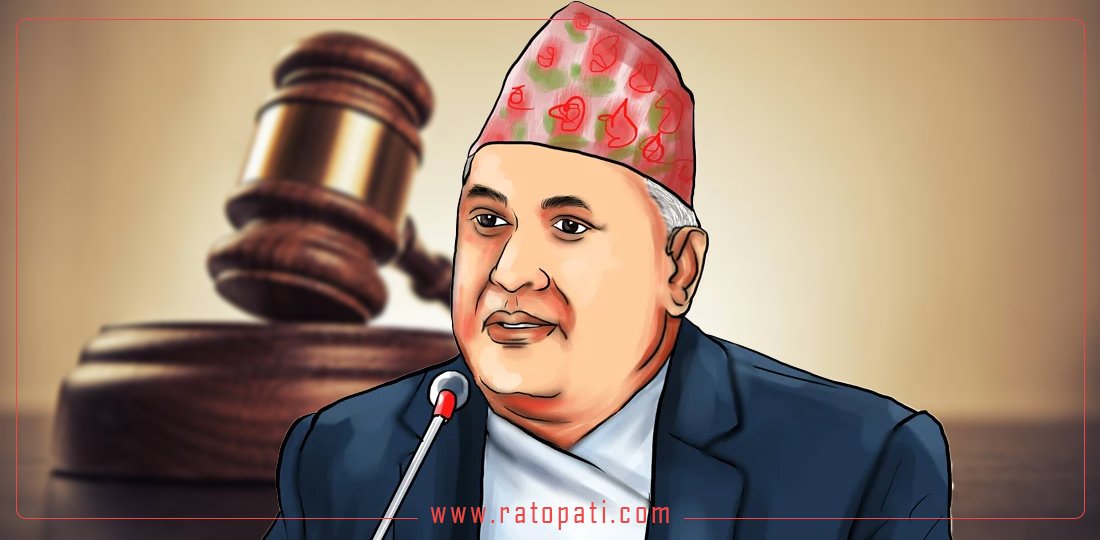
But the government says that corruption has flourished due to the Foreign Employment Act and past policies. Youth, Labor and Employment Minister Ramji Yadav stated this while responding to questions raised by MPs on the allocated budget of the ministry in the meeting of the House of Representatives last Wednesday.
He described the Foreign Employment Act as a 'horse without reins'. He said that it is not possible to move forward without correcting the old weaknesses in the act. He informed that the draft for the amendment of the act is being prepared and is being prepared to be sent to the Ministry of Law soon.
'I am in a great hurry to bring this act. If necessary, it had to be brought through an ordinance, but now we have finalized it,' he said.
He asserted that the upcoming act will strengthen the security of the workers.
The 'Free Visa Free Ticket' system, which was supposed to be implemented in 2072 BS, has also passed a decade. However, the government has neither fully implemented nor amended it.
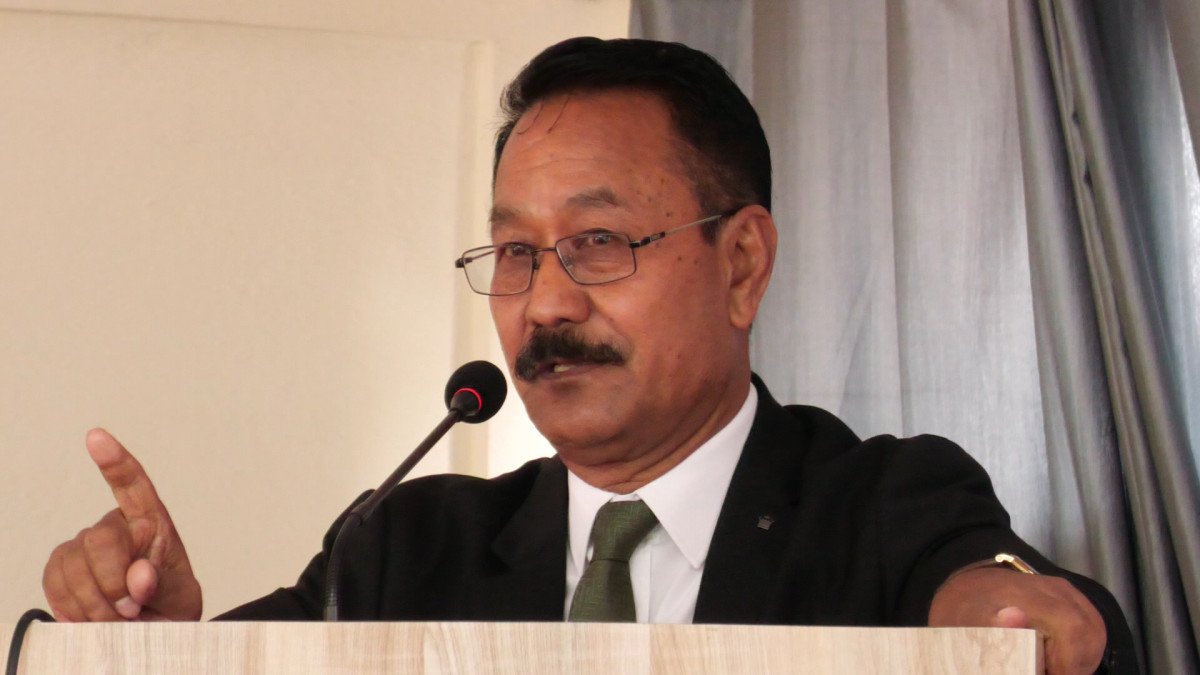
Nepal Association of Foreign Employment Agencies Chairman Dik Bahadur Khatri also said that the provisions from Section 15 to 19 of the Foreign Employment Act, 2064 BS, need to be amended immediately to be time-appropriate.
According to him, the foreign employment sector has fallen into a policy trap due to cumbersome procedures and impractical legal provisions. He said that policies like increasing the deposit and sending at least one hundred workers have increased unhealthy competition among businessmen, and the economic burden of this ultimately falls on the workers.
Free Visa Free Ticket Slogan Only on Paper
The 'Free Visa Free Ticket' system, which was supposed to be implemented in 2072 BS, has also passed a decade. However, the government has neither fully implemented nor amended it.
However, the current government has committed to amending it. Minister Yadav commented that this system has turned into a policy trap. He informed that a high-level task force has been formed to make it practical.
The then Minister of State for Labor, Tek Bahadur Gurung, decided to implement this policy on Jestha 26, 2072 BS. The government had adopted a policy that workers going to Saudi Arabia, Qatar, Kuwait, Bahrain, Oman, UAE, and Malaysia would not have to pay for visa and ticket.
'The government is preparing to continuously promote the employer pay model where the employer bears the recruitment cost and ethical recruitment,' he said.
With the change in government, the Free Visa Free Ticket policy was seen as a political vote. No government could amend it. As the policy remained only on paper, the economic burden and hardship on the workers never decreased.
The then Minister of State for Labor, Tek Bahadur Gurung, decided to implement this policy on Jestha 26, 2072 BS. The government had adopted a policy that workers going to Saudi Arabia, Qatar, Kuwait, Bahrain, Oman, UAE, and Malaysia would not have to pay for visa and ticket.
However, manpower companies were allowed to charge a service fee of Rs 10,000. This policy had created great hope among the workers, but its implementation was weak.
Now the government itself has accepted it as a 'trap'. Although the cost is said to be zero on paper, in practice, workers are still forced to pay lakhs of rupees.
According to statistics, only about 5 to 7 percent of workers currently go abroad under the employer pay model, where the employer bears the expenses.
About 50 percent of workers still have to pay for both visa and ticket out of their own pockets. Not only the government, but businessmen have also accepted that the non-implementation of Free Visa Free Ticket has led to a policy capture. According to Chairman Khatri, the existing act and some government policies are the main roots of the corruption seen in the foreign employment sector.
Shrestha said that policies brought in haphazardly have put both businessmen and workers in trouble. He believed that the Free Visa, Free Ticket, brought about by the state minister in 2072 BS, was popular but impractical.
'The decision, brought as a trial for three months, was continued without any legal basis and impact assessment,' he said, '10,000 does not even cover the administrative expenses of a manpower company, which has led to policy corruption and irregularities in this sector.'
Ministers also used it as a vote bank rather than for the benefit of the workers. Khatri argues that the amendment made in Section 15 (C) of the Foreign Employment Act 2064 BS through the Some Nepal Laws (Amendment) Act in 2075 BS has made foreign employment more complicated.
Saudi Arabia, the main destination for Nepali workers, has added another problem with its recently introduced skill certification rule. Nepali workers, already suffering due to various policies, are further worried by Saudi Arabia's new rule.
He said that the demand letter certification system has confined them only to traditional destinations (Gulf and Malaysia) and hindered institutional sending of workers to emerging (attractive destinations like Europe).
'When institutional access to places where workers receive good services, facilities, and human rights is blocked, intermediaries become active, and incidents like human trafficking increase,' he added.
Chairman Khatri said that the Minister of Labor's use of the term 'policy trap' in parliament indicates that the government is aware of the problem.
Chairman Khatri emphasized the need to make service fees sustainable and practical, to clearly define worker cost headings, and to remove policy ambiguities in the act. He believes that if these reforms are made, 95 percent of the irregularities will end, and this sector will become more disciplined.
Saudi Arabia's New Rule Another Problem
Saudi Arabia, the main destination for Nepali workers, has added another problem with its recently introduced skill certification rule. Nepali workers, already suffering due to various policies, are further worried by Saudi Arabia's new rule.
Under the new rule, Nepali workers cannot go without skill certification, and a fee of Rs 15,000 has been set for skill testing, which adds another financial burden on the workers.
According to the Saudi Embassy, workers who do not pass the skill test will no longer receive labor approval for Saudi Arabia. For this, workers have to pay an additional fee of Rs 15,000.
While having skills is a good thing, businessmen and labor rights activists are protesting the implementation process and fees. A skill testing center was planned to be opened in Kathmandu, and businessmen protested against it.
UAE's Another Hassle
Following the GenZ movement, the United Arab Emirates (UAE) has tightened its visa process citing security sensitivities, which has affected Nepalis.
Previously, a police report (character certificate) stamped by the Ministry of Foreign Affairs was sufficient, but now a mandatory provision requires authentication from the UAE Embassy.
Processing through the VFS center for police report authentication requires workers to pay an additional Rs 14,005 (353 Dirhams). This expensive system remains in place even though the country has returned to normal.
However, the government is silent on facilitating this.
Workers are also forced to pay an additional fee to obtain a report from the Nepal Police. They have to pay a large amount to a foreign agency to authenticate a report issued by their own country's police.
Syndicate in Health Check-ups
For years, the biggest loot in the foreign employment sector has been in health check-ups. Due to the monopoly of only 171 health institutions being allowed to conduct tests, workers were paying up to Rs 9,500 for tests that cost Rs 3,000 in government hospitals. However, with the arrival of the new government, this syndicate has been broken.
The government has opened the way for health check-ups to be done by all listed health institutions and government hospitals. If this decision is fully implemented, billions of rupees will be saved from the pockets of the workers.
However, there is still doubt about its success, as such decisions have been made in the past and overturned under pressure from manpower and health businesses during the implementation phase.
Nepali workers are employed in more than 178 countries worldwide. More than 2,000 youths fly for foreign employment from Nepal daily.
This specific news has been automatically translated by AI. As a result, there may be some inaccuracies or language errors.

-(2)_QJLjKxR87n.jpg)