Economist Sudankumar Oli Advocates Strategic Partnership for Economic Prosperity

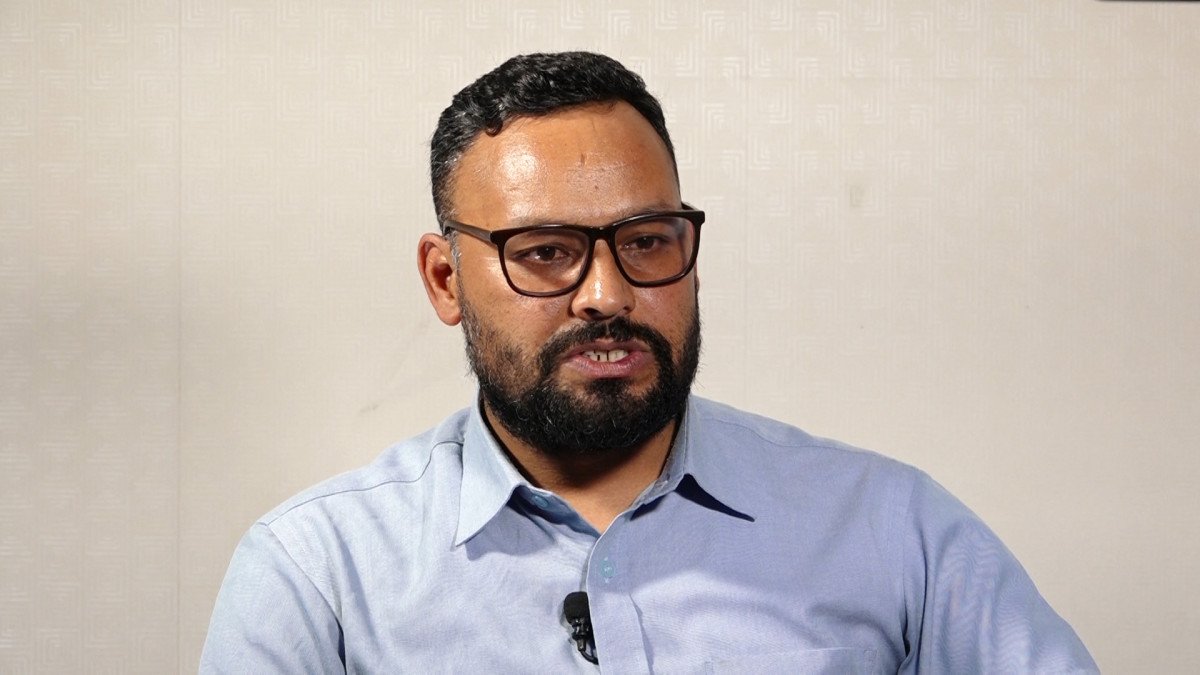
Kathmandu. Economist Sudankumar Oli has stated that Nepal should convert its relations with India and China into economic prosperity through strategic partnership. Mentioning that the recent visits of Foreign Minister Shishir Khanal to China and India have given special importance to Nepal by both neighboring countries, he said that this opportunity should be transformed into practical benefits.
According to Oli, both India and China are extremely important partner nations for Nepal. More than about 65 percent of Nepal's total economic interest is linked with India and about 20 percent with China. Oli mentioned that it is necessary to move forward with the relationship in a new way, leaving behind the bitter and sweet incidents of the past with India.
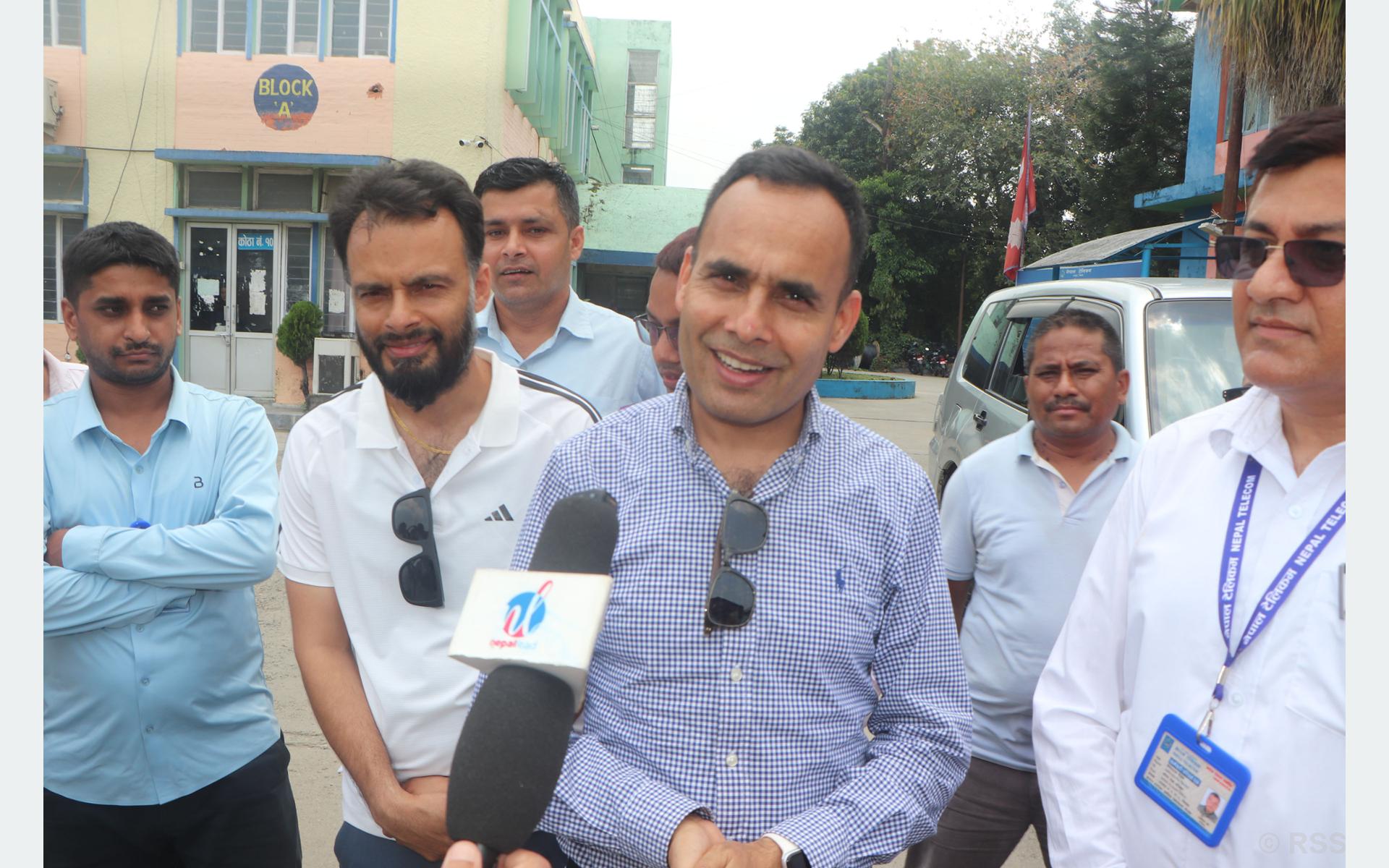
In a conversation with News Agency Nepal, he said that the neighborly country's visit by the Foreign Minister has added a new dimension to the relationship and has provided an opportunity to correct the misunderstandings and differences seen with China for some time.
Highlighting the need to evaluate Nepal-China relations on the basis of both historical background and the current global economic environment, he said, 'For a long time, there has been a lack of consensus on some issues between China and Nepal. The narratives presented through our media may have also contributed to this among some general citizens. But the important aspect is that we need to analyze the relationship between Nepal and China from both historical and current perspectives.'
Oli argues that Nepal can gain significant economic benefits through strategic partnership, being situated between China, the world's second-largest economy, and India, the sixth-largest economy. He stated that the current government should not miss development opportunities by utilizing the mandate received from the citizens for political stability and policy clarity.
Mentioning that issues such as the Belt and Road Initiative (BRI), regional connectivity, quality infrastructure, and global governance were prominently raised in the Foreign Minister's discussions with China, Oli emphasized that Nepal should utilize these opportunities. In particular, he stated that cooperation with China can be increased in the areas of quality infrastructure, regional connectivity expansion, digital connectivity, and technology transfer. Oli said that Nepal can expand its trade capacity through roads, railways, air services, digital networks, and border crossing improvements.
Discussing the current political situation and opportunities, he said, 'Now, being between China, the world's second-largest economy, and India, the sixth-largest nation, opportunities have been created for us to work as strategic partners. With the government having a nearly two-thirds majority from a single party, there is no stopping us now. There is no excuse for not creating new opportunities. The Global Governance Initiative has come up, followed by the implementation of projects within the BRI framework. Even though we are a landlocked nation, this is an opportunity, as China has taken the visit of Nepal's Foreign Minister, which we have not been able to capitalize on. Now, the Government of Nepal also needs to think differently about foreign relations. Our past Panchsheel principles are definitely necessary. China's role is not only in the South Asian region but also in the global space, and by working between China and India, we should gain economic benefits from both nations.'
Mentioning that Nepal's biggest economic challenge is high transportation and management costs, Oli said that if Nepal can expand modern infrastructure, new technology, and regional connectivity, production costs will decrease and competitiveness will increase. He informed that Nepal's logistics cost is more than 35 percent above the world market average.
Stating that roads are the main option as Nepal does not have a sea port and air routes are very expensive, he emphasized the need to make projects under BRI such as the Narayanghat-Butwal road, ring road expansion, Pokhara International Airport, and Tatopani-Kathmandu road effective. He claimed that China has the best technology to reduce logistics costs by increasing productivity. He stated that cooperation with China should not be limited only to infrastructure construction but should also be expanded to technology transfer, technical education, human capital development, green energy, digital economy, social security system, and digital governance.
Oli stressed that Nepal should prioritize its own national interests while maintaining a balanced relationship between India and China. He said that Nepal should set priorities according to its own interests rather than using one country against another, adding, 'We feel like we have gone out of the league. The right time has come. We should not use one country against another; instead, the state should prioritize things like 1-2-3 based on Nepal's benefits, determining which things we can be comfortable with regarding India and which things we can be comparatively comfortable with regarding China.'
He stated that Nepal needs to move forward with a clear and long-term perspective in its foreign policy, security policy, and economic policy. Oli's view is that Nepal should seriously understand and act upon important international initiatives such as China's 'One China Policy', regional stability, and BRI. He mentioned that since China has been using educational exchanges and cultural relations as 'soft diplomacy' in recent years, Nepal should benefit from it, and if it moves forward with the right policies and clear priorities, neighborly relations will reach new heights.
This specific news has been automatically translated by AI. As a result, there may be some inaccuracies or language errors.