Nepal Remains on FATF Grey List, Needs to Address Strategic Deficiencies

Kathmandu. The international body for preventing money laundering, the Financial Action Task Force (FATF), has kept Nepal on the 'Grey List' for money laundering. In its latest report on the global state of combating money laundering and terrorist financing, FATF has continued Nepal in the same list.
According to the report released on Friday after the FATF plenary meeting in Paris, France, Nepal still remains on the high-monitoring list, i.e., the 'Grey List'.
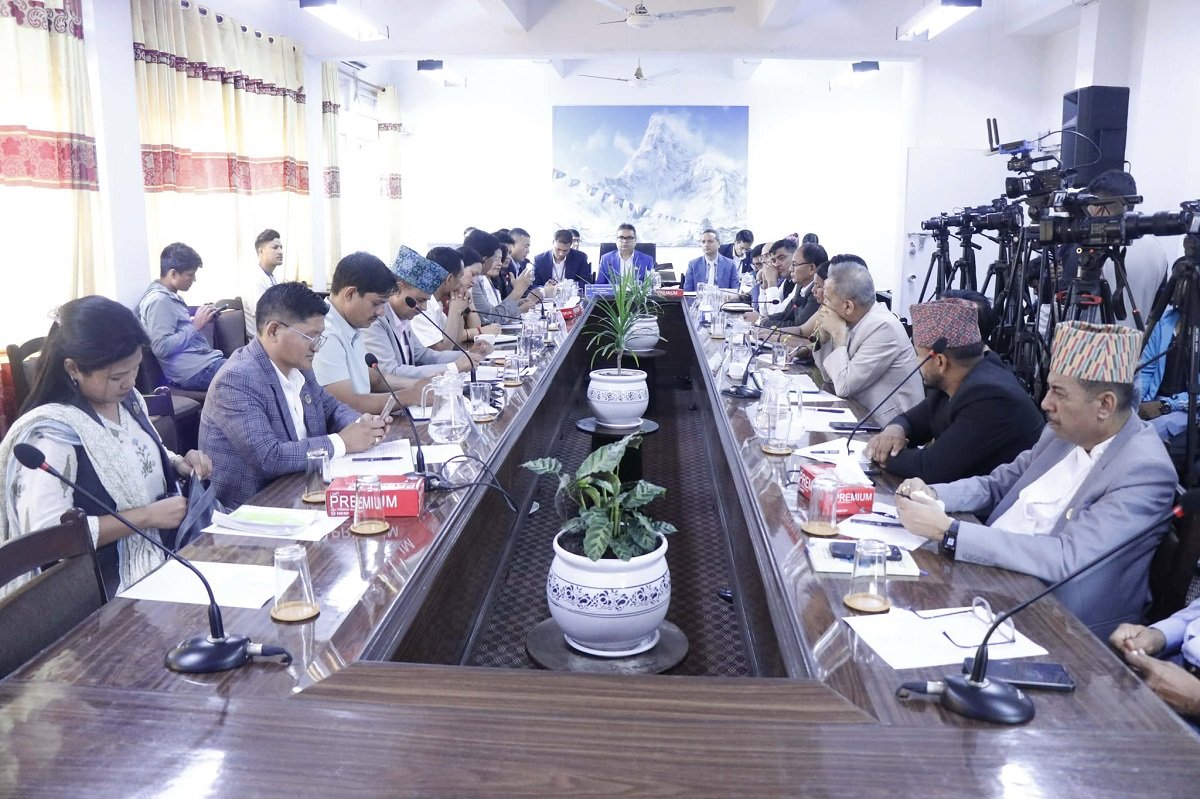
FATF has praised Nepal for making some improvements in its system. However, it has clarified that strategic deficiencies still need to be fully addressed. Specifically, FATF has drawn Nepal's serious attention to controlling hawala transactions and strictly supervising high-risk cooperatives and casinos.
Nepal's Situation and Reform Efforts
The report mentions that since February 2025, Nepal has shown high-level political commitment to strengthening the effectiveness of its anti-money laundering and counter-terrorist financing system in collaboration with FATF and its regional body, the Asia-Pacific Group.
Since then, Nepal has taken some significant steps to improve its system by addressing the remaining technical compliance deficiencies in terrorist financing and financing of weapons of mass destruction related to targeted financial sanctions.
However, these improvements alone are not enough for Nepal to get off the Grey List. FATF has set a condition for Nepal to fully address its strategic deficiencies within the stipulated timeframe and to continuously work on effectively implementing the action plan given by FATF.
Nepal's 6-Point Action Plan to be Fulfilled
FATF has outlined 6 key tasks that Nepal must undertake immediately to get off the Grey List:
1. Deeper Understanding of Risks: Nepal must identify and improve its understanding and analysis of the major money laundering and terrorist financing risks in the country.
2. Risk-Based Supervision: To prevent the misuse of the financial system, the risk-based supervision system for commercial banks, high-risk cooperatives, casinos, precious metal and stone traders, and the real estate sector must be improved. International concern has been expressed about the high risk of black money being hidden in cooperatives and real estate transactions in Nepal.
3. Control and Action Against Hawala: FATF has explicitly instructed Nepal to identify and take strict action against 'hawala' providers. It must be proven that significant illegal money transfer syndicates are identified and brought under the purview of law and prosecuted, without hindering financial inclusion or affecting legitimate remittances.
4. Increase in Investigation Capacity and Coordination: The capacity of Nepal's competent bodies (e.g., Nepal Police, Financial Intelligence Unit, etc.) for in-depth investigation of money laundering-related cases must be enhanced, and coordination among them should be increased.
5. Increase in Investigation and Prosecution: It is not enough to just investigate money laundering crimes; Nepal must show FATF statistics and evidence of a significant increase in prosecutions by taking such cases to court.
6. Confiscation and Control of Illicit Assets: A mechanism must be proven to be implemented for the effective identification, tracing, freezing, and, if necessary, confiscation in the name of the state of proceeds of crime (black money) and instruments used in crime, according to the country's risk profile.
Only by completing these 6 action points on time will Nepal have a chance to be removed from the Grey List in the future.
FATF has urged member states not to de-risk countries on the Grey List but to adopt a risk-based system. It has also cautioned against obstructing humanitarian aid, legitimate NGO activities, and the flow of remittances.
International Scenario: What is the Situation of Other Countries?
The report of June 19, 2026, also provides detailed information about the situation of many other countries, including Nepal. While some countries have succeeded in getting off the list by making significant improvements, some new countries have been added to the Grey List. Some countries have received serious warnings after their deadlines expired.
FATF has removed Algeria and Namibia from the Grey List. Both these countries have been removed from the list for making significant improvements in their AML/CFT systems.
Algeria has been freed from the list for increasing effective supervision in high-risk areas, improving suspicious transaction reporting, and imposing targeted sanctions against terrorist financing. Similarly, Namibia has moved out of the monitoring list for resourcing its Financial Intelligence Unit, increasing coordination among law enforcement agencies, and successfully investigating and prosecuting money laundering cases.
New Countries Added to the Grey List
Following this review, Bosnia and Herzegovina and Iraq have been included in the Grey List. Bosnia and Herzegovina has come under FATF's monitoring for failing to effectively supervise the real estate, notary, and banking sectors, while Iraq has been monitored for failing to stop informal money transfers and regulate virtual assets. Both countries have shown high-level political commitment to reforms.
Countries on the Verge of Being Removed from the List
FATF has stated that Bulgaria, Côte d'Ivoire, the Democratic Republic of Congo, and Monaco have substantially completed their action plans. FATF teams will now conduct on-site visits to these countries to ascertain whether the reform work is progressing sustainably. If the on-site visit reports are positive, these countries will be removed from the Grey List at the next meeting.
Countries Whose Deadlines Have Expired and Received Warnings (Red Alert)
The report has issued serious warnings to Vietnam, Cameroon, Haiti, and South Sudan. The deadlines given to these countries to complete their action plans have expired, but much work still remains. FATF has strongly urged Vietnam, whose deadlines expired in May 2025, to make improvements as soon as possible.
While Cameroon and Haiti have made some progress, their work is incomplete, and South Sudan's progress has been very slow, with a suggestion to translate political commitment into action.
Other Countries on the List Undergoing Reforms
Angola, Bolivia, Kenya, Lao PDR, Lebanon, Venezuela, and the Virgin Islands are carrying out reforms according to their action plans. FATF has specifically drawn Venezuela's attention to adopting only a risk-based system when supervising NGOs, without hindering their legitimate work, and to revise new laws. Lebanon's efforts, despite the country's difficult economic and security situation, have been noted.
Countries in Special Situations
Syria and Yemen completed their technical action plans in 2014. However, due to the ongoing war and serious security challenges in these countries, FATF teams have not been able to conduct on-site monitoring there. FATF has stated that once the security situation normalizes, their status will be determined through on-site visits.
Similarly, Kuwait and Papua New Guinea have maintained their previous status as they postponed reporting their progress this time, according to the report.
This specific news has been automatically translated by AI. As a result, there may be some inaccuracies or language errors.