
Supreme Court Registrar: Court Verdicts Not Government Wins or Losses


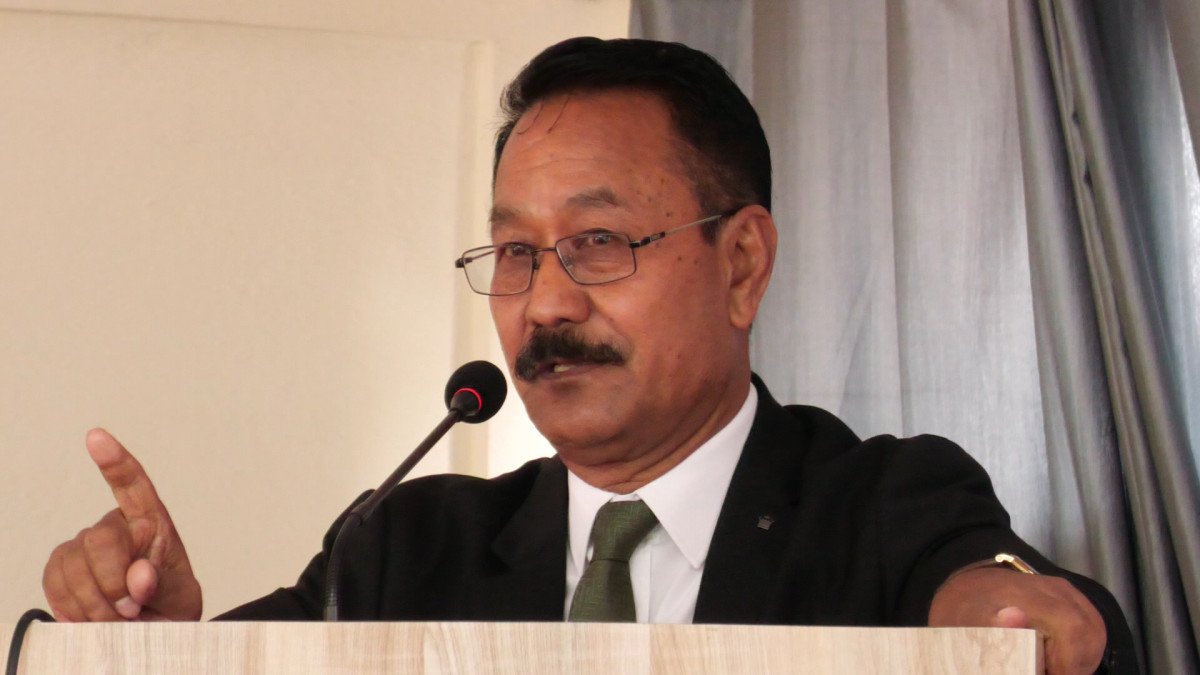
Kathmandu. Chief Registrar of the Supreme Court Bimal Poudel has said that understanding verdicts from the court as the government's loss or win is a narrow mentality. Speaking at an interaction program organized by the Supreme Court Verdict Implementation Directorate, Chief Registrar Poudel emphasized that the relationship between the executive and the judiciary should be complementary, not confrontational.
According to him, the court does not create cases on its own and only plays the role of an impartial umpire to protect the fundamental rights of citizens guaranteed by the constitution. He argued that it is not the dharma of the judiciary to deliver verdicts in favor of the state just because state-side cases come up during judicial proceedings, and commented that his body must be impartial to maintain judicial impartiality.
He clarified that it is not permissible to deliver verdicts in a way that is unjust to the defendant just because the government is the plaintiff in government cases, and that the court's verdicts against the government should not be understood as the government losing. He added, 'This is just a reasonable interpretation within the limits of the constitution and law. If this is understood correctly, there will be no situation where anyone has to blame anyone else. We need to rise above this blaming culture.'
During his address, Chief Registrar Poudel also revealed the fact that there are extremely serious challenges in the area of verdict implementation in Nepal's justice system. He stated that it is a worrying situation that over 121,000 years of imprisonment and fines exceeding approximately 34 billion rupees are yet to be collected across the country. He emphasized that this frightening picture should be understood as a serious challenge in the area of verdict implementation and stressed the need to move forward with innovative methods different from traditional working styles to address it.
He informed that preparations are underway to link the court's information system with the government's national identity card system to make the verdict implementation process efficient, scientific, and technology-friendly. Mentioning that the details of more than 20.5 million citizens have already been entered into the Government of Nepal's national identity card system, he said that if the court's case system can be connected to the national identity card database through API, tracking individuals and identifying their addresses will be easier. He analyzed that this innovative work can bring about revolutionary improvements in the current difficult situation of verdict implementation.
Poudel also argued that the credibility of the judiciary indirectly connects to creating an environment for the country's economic development and attracting foreign investment. Citing reports from the World Bank and the United Nations Development Programme, he analyzed the fact that foreign direct investment does not flow into countries where the rule of law is weak. He clarified that investors will not invest in infrastructure unless they are assured of easy justice from the court when problems arise in contract management, and claimed that even though the judiciary does not go to the field of physical construction, it is the court's responsibility to create a development-friendly legal environment.
On another occasion, Chief Registrar Poudel pointed out the need for innovation in the administrative machinery and bureaucracy. He shared his experience that the new manpower who come with enthusiasm at the time of entering service gradually become dull or stagnant in the traditional system. He urged representatives from ministries and departments to start small but meaningful reforms immediately from their respective bodies instead of waiting for major reforms and to focus on inter-agency information exchange.
He argued that information exchange between agencies will increase the efficiency of everyone, and its direct positive impact will be seen on service recipients.
This specific news has been automatically translated by AI. As a result, there may be some inaccuracies or language errors.



-(2)_QJLjKxR87n.jpg)