North Korea Intensifies Dry Field Rice Cultivation Amid Drought Concerns
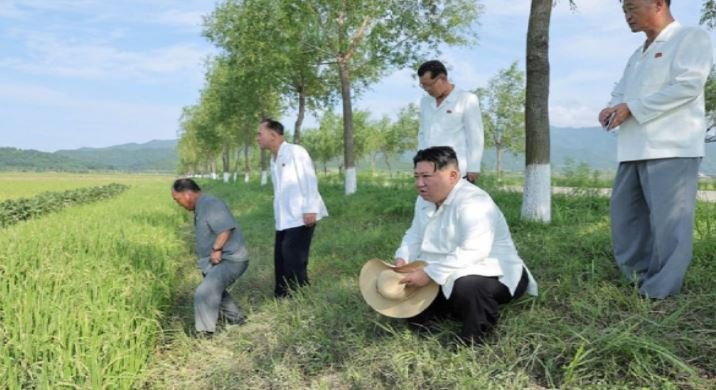
Pyongyang. North Korea has intensified rice cultivation in dry fields as an alternative to traditional water-submerged paddy farming. While state media presents this as an effort to increase agricultural production, experts interpret it as a serious indication of the country's growing drought and food insecurity.
North Korea, a nuclear-armed nation, has long grappled with international sanctions, a state-controlled economy, and persistent food shortages. In previous years, natural disasters and a weak agricultural infrastructure have also impacted food production.
Elizabeth Salmon, the UN's special rapporteur on human rights in North Korea, stated in February that food shortages were a major humanitarian challenge in the country. According to her, the lack of adequate food is directly affecting the lives of ordinary citizens.
North Korea's state news agency, Korean Central News Agency (KCNA), reported on Tuesday that dry field rice cultivation is expanding in various regions of the country. Although rice cultivation typically requires abundant water, this method is used when irrigation is limited or dependent on rainfall.
Earlier in April, KCNA had warned that the country was facing an 'unusual' and 'severe' drought and mentioned that special measures were being taken to save crops. Since then, various reports have indicated that the drought situation remains challenging.
According to South Korea's Yonhap News Agency, North Korean state television last month showed severe drought conditions in several locations in South Hwanghae Province, a major grain-producing region in the country.
Experts suggest that recent developments indicate a worsening water shortage in North Korea's agricultural sector. Kim Yong-hyun, a professor at Dongguk University, stated that as water availability decreases, dry field rice is used as an alternative production system.
He added that the fact that North Korea is expanding such cultivation signals growing concerns about food production by the end of this year. He noted that a decrease in production could further deepen food shortages.
Park Won-gon, a professor of North Korean studies at Ewha Womans University, also assessed that the drought situation has not improved significantly. According to him, North Korea faces a food deficit of approximately five hundred thousand to one million tons annually.
Analysts believe that North Korea's food security challenges may become more severe in the coming days due to climate-related risks, limited agricultural technology, and long-term economic difficulties.
This specific news has been automatically translated by AI. As a result, there may be some inaccuracies or language errors.