Government Focuses on Infrastructure Development and Private Sector Partnership for Economic Growth


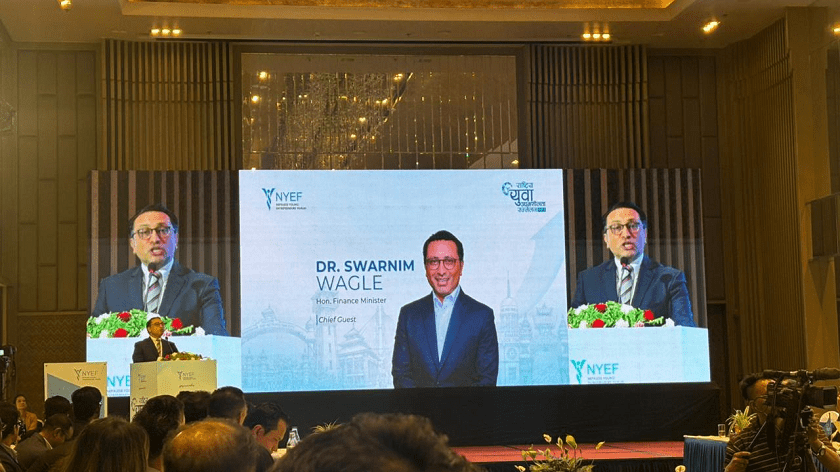
We have brought the budget for the fiscal year 2083/084. Since the government was formed on Chaitra 13, we only got 2 months to prepare the budget. Within this limit, we tried to create a budget that would bring 'reform' to the economy.
Initially, while planning a budget of 19-20 kharba rupees, my mind was always agitated by one thing – to uplift our 70 kharba economy. There is also an unrealistic expectation that the budget will come and solve all the country's problems of decades.
However, what is our brutal reality is that out of this 19-20 kharba budget, 14-15 kharba is consumed by our mandatory liabilities. Even if no government comes, even if this country closes its eyes, that money has to be spent. In the end, only 4 kharba rupees remain for development. That too is not easily spent.
Sometimes there are complications with land acquisition, sometimes with tree cutting, and sometimes with procurement rules. To overcome such chronic diseases, we are practicing 'sunset law', but even after overcoming all this, only 4 kharba is spent in the end. This 4 kharba alone does not meet the needs and aspirations of our country. Therefore, if we are to truly make the economy dynamic, we now need a 'big push' in the infrastructure sector.
While talking about 'big push' in infrastructure, we had a desire – to set aside the previous projects and announce our own new grand projects, but thinking that would be irresponsible, respecting the continuity of the state, we have set a goal to complete projects like Hulaki, Madhyapahadi, and Uttara-Dakshin Corridor first. The money of the Nepali people has already been invested, it should not be wasted.
But what after these projects are completed? Yes, we have added something new there. Now we are moving forward with the concept of 'Growth Quadrilateral'. This is our big departure to build economic corridors encompassing various geographical regions of the country.
For example, let's look at the Madhesh Growth Quadrilateral. The Sunkoshi-Marin Diversion is a transformative project that will irrigate 1 lakh 22 thousand hectares of land in Madhesh. Although the contract is currently terminated, we will revive and move it forward. Now, the land to be irrigated will be 'engulfed' by the Hulaki Highway below. Madhyapahadi is above, and the East-West Highway surrounds it in the middle. We have secured investment to make more than 900 kilometers of the East-West Highway, out of approximately 1,080 kilometers, into four and six lanes. Now, why not create a Growth Quadrilateral (Madhesh Quadrilateral) by 'tying up' that 1 lakh 22 thousand hectares with agriculture?
Similarly, the concept of Gandaki Quadrilateral has been put forward in the Gandaki Province. A world-class highway is being built from Mugling to Pokhara. Mugling-Narayangadh is complete, Narayangadh-Butwal is almost complete. Now, we have imagined a 'construction path' to eventually reach Muktinath from Butwal or Lumbini. That area, which 'engulfs' the Kaligandaki region, will be made an economic and tourist center as the Gandaki Quadrilateral.
In Sudurpaschim and Karnali, we have a plan to build another circuit by connecting religious and tourist sites like Khaptad and Badimalika. Similarly, in Koshi Province, there is talk of an ecological corridor from Koshi Tappu to Kanchenjunga. The meaning of all this is that the infrastructures that have been built should now be converted not just as a means, but as an end in themselves.
To do all this, the government's treasury money alone is not enough. Now we have to mobilize capital beyond the government's balance sheet. There is no escape from bringing private capital into the infrastructure sector. In India, people like Nitin Gadkari have built world-class infrastructures with the Hybrid Annuity Model. Although it may not be possible to replicate exactly the same in Nepal, we have to open the door to build large infrastructures by bringing in private capital.
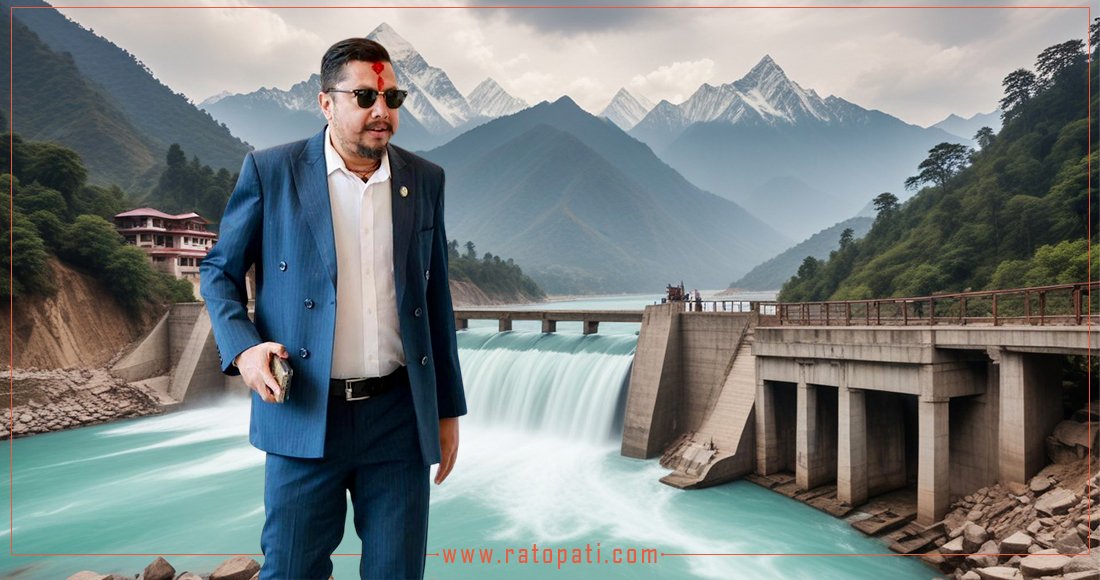
We have brought the private sector into transmission lines and hydro, now we will bring them into roads and tunnels as well. We have to start bringing private capital into highways like Butwal-Pokhara or new expressways from Aabukhairani to Pokhara. Let's start this with 5-7 tunnels, underpasses, or overpasses. We are making a big departure in off-budget infrastructure financing.
You might think – where will the resources come from for all this? Grants are shrinking, loans have their own limits. To address this tension, we have envisioned an Alternative Development Finance Vehicle. We have already passed the Alternative Development Finance Bill from parliament. We are starting a fund with an initial capital of about one kharba rupees under the leadership of the government itself, which will eventually be handed over to the private sector.
Along with this, we are making a big leap in financial diversification. Offshore bonds are being issued in Nepali currency with the support of the Asian Development Bank (ADB) and IFC. The diaspora is very excited, we are coming with NRN bonds. We are issuing clean bonds through institutions like Nepal Electricity Authority. These new instruments will be game-changers to capitalize on our vast goals in infrastructure.
To make all these plans successful, I need the support of the private sector. The state is now becoming a creator, an enabling state, not a controller of opportunities. We have abolished old laws, broken the practice of syndicate and policy capture. The days of wasting creative potential by running after license raj are now over.
Therefore, my request to the friends in the private sector is – you are our charioteer, our co-traveler. You take the risks, you plan. Make full use of the clean slate and policy space we have provided. When you create 10 jobs, 8-9 jobs depend on the private sector. Therefore, let's not hesitate in this new entrepreneurial culture. 'Success begets success' – if we can deliver initial results together, our journey to uplift this 70 kharba economy will surely gain strong momentum.
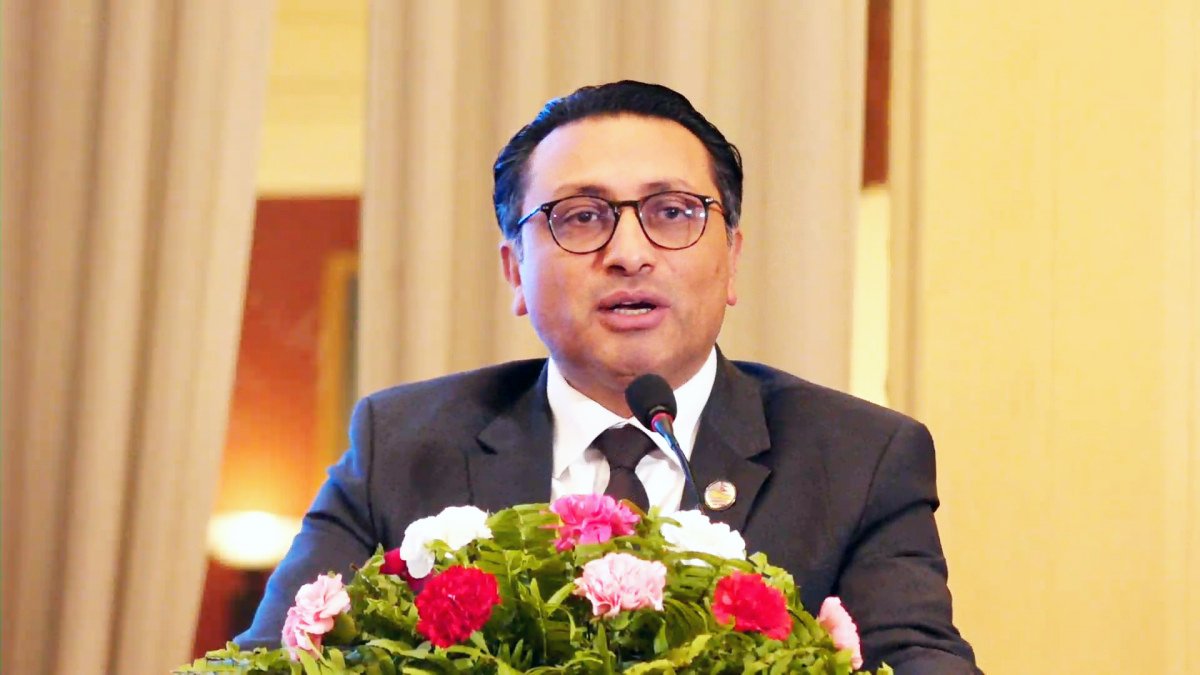
(Excerpts from the speech given by Finance Minister Wagle at the Nepal Chamber of Commerce post-budget discussion program)
This specific news has been automatically translated by AI. As a result, there may be some inaccuracies or language errors.