Government Unveils 'Chaturbhuj' Project for Strategic Regional Development

Kathmandu. The government has put forward a new and strategic concept of development through the budget for the upcoming fiscal year - the 'Chaturbhuj' project. Breaking the trend of scattering budgets in specific places or small projects in previous years, this time, a framework for three large connectivity and growth centers in Madhesh, Gandaki, and Karnali has been drawn to encompass the entire region.
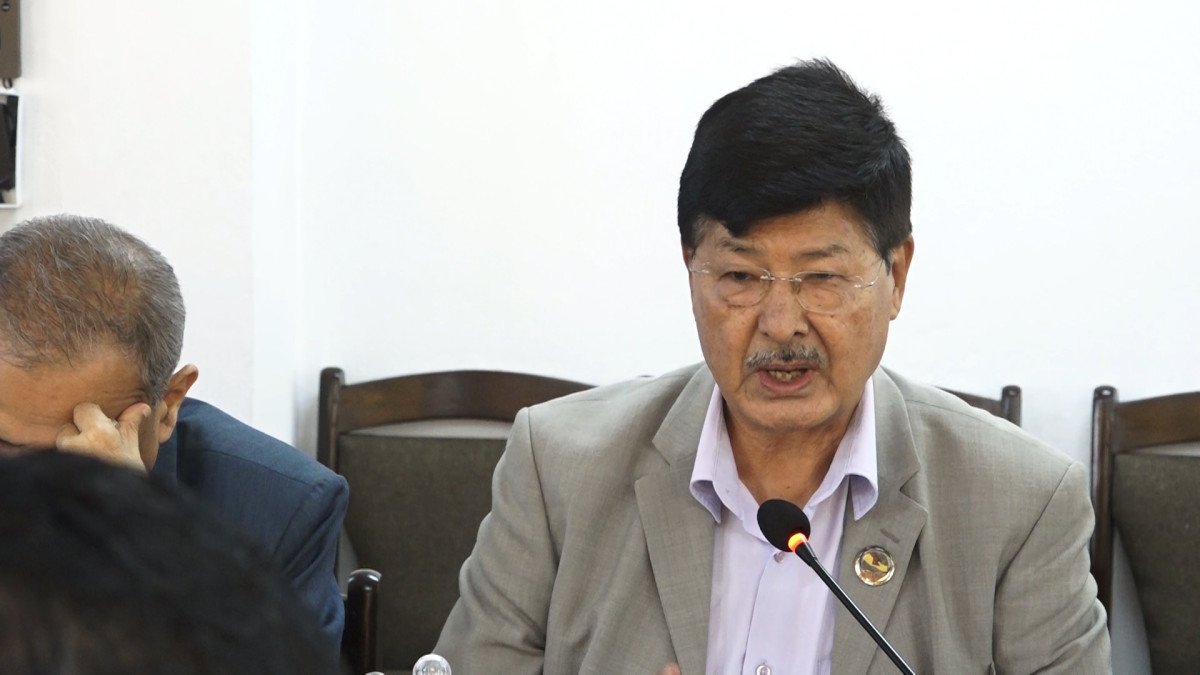
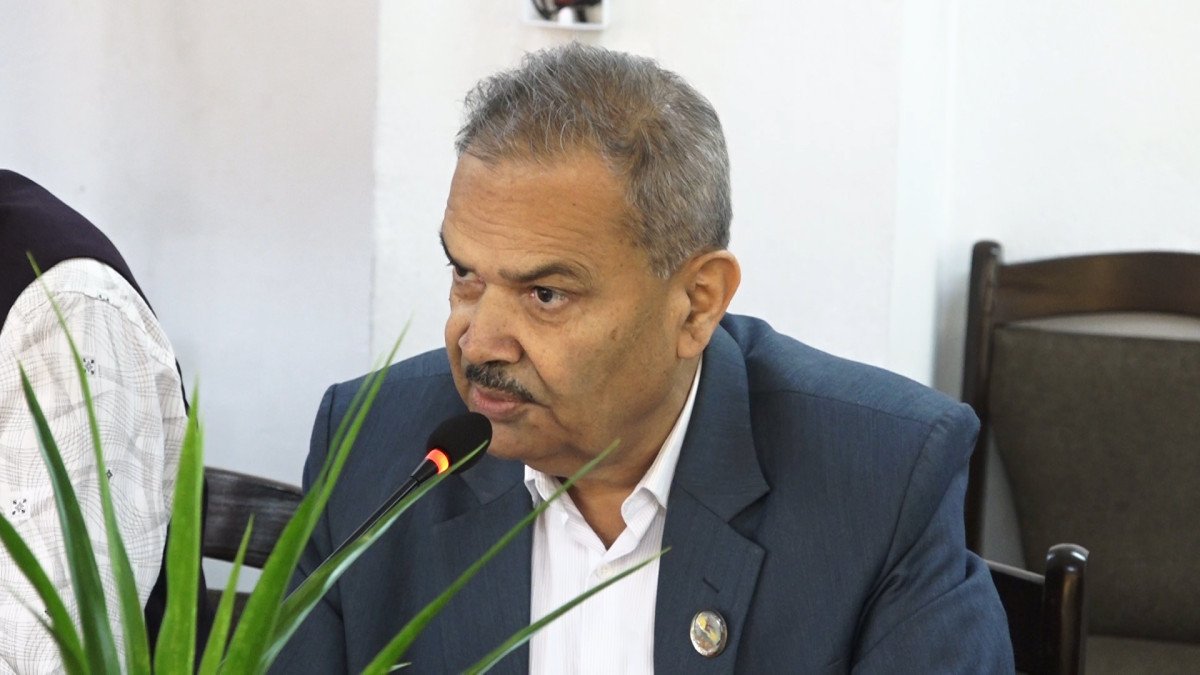
What is this 'Chaturbhuj' concept, which has come after the discussion of the Gandaki Economic Triangle has not yet subsided? How does it connect geography with the economy? Is this a program brought solely for political satisfaction, or does it have a solid economic basis behind it? What will be the role of the private sector in its successful implementation? An interview has been conducted with infrastructure expert and former secretary of the Government of Nepal, Madhusudan Adhikari, focusing on these and similar issues. Here is the edited excerpt of the interview with former secretary Adhikari:
- The government has brought three Chaturbhuj projects through the budget for the upcoming fiscal year, what exactly does this mean?
The Chaturbhuj project is a concept of regional development created by combining connectivity and growth centers. While previous budgets focused only on a specific place, this time the concept has been brought to encompass the entire region. It identifies four main points, and these points are connected by infrastructure such as roads, irrigation, energy, and market networks.
Its main objective is to develop those four centers and extend their impact to the surrounding areas. It integrates economic, tourist, agricultural, and industrial centers. In the past, there was a problem of only one region developing when separate projects were brought, but this concept aims to consolidate overall regional development and economic activities.
- Which areas are covered in these three Chaturbhuj projects?
The first is the Madhesh-centric Chaturbhuj, which considers the Sunkoshi-Marin Diversion as its main infrastructure. It aims to connect agriculture and industry based on the Hulaaki and East-West highways. The second is the Gandaki Chaturbhuj, which includes areas like Butwal, Pokhara, Muktinath, Devghat, and Triveni Dham. It envisions increasing economic activity by connecting religious tourism and commercial centers.
The third is the Karnali Chaturbhuj, which mainly focuses on tourism and cross-border trade. It seeks to connect Rara, Shey Phoksundo, and the Hilsa border point. Hilsa is a trade point, while the others are tourist destinations. It is considered important from both a commercial and tourist perspective due to the abundant potential for hydropower and medicinal herbs.
- Where did the concept of such a project come from, and how does it expand economic centers?
This concept comes from the growth pole theory of development economics and the growth corridor model. The idea is to first create a strong economic center, connect it with roads, energy, industry, and markets, and then let its impact spread to the surroundings. For example, connecting centers like Pokhara, Butwal, or Nepalgunj with surrounding rural areas expands investment, employment, industry, and tourism.
It is mainly based on three policy levels. First, an attempt has been made to connect our diverse geography with the economy. Second, religious and cultural journeys are being sought to be made a medium for economic transformation. Third, a vision has been set to integrate our north-south and east-west road networks.
When we develop these main points, their impact also starts to be felt in the neighboring areas. After the infrastructure connects the four centers, integrated development of the entire region takes place. This causes economic activity to spread in all directions, rather than being confined to one corner.
- Last year's budget discussed the Economic Triangle, and now it's called Chaturbhuj. What is the difference between the two?
The Karnali Triangle project that came into discussion last year was actually a concept put forward by the Karnali Province Planning Commission. It seems to be a development concept put forward by the Karnali Planning Commission to build infrastructure in a triangular shape connecting Surkhet (Kakrebihar, Bulbule Lake, Deuti Bajyai), Humla's (Rara), and Dolpa's (Shey Phoksundo and Tripura Sundari).
The budget brought by the then Finance Minister, Barshaman Pun, last year featured the concept of the 'Gandaki Economic Triangle', not the 'Karnali Triangle'. This year's budget has further broadened it by proposing the 'Kaligandaki Chaturbhuj' concept. Therefore, the comparison should be between the Gandaki Triangle and the Kaligandaki Chaturbhuj.
The Gandaki Triangle was mainly based on the concept of strengthening the interrelationship between major urban and economic centers like Pokhara-Bharatpur-Butwal. Its focus was on integrating transportation, trade, industry, service sectors, investment, and urban economies. The Kaligandaki Chaturbhuj is not just a network of economic centers; it also brings religious-cultural sites like the Kaligandaki civilization, Shaligram culture, Triveni Dham, Devghat, Ruru Kshetra, Kagbeni, Muktinath, and Damodar Kund within a single development framework. It appears to be an effort to integrate tourism, culture, spirituality, environmental conservation, and local economies along with trade and infrastructure.
Overall, in comparison, the Gandaki Triangle was a concept to connect economic centers, while the Kaligandaki Chaturbhuj is a broader regional development model that simultaneously connects economic development with cultural heritage, religious tourism, and regional identity.
- What will be the role of the government and the private sector in the implementation of these projects?
For any development project to be successful, the government and the private sector must be closely linked, like fingernails and flesh. The government's main role is to facilitate the environment. The government must build large infrastructure such as roads, airports, irrigation, and electricity. Similarly, simplifying policies, land management, and facilitating trade at border crossings are also the government's responsibilities.
The private sector, on the other hand, invests in those areas and operates economic activities. For example, opening hotels and resorts, running agricultural and herbal processing industries, building warehouses, and investing in small infrastructure like cable cars are the tasks of the private sector. In this, the government is the facilitator, while the private sector is the main 'actor' or investor.
- There is talk of building an expressway instead of widening the Siddhartha Highway, how do you view this?
While building an expressway is good, it tends to focus more on the starting and ending points. In our hilly geography, widening the road incorporates intermediate markets and increases local economic activity, but widening can be very expensive in terms of construction and maintenance costs.
A road should be chosen only after a detailed study of our traffic demand and economic needs. Since the Siddhartha Highway connects many markets from Bhairahawa to Pokhara, the concept of widening it might be more beneficial in the current context, but attention must also be paid to whether a highly ambitious large investment can be sustained economically.
- It is said that projects in Nepal are selected based on political influence, are these current programs economic or political?
In the past, when preparing the budget, most people's representatives and leaders used to focus only on their constituencies. Budgets were distributed to please voters rather than based on the overall needs of the country. There are both aspects to this. The Sunkoshi-Marin, Karnali Corridor, Lumbini-Muktinath Road, and Koshi Corridor are focused on economic aspects, and all of them show clear economic foundations.
Looking at the political aspect, some projects mentioned in the budget are indeed linked to electoral constituencies and political representation.
There is no history in Nepal of project selection being based entirely on cost-benefit analysis. Therefore, it is appropriate to call these programs political projects with economic logic. What needs to be understood is that the development of any country depends on policies made according to its context, not on imitating a development model that has succeeded elsewhere. From a conceptual perspective, it appears that the government has politically embraced the need for development, but a plan being socially necessary and desirable is not sufficient. It is equally important to consider whether the plan is technically feasible, economically sustainable and affordable, and whether it can be implemented in practice in terms of development administration capacity, institutional preparedness, and implementation mechanisms.
- What is the main focus of these projects?
These projects are multi-dimensional. First, it seeks to connect production and markets. Second, it aims to transform agriculture into industry, for example, it is said that irrigation and agriculture will be taken together in the central region. Third, there is a plan to generate economic benefits by connecting adventure and religious tourism with infrastructure.
In addition, it also focuses on maintaining regional balance, creating employment, and increasing cross-border trade. Specifically, the concept is to develop products, especially medicinal herbs and agricultural produce, in a way that can compete in the vast market of neighboring countries. If these concepts are implemented correctly, they will greatly help in transforming the country's economy.
In a single sentence, the main objective of these Chaturbhuj projects is not just road construction, but to transform Nepal's various geographies into an integrated regional economy of production, tourism, trade, and services.
The most important subject is production itself. There has been a lack of focus on that. In our context, production-centric projects must be brought by fully utilizing medicinal herbs, agricultural produce, and human resources, and by identifying other potentials.
This specific news has been automatically translated by AI. As a result, there may be some inaccuracies or language errors.