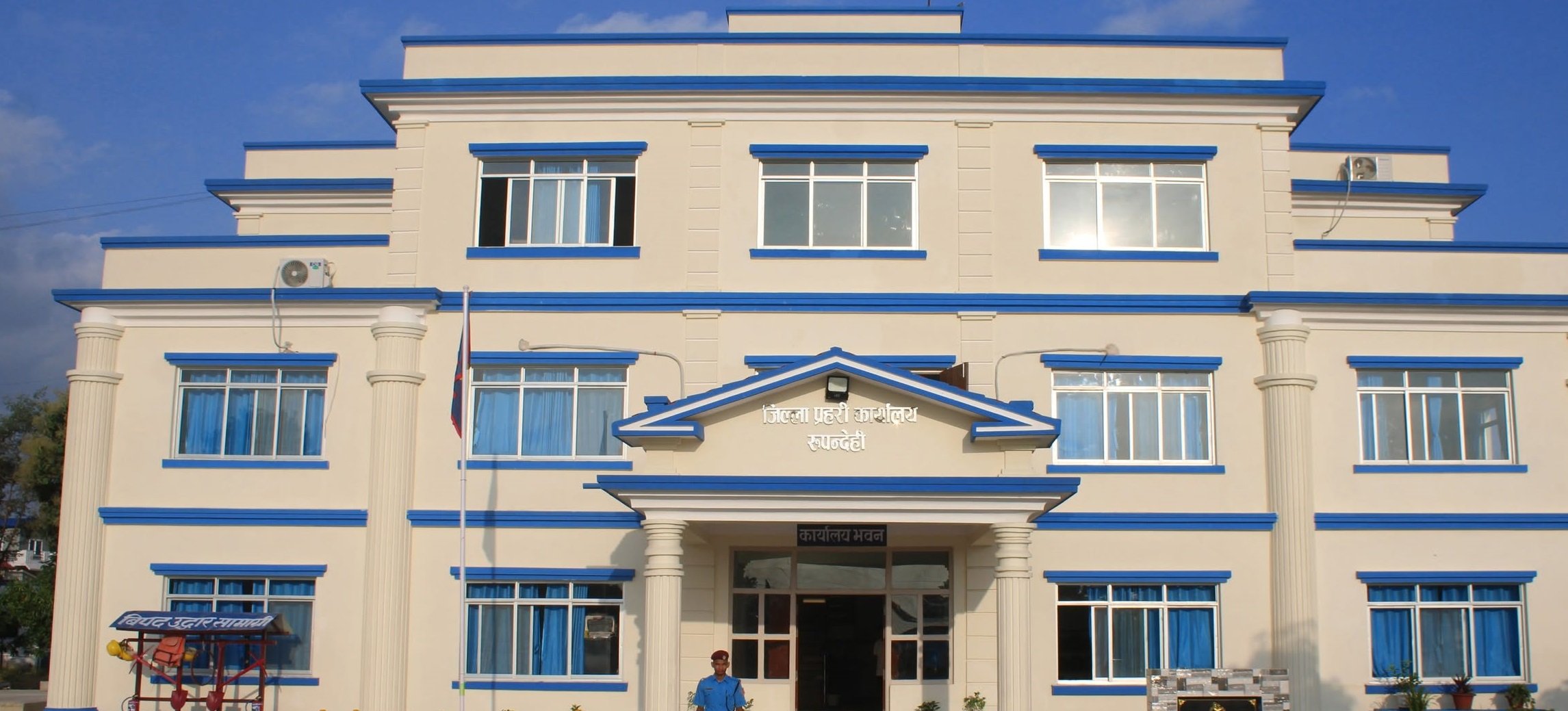
Government Completes 100 Days, Madhesi Public Expresses Mixed Reactions


Janakpurdham. The government led by Rastriya Swatantra Party (RSP) senior leader Balendra (Balen) Shah, formed immediately after the November 21 House of Representatives election, has completed its honeymoon period of 100 days. During the election campaign, the Rastriya Swatantra Party (RSP) had publicly released a manifesto outlining what it would accomplish in its 100-day tenure. Although various issues were raised in the manifesto, RSP's commitment was to prioritize good governance in its work.
While some of the government's actions have been positive as it crosses the 100-day mark, the people of Madhesh say that work has not been done according to public expectations.
This government has completely banned the tradition of past prime ministers and ministers inaugurating various projects, cutting ribbons, laying foundation stones, and meeting with cadres. The public has viewed actions such as dismissing a minister from their own cabinet after controversy, and arresting former Prime Minister KP Oli and Home Minister Ramesh Lekhak, who were identified as the main culprits by the Karki Commission's report for the severe suppression of the youth movement, positively.
The government's move to abolish trade unions for employees, political organizations among university students, and to abolish political appointments and select through open competition is also considered a major achievement by the people of Madhesh so far.
Anil Jha of Ramananda Chowk, Janakpur, told Rato Pati, 'It cannot be said that the government has done nothing, but the work from this government has not been as expected. I do not feel that work has been done that directly impacts Madhesh and its people.'
Stating that people voted for RSP out of frustration with the activities of old parties, he said that although the entire Madhesh voted for RSP, it has not been able to deliver justice to Madhesh so far. Mentioning that they received verbal assurances from old parties as well, he complained that Madhesh has not received any concrete programs or plans from the current government yet.
According to Jha, one still has to visit government offices for many days to get services, and there is extreme negligence in health and education in Madhesh.
He clarified that the main problem in Madhesh is unemployment, and due to the lack of employment, youth have to go abroad, leaving many families without men.
Binod Verma, from Brahmuri, Rautahat, said that Nepali youth have to sweat in temperatures of 50-55 degrees Celsius in Gulf countries just to earn a living.
'There is a situation where many individuals return to the country as corpses due to the lack of safety guarantees at the workplace,' he said. 'Past governments only made promises. We don't have very high expectations from this government, but we thought at least it would arrange employment within the country. This government's attention has not reached that area. So how can we trust this government?'
He said that if the government took over the factories in Madhesh and operated them under its own management, some employment could be created.
He stated that there is extreme mismanagement and rampant corruption in development work in Madhesh.
Awadhesh Pokhrel (Janakpuriya), from Balja Tole, Janakpur 8, recalling that many families from the Pahadi community had to be displaced from Madhesh during the Madhesh movement, said, 'We are now a minority in Madhesh. The seed of federalism sown by Madhesh has reaped benefits, but the work has not been done as promised by Balen himself during his election campaign speech in Janakpur before becoming Prime Minister.'
He complained that although Balen gave speeches like 'Make federalism stronger' and 'What is there to see in Kathmandu, just go for darshan', the government has not yet initiated concrete work for it.
'Where is the work done by this government to strengthen federalism?' he asked.
Pokhrel says that the spirit of national unity has strengthened since this government came to power. He said that the tendency to look down on each other as Madhesi and Pahadi, as in the past, has significantly decreased.
He clarified that because some leaders and cadres in RSP came from old parties, the same mentality seems to be dominant somewhere.
He stated that the Madhesi people are not so much evaluating the government's 100-day tenure as they are focusing on what kind of work the government is prioritizing and how it is performing.
Anil Kumar Yadav, from Bardibas, Mahottari, says that there has been some improvement in the police and administration since this government was formed. 'Previously, when we went with a simple problem, they would ignore it, create various legal hurdles, and delay work. There has been some improvement in this work style,' he said.
He expressed confidence that the public's expectations will be met because all the ministers in this government are young and educated.
Yadav said, 'How long has the government been working? Work that hasn't happened in so many years cannot be expected in just a few months. It is a government with a two-thirds majority, and it can do a lot if it wants to, from development to good governance. If it fails to do so, it will prove to be a tragedy for the entire country.'
Nazir Ali from Siraha-4 expressed anger that the government has not paid attention to the construction of the Kamala bridge on the Hulasi road section. 'For us, it's all the same, no matter who the leader is. The monsoon has started, and the government has not been able to pay attention to the construction of this bridge,' he said.
He also complained that fertilizer is not easily available for farmers.
Ram Patal Sah, found at a pan shop at Jaleshwor Zero Mile, shared his experience that the culture of nepotism and favoritism, which was prevalent everywhere, has somewhat reduced since the government led by Balen was formed.
'In the past, if you went to any sector for even a simple task, you either needed a recommendation or had to rely on someone you knew; otherwise, the work wouldn't get done. But now, in some places, that situation has changed,' he said.
The people of Madhesh understand that it would be more appropriate for the government to prioritize and work on specific areas rather than trying to tackle too many things at once.
This specific news has been automatically translated by AI. As a result, there may be some inaccuracies or language errors.
_QgiUA4ADS9.jpg)

_zDgGjQnBk0.jpg)