Germany's Dominance Over Newcomers in World Cup History

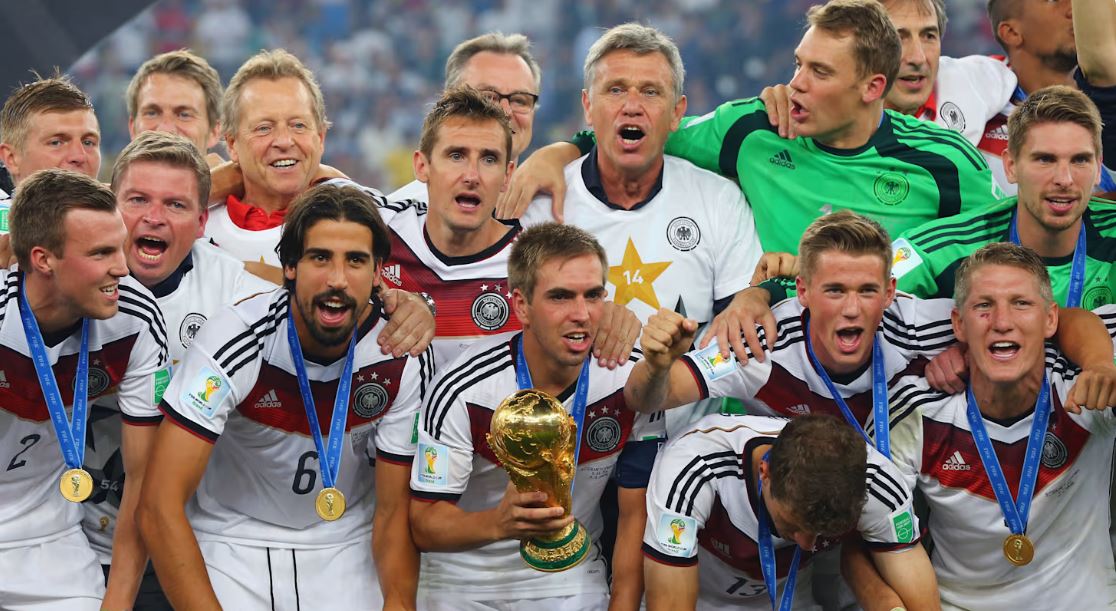
KATHMANDU. Germany, a four-time World Cup champion, has an interesting aspect in the history of the FIFA World Cup—dominating against debutant or less experienced teams. Of course, stronger countries usually dominate weaker nations or debutants. But in Germany's case, it's a bit different; they often face new teams in the World Cup group stage.
Four-time world champions Germany often get the opportunity to showcase their strength against nations participating in the World Cup for the first or second time.
An example of this can be found in the 1954 World Cup, where South Korea, playing in the World Cup for the first time, lost to Germany 7-2. In the same tournament, debutant Turkey also faced Germany twice, losing 4-1 and 7-2.
Due to Germany's organized playing style and lack of experience, new teams have historically struggled to compete against Germany at the high level of the World Cup.
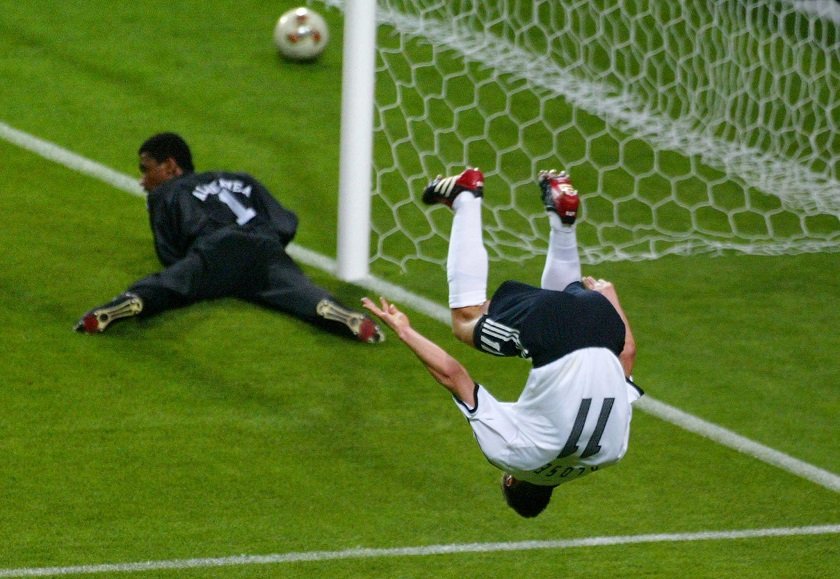
The most talked-about example was seen in the 2002 World Cup when Saudi Arabia, playing in the World Cup for the second time, was defeated by Germany 8-0. This result is still recorded as Germany's biggest win in World Cup history. At that time, German striker Miroslav Klose scored a hat-trick, and the Saudi team appeared completely helpless against Germany's attack. Klose himself is recorded as the all-time leading scorer in the FIFA World Cup (16 goals).
Before that, Australia, playing in the World Cup for the first time, also lost to West Germany 3-0 in 1974. In 2006, Costa Rica, playing in their second World Cup, put up some resistance but had to face a 4-2 defeat against host Germany.
Germany's dominance is not just a coincidence; its long World Cup experience, strong domestic football structure, excellent player development system, and ability to manage pressure in big tournaments make it even more dangerous against new teams.
Debutants often struggle to adapt to the World Cup atmosphere, crowd pressure, and high-level competition, making them more prone to mistakes against experienced teams like Germany. Therefore, many debutant nations have suffered their biggest defeats against Germany in World Cup history.
However, there are exceptions in football. In 1982, Algeria, playing in the World Cup for the first time, defeated West Germany 2-1, creating one of the biggest upsets in history. Similarly, in 1974, East Germany, playing in its first and only World Cup, defeated West Germany 1-0.
But such exceptions are negligible. Looking at the overall history, Germany has always established itself as a dominant force against weaker and debutant teams, and therefore, many eyes are focused on how big a win Germany will achieve against Curaçao, playing in the World Cup for the first time in 2026.
However, Germany's journey has been on a downward trend since winning the 2014 World Cup. At that time, Germany was at the pinnacle of football. Germany had talented players like Klose, Philipp Lahm, Bastian Schweinsteiger, Thomas Müller, Manuel Neuer, and Toni Kroos. Even now, Germany's squad includes players from famous leagues in world football. But their performance has not been comparable to that of 2014.
Although Germany has historically dominated debutant or weaker nations, today's Germany is not the formidable Germany of the past. Many expect that the current Germany will not produce such one-sided results. Therefore, for new teams like Curaçao, Cape Verde, or Uzbekistan in 2026, Germany is still a tough opponent, but the situation of 'definite defeat' as before is no longer the case.
What about Germany's last 10 matches?
Looking at Germany's last 10 matches, the team appears to be back in form in terms of results, but the performance still doesn't fully reflect the old Germany. After starting their World Cup qualifying campaign with a 2-0 loss to Slovakia in September 2025, Germany subsequently secured their place in the World Cup by consecutively defeating Northern Ireland 3-1 and 1-0, Luxembourg 4-0 and 2-0, and Slovakia 6-0. The 6-0 victory against Slovakia was particularly significant. Football experts say that their attacking and defensive capabilities were fully tested in that match.
Germany has also achieved positive results in friendly matches played after the World Cup qualifiers. They defeated Switzerland 4-3, Ghana 2-1, and Finland 4-0. They defeated the USA 2-1 on their home ground.
In other words, Germany won 9 out of its last 10 matches. They also scored 28 goals in those 10 matches, conceding only 8. However, many argue that Germany's true test has not yet come, as most of these wins were against relatively weaker opponents.
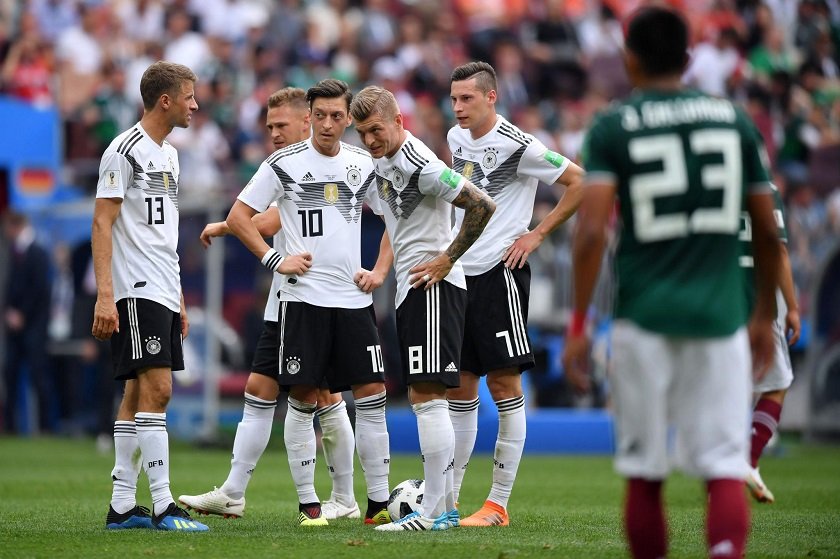
While successes against Northern Ireland, Luxembourg, and Slovakia have boosted Germany's confidence, their true level against top teams in world football is yet to be tested. Currently, the German team is undergoing reconstruction under coach Julian Nagelsmann. He is trying to balance young talent with experienced players.
Therefore, looking at the results of the last 10 matches, Germany appears to be on the rise again. However, it cannot be concluded yet that they have returned to being the team that intimidated the world football scene like the 2014 World Cup winners. Having made the disappointing history of being eliminated from the group stage in the 2018 and 2022 World Cups, Germany will be looking for another big win tonight at 10:45 PM against Curaçao, who are participating for the first time.
This specific news has been automatically translated by AI. As a result, there may be some inaccuracies or language errors.