Doctors Protest Extreme Labor Exploitation in Medical Colleges

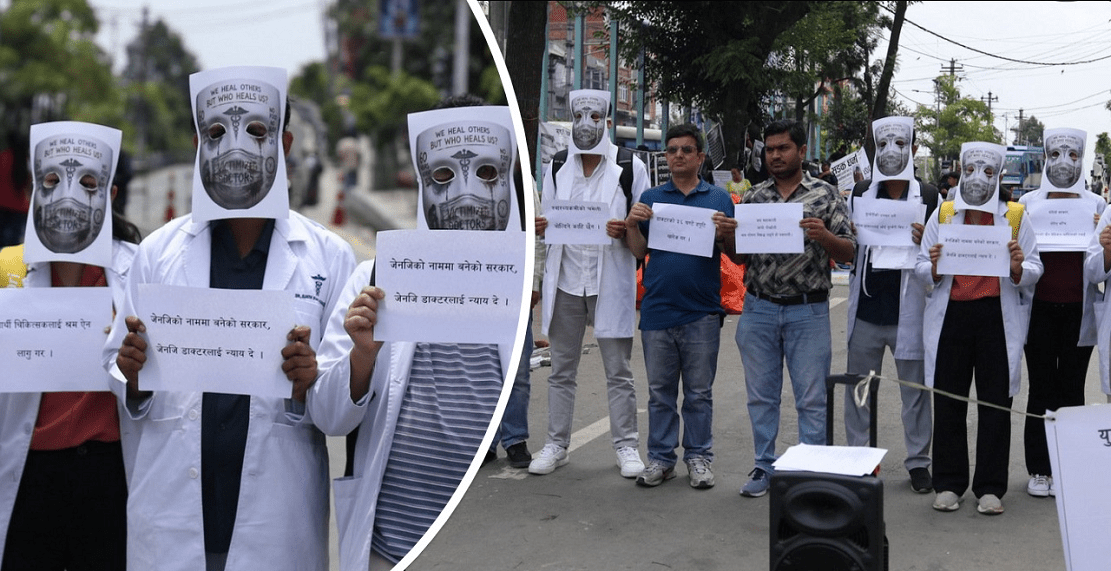
Kathmandu. Doctors undergoing internship, medical officers, and resident doctors in various medical colleges and teaching hospitals across Nepal have taken to protest. Around 13,000 doctors are protesting, claiming they are subjected to extreme labor exploitation. They have formed a struggle committee and have been staging a sit-in at Maitighar since Saturday, increasing pressure on the government.
Dr. Pragyan Basnet, coordinator of the struggle committee, stated that doctors are suffering due to excessive workload. He said, 'Even after scoring excellent marks in the Medical Education Commission's exam, I did not pursue MD in Internal Medicine because it requires duty for up to 36 hours at a time.' He mentioned that many doctors suffer from mental stress due to workload and lack of sleep.
He added, 'If a doctor gets selected for MD in a government hospital on a scholarship, they have to work continuously for 36 hours and approximately 100 hours a week. There is no provision for weekly leave. This makes one feel like quitting studies after working for six months due to severe mental stress. However, there is a rule that a heavy fine must be paid if studies are dropped midway. Until the fine is paid, one cannot appear for the MD/MS entrance exam the following year. This makes it impossible to leave studies or pay the fine easily. Ultimately, this leads to serious mental health problems. Our protest is against this.'
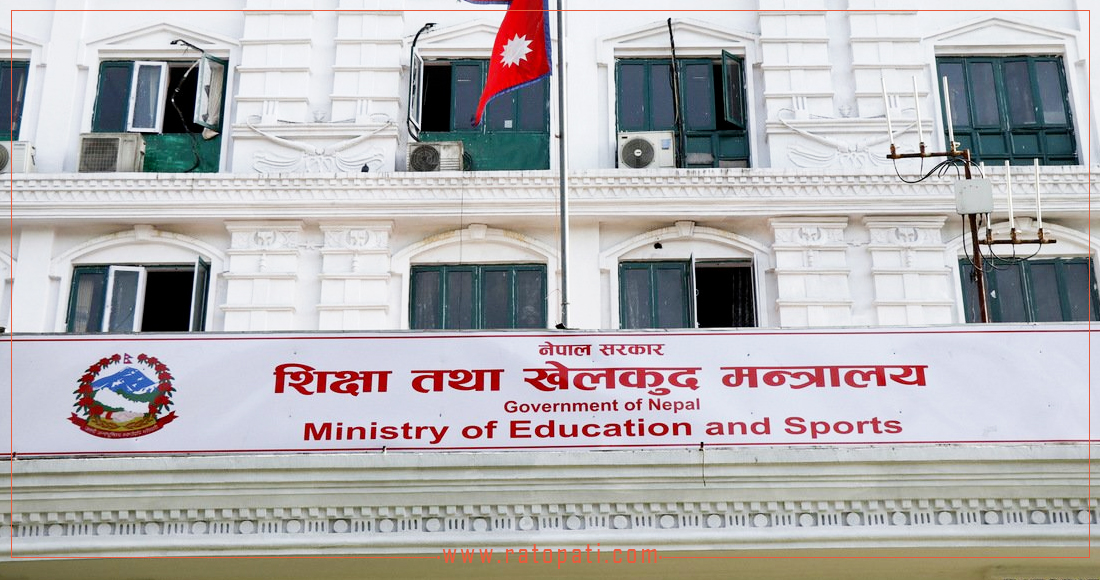
According to the Central Committee of the Medical Education Struggle Campaign, there are currently over 1,500 doctors doing internships, 8,000 medical officers, and more than 3,000 resident doctors in Nepal. They have been forced to protest because the Ministries of Labor, Education, and Health have not addressed their demands. The committee has stated that this protest will continue until their demands are met.
According to Dr. Saugaat Pandey, the committee's general secretary, the salary for doctors doing internships in private medical colleges is only 10,000 to 12,000 rupees per month. Similarly, the salary for medical officers who passed the licensing exam after spending lakhs of rupees has been set at only 32,000 rupees.
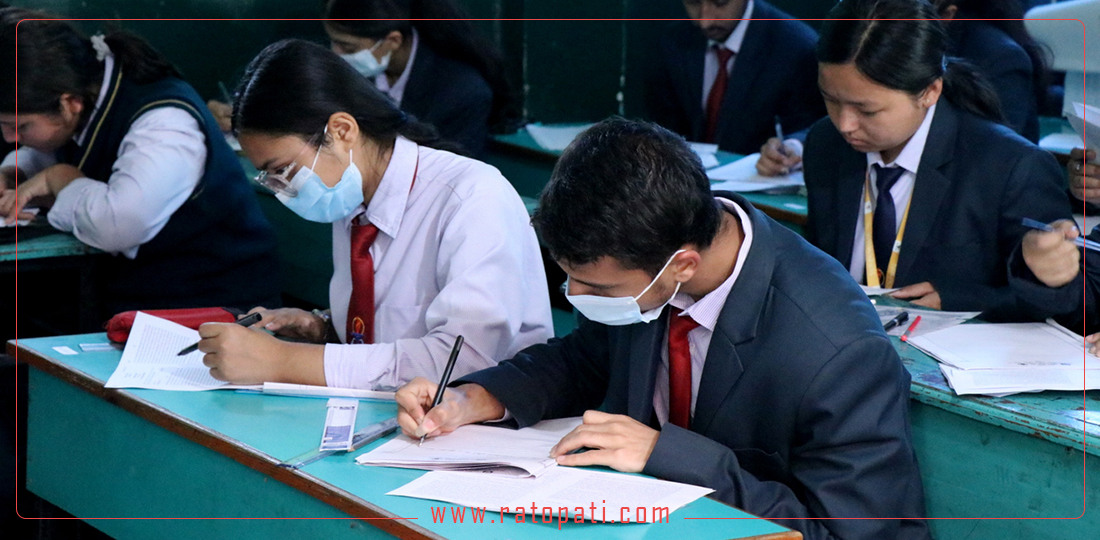
Dr. Pandey said, 'Resident doctors have to work continuously for up to 72 hours in medical colleges. They are not given any weekly leave. Female doctors are made to work continuously for the entire three-year study period without maternity leave and are paid only 48,000 rupees per month as remuneration.' According to him, resident doctors are continuously subjected to labor exploitation, and when they raise their voices, they are threatened with 'failing the exam' or 'expulsion from the college.'
_WL8o4fpueg.jpg)
Although the Ministry of Labor, Employment, and Social Security has directed that no health worker should be made to work more than 48 hours a week, the victimized doctors claim that medical colleges are making them work continuously for up to 72 hours.
According to Dr. Pandey, despite repeated correspondence from the Ministry of Health, medical colleges have been ignoring it. He added, 'The university conducts exams for resident doctors every year, but they are forced to examine patients in the hospital without being given time to prepare. Many doctors are suffering from mental stress due to being made to work for low wages without adequate sleep and study time. Some have committed suicide unable to bear it, while others are forced to drop out of studies or flee abroad.'
Similarly, doctors who have passed the Nepal Medical Council's licensing exam and are seeking to work in hospitals have a mandatory one-year work experience for PG studies, which means some spend their time looking for jobs, and even if they find one, they are forced to work for only 32,000 rupees per month, a doctor expressed their plight. The protestors have raised the issue that not only doctors but also nurses and paramedics are falling victim to this labor exploitation.
Before the protest began, a complaint regarding the labor exploitation of resident doctors was registered at the Office of the Prime Minister and Council of Ministers on Jestha 28. The complaint stated, 'Doctors pursuing higher education (MD/MS/MDS) after completing MBBS and BDS studies are called resident doctors. This study is different from other subjects because it involves studying while working, i.e., treating patients. Therefore, worldwide, resident doctors are considered important members of the medical team and are provided with appropriate stipends. Resident doctors are the backbone of teaching hospitals. As they are doctors registered with the Nepal Medical Council, they are the first to examine patients and provide emergency treatment in hospitals. However, they are being severely exploited in Nepal. The Labor Act clearly stipulates that no person shall be made to work more than 8 hours a day and 48 hours a week, with a maximum of 12 hours a day and 72 hours a week including overtime.' However, the victimized doctors complain that the Prime Minister's Office has not taken any action on this complaint so far.
Main Demands of the Protesting Doctors:
1. Determination of Duty Hours and Weekly Leave: The duty hours for trainee doctors (interns and resident doctors) should not exceed a maximum of 12 hours a day and 72 hours a week as per Nepal's Labor Act, 2074, and there should be a provision for one mandatory day off per week. If made to work more than 48 hours a week, overtime allowance should be provided as per the Labor Act.
2. Provision of Maternity Leave: All trainee female doctors should be provided with paid maternity leave as per the law, and they should be able to complete their studies and training after childbirth without any obstruction. Furthermore, maternity leave should be equally provided to all contract and permanent female health workers.
3. Salary Increase: The increased salary for resident doctors, equivalent to that of a Grade 8 officer, as announced by the Government of Nepal in the budget speech and as per previous agreements, should be implemented.
4. Monitoring and Mental Health Committee: The Medical Education Commission and the Nepal Medical Council should form empowered committees to hear and monitor the labor exploitation and other problems of trainee doctors. Additionally, a committee should be formed under the Mental Health Department in each medical college to promote the mental health of doctors.
5. Fine Reduction and Seat Adjustment: The hefty fines imposed on resident doctors for dropping out of studies due to special reasons should be reduced, and the vacant seats should be adjusted in the next year's seat allocation to avoid wastage.
6. Abolition of One-Year Mandatory Experience: The provision of one year of mandatory work experience required for MD/MS/MDS studies after completing MBBS and BDS should be abolished. This provision forces new doctors to work under low wages and difficult circumstances, so this provision should be abolished by amending the Medical Education Act.
This specific news has been automatically translated by AI. As a result, there may be some inaccuracies or language errors.